

Daily Dose Of Jazz…
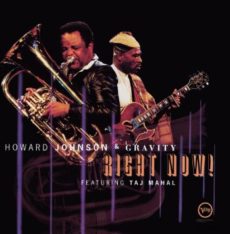
Howard Lewis Johnson was born August 7, 1941 in Montgomery, Alabama. In the 1960s he worked with Charles Mingus, Hank Crawford, Rahsaan Roland Kirk, Archie Shepp, and Hank Mobley on the album A Slice of the Top.
He began a long association with Gil Evans in 1966, arranger of a horn section that backed Taj Mahal on Mahal’s 1971 live album, The Real Thing, which featured three other tubists/multi-instrumentalists, Bob Stewart, Joseph Daley and Earl McIntyre. Howard played with The Band on their Rock of Ages live album, The Last Waltz and into the late 2000s with The Band drummer, Levon Helm’s Band. During the 1970s, he was the band conductor of the Saturday Night Live Band; he can be seen in several musical numbers, including playing bass saxophone in the King Tut sketch.
He has also led three tuba bands, collaborated with Tomasz Stanko, Substructure, Tuba Libre and GRAVITY, perhaps his best-known band. In 1981 he performed at the Woodstock Jazz Festival, held in celebration of the tenth anniversary of the Creative Music Studio.
He had a minor role in the 1983 film, Eddie and the Cruisers as Wendell’s replacement and also appeared in episodes of Matlock and Hill Street Blues. Johnson famously accompanied James Taylor in a performance of Jelly Man Kelly on Sesame Street in 1983, and also on tin whistle when Taylor sings to Oscar The Grouch.
Tubist, baritone saxophonist, arranger, conductor and bandleader Howard Johnson, who also plays bass clarinet, trumpet and other reed instruments, continues to perform, record and tour.

Dose A Day-Blues Away

Daily Dose Of Jazz…
John Kirby was born John Kirk in Winchester, Virginia on December 31, 1908. His mother gave him up for adoption and was raised by Reverend Washington and Nancy Johnson. He was a student at the Winchester Colored School and started trombone lessons around nine years old under the guidance of Professor Powell Gibson. As a kid and that he learned to play music just as it was written and his formal education ended around 1923.
Kirby arrived in Baltimore around 1927 and met trombonist Jimmy Harrison, saxophonist Coleman Hawkins and composer Duke Ellington. It was Harrison who persuaded him to switch from trombone to tuba. He played tuba with Bill Brown and His Brownies, pianist Charlie Sheets and then with John C. Smith’s Society Band. He joined Fletcher Henderson in 1929, recorded tuba on a number of sessions, but switched to double-bass when tuba fell out of favor as jazz bands’ primary bass instrument.
In the early 1930s, John took bass lessons from legendary bassists Pops Foster and Wellman Braud, left Henderson to play with Chick Webb, then joined Lucky Millinder and briefly led a quartet in 1935, but was more often than not a sideman in other groups. He performed behind Billie Holiday and Teddy Wilson on their first recording date.
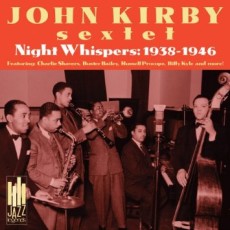
By 1936, Kirby was a successful sideman on the New York City jazz scene, secured a gig at the Onyx Club leading Charlie Shavers, Buster Bailey, Billy Kyle, Russell Procope and O’Neill Spencer, becoming one of the more significant small groups in the big band era. They recorded the Shaver’s classic Undecided, with Maxine Sullivan most often performing the vocal duties for the group.
Along with his orchestra, John had a 30-minute radio program, Flow Gently, Sweet Rhythm, also known as The John Kirby Show on CBS from April 1940 – January 1941. The program also featured Sullivan and the Golden Gate Quartet and they have been cited as the first black artists to host a jazz-oriented series.
He tended toward a lighter, classically influenced style of jazz often referred to as chamber jazz. He was very prolific and extremely popular from 1938-1941 but lost most of his group to World War II. Through the war years he was able to attract Dizzy Gillespie, Benny Carter, Ben Webster, Clyde Hart, Budd Johnson and Zutty Singleton to his small groups and club dates. As Kirby’s career declined, he drank heavily and was beset by diabetes.
After the war, Kirby got the surviving sextet members back together, with vocalist Sarah Vaughan but the reunion did not last. A concert at Carnegie Hall in December 1950, with Bailey plus drummer Sid Catlett, attracted only a small audience, crushing his spirit and badly damaging what little was left of his career. Double-bassist, trombonist and tubist John Kirby passed away on June 14, 1952 in Hollywood, California at age 43.
Give A Gift Of Jazz – Share
Daily Dose Of Jazz…
Wycliffe Gordon was born May 29, 1967 in Waynesboro, Georgia and was heavily influenced musically by the church music his organist father played at several churches in Burke County as well as being a classical pianist and teacher.
It wasn’t until 1980 that Gordon became particularly inspired in jazz at age thirteen, listening to jazz recordings inherited from his great aunt. The collection included a five-LP jazz anthology produced by Sony-Columbia and was drawn in particular to Louis Armstrong and the Hot Fives and Hot Sevens.
Wycliffe attended, at that age, Sego High School in Augusta, Georgia and played in the band under direction from Don Milford. He graduated from Butler High in 1985, performed in New York City as part of the McDonald High School All-American Band, went on to study music at Florida A&M where he played in the marching band.
His early works as a professional were with Wynton Marsalis but in recent years he expanded beyond swing and experimented with new instruments, notably the indigenous Australian wind instrument, didgeridoo. In 1995, Gordon arranged and orchestrated the third version of the theme song for NPR’s All Things Considered, the widely recognized melody composed in 1971 by Donald Joseph Voegeli.
In 2006 he founded Blues Back Records, his was an independent jazz label and released his Rhythm On My Mind album, a collaboration with bassist Jay Leonhart. His desire for full artistic control was the impetus for creating Blues Back. Blues Back had produced other artists in Wycliffe’s universe who met Gordon’s criteria for originality, however, since 2011 has been inactive.
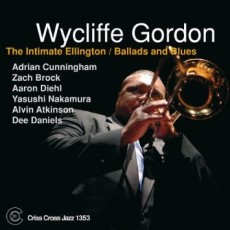
Jazz trombonist, arranger, composer, bandleader and music educator at the collegiate-conservatory level, Wycliffe Gordon also plays didgeridoo, trumpet, tuba, piano, and sings. To date he has a catalogue of 19 albums as a leader and another eight as a sideman performing with John Allred, Marcus Roberts, Randy Sandke, Maurice Hines, Ron Westray, and Chip White. He continues to perform, tour, record and educate.
Take A Dose On The Road
;
Daily Dose Of Jazz…
Andrew Dewey Kirk was born on May 28, 1898 in Newport, Kentucky but grew up in Denver, Colorado and was tutored by Paul Whiteman’s father, Wilberforce. He started his musical career playing with George Morrison’s band, but then went on to join Terence Holder’s Dark Clouds of Joy. In 1929 he was elected leader after Holder departed, renamed the band Clouds of Joy and also relocated the band from Dallas, Texas, to Kansas City, Kansas.
Also known as the Twelve Clouds of Joy for the number of musicians, they set up in the Pla-Mor Ballroom on the junction of 32nd and Main. They made their first recording for Brunswick Records that same year. Mary Lou Williams came in as a last moment pianist and so impressed the label’s Dave Kapp that she became a regular member and arranger of the band.
With the move they grew highly popular as they epitomized the Kansas City jazz sound and in mid-1936 Andy signed with Decca and made scores of popular records for the next decade. In 1938, he and band held the top spot of the Billboard chart for 12 weeks with “I Won’t Tell a Soul (I Love You)”, written by Hughie Charles and Ross Parker and featured Pha Terrell on vocals. In 1942 leading His Clouds of Joy, they recorded “Take It and Git”, which on October 24, 1942, became the first single to hit number one on the Harlem Hit Parade, the predecessor to the Billboard R&B chart. In 1943, with June Richmond on vocals, he had a number 4 hit with “Hey Lawdy Mama”.
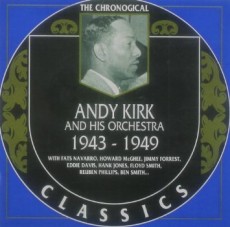
Over time the band had Buddy Tate, Claude Williams, John Williams, bill coleman, Don Byas, Shorty Baker, Howard McGhee, Jimmy Forrest, Fats Navarro, Charlie Parker, Ben Thigpen,, Hank Jones, Joe Williams and Reuben Phillips among others.
In 1948, Kirk disbanded the Clouds of Joy and continued to work as a musician, but eventually switched to hotel management and real estate, but kept his hand in music serving as an official in the Musicians’ Union.[
Although the leader of the band, saxophonist and tubist Andy Kirk seldom was a soloist, utilizing the talent in his band for the spotlight. His genius lay in realizing how best to make use of his band members’ skills. On December 11, 1992 at the age of 94, he passed away in New York City.
Give A Gift Of Jazz – Share
Daily Dose Of Jazz…
Born January 14, 1982 in California, Ben Stapp grew up as a brass musician before turning to jazz. Studying with his mentor, the late Tommy Johnson, the voice of the Jaws’ theme, at UCLA, he was awarded a fellowship during this period to play principal tuba in the Henri Mancini Orchestra. He obtained his masters from RNCM in Manchester, England where he studied with tuba legend Roger Bobo, and for composition, Anthony Gilbert.
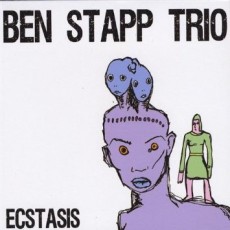
While living in Europe, he played in numerous Euro/international festivals including Festival do Sodeste, Gulbenkian August Music Festival, Festival of New Music in Krems and the Barcelos Music Festival. Back in New York, tubist and composer Stapp hit the forefront in city’s creative music scene. His debut CD release, Ecstasis featuring Tony Malaby and Satoshi Takeishi, has received a critical acclaim from the New York Times and All About Jazz.
He has recorded for Clean Feed in Portugal, Dakah Hip Hop Orchestra in LA, Franz Hautzinger in Austria, James Gourlay in England, and has appeared with the NYJA All Stars on CNBC. Ben Stapp now plays and subs with such tuba luminaries like Howard Johnson and Bob Stewart. He also directs and composes for his large ensemble, the Zozimos Collective and continues to perform and tour.
Dose A Day – Blues Away
More Posts: tuba