


SASHA BERLINER
Sasha Berliner – vibraphone
Mike King– piano
Russell Hall – bass
Jongkuk Kim – drums
TBA
Originally from the San Francisco Bay Area, vibraphonist Sasha Berliner, one of the most acclaimed new musicians on the New York music scene, leads an exciting quintet featuring pianist Mike King, bassist Russell Hall and drummer Jongkuk Kim. Her music has been described as a trans-genre, politically charged, jazz-alternative sound… a product of her diverse musical background and influences. “Berliner plays, composes, and leads her band with maturity and artistic presence rarely attained…and appears likely to occupy that upper stratosphere for some time to come,” reports All About Jazz. She won the 2020 Downbeat Critics’ Poll in the “Rising Star – Vibraphone” category and was named among the top ten vibraphonists in both the 2021 and 2022 Downbeat Readers’ Polls. Some of her recent notable performances and recording include collaborations with Tyshawn Sorey, Nicholas Payton, and Christian McBride and she has also headlined at the Newport Jazz Festival, The Blue Note, Montreal Jazz Festival, and Monterey Jazz Festival.
Fess Applied To All Ticket/Pass Purchases
More Posts: adventure,album,club,festival,genius,jazz,museum,music,preserving,restaurant,travel,vibraphone
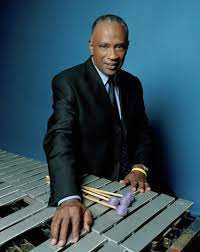
Three Wishes
When Nica was hanging out with Bobby Hutcherson she inquired what three wishes he would ask if they could be granted and he told her:
- “I’d want to be happy. I’d want to be very happy.”
- “I’d want to be healthy. Strong.”
- “And play good music.”
*Excerpt from Three Wishes: An Intimate Look at Jazz Greats ~ Compiled and Photographed by Pannonica de Koenigswarter
Bobby Hutcherson: January 27, 1941 ~ August 15, 2016 | Vibraphone, Marimba
More Posts: baroness,history,instrumental,jazz,marimba,music,pannonica,three,vibraphone,wishes
Requisites
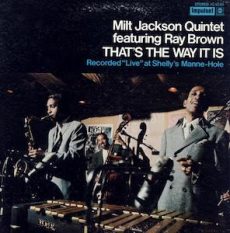
That’s The Way It Is ~ Milt Jackson Quintet Featuring Ray Brown | By Eddie Carter
One of my favorite musicians, Milt Jackson, steps into the spotlight with a live date for this morning’s subject. After listening to it, I thought it would be good to discuss. That’s The Way It Is (Impulse – ABC Records AS-9189) is the first of two albums The Milt Jackson Quintet recorded in performance over two August nights at Shelly’s Manne-Hole in 1969. The companion album is Just The Way It Had To Be, and both records hit the stores a year later. Teddy Edwards on tenor sax, Monty Alexander on piano, Ray Brown on bass, and Dick Berk on drums complete the ensemble. My copy is the original 1970 US Stereo release.
The quintet begins its set with Frankie and Johnny. Monty begins the introduction, then steps aside for Ray, who provides the first two choruses of the melody. Teddy is up first and swings nicely on the opening solo; next, Milt speaks with the sweetest of sounds. Monty compliments his colleagues with ease before Ray’s theme reprise and soft ending. Here’s That Rainy Day by Johnny Burke and Jimmy Van Heusen is a quartet feature for Milt and the rhythm section. It begins with a tender dialogue between Jackson and Alexander that grows into the quartet’s pretty theme. Milt combines tenderness and warmth in the song’s only solo for one of his most profoundly moving and lyrical performances preceding the gentle climax.
Wheelin’ and Dealin’ by Teddy Edwards takes off quickly from Monty’s introduction. Teddy picks up the pace for a quick run through the theme and brisk opening chorus. Milt swings into an enthusiastic interpretation, then Monty neatly summarizes the solos with an exhilarating turn leading to the ensemble’s speedy finish. Side Two starts with a Ray Brown creation, Blues In The Bassment. The bassist begins the song with a tasteful introduction that blossoms into a two-instrument melody with Berk. Edwards steps up first to deliver a delightful feast for the ears on the lead reading. Jackson unfolds an inspired presentation next, and Alexander adds a fitting summation that proceeds to the closing chorus and subtle ending.
Up next is Tenderly, by Walter Gross and Jack Lawrence. Ray is the featured musician in this quartet performance. He begins with an extended introduction and the first of two gorgeous readings, and Milt takes a brief moment to shine delicately in a short statement. Ray concludes his second solo with a sensuously beautiful interpretation culminating with the audience’s ovation. The evening ends with the title tune, That’s The Way It Is, by Monty Alexander. This soulful blues begins with Monty’s succulent introduction and segues into the ensemble’s collective theme. Jackson, Edwards, and Alexander provide three soul food dishes with band introductions by Milt, who also thanks the audience before they wrap it up.
Ed Michel produced both That’s The Way It Is and its companion album, Just The Way It Had To Be. Wally Heider was the recording engineer for both nights. The album’s sound quality is quite good, with a ‘you are there’ feel. The musicians are in fine form throughout, and the addition of Ray Brown makes this date a fantastic live session to listen to and enjoy. If you are a fan of Milt Jackson, I invite you to check out, That’s The Way It Is by The Milt Jackson Quintet Featuring Ray Brown. The album is an enjoyable listening experience and is worth considering for your library the next time you’re out vinyl shopping!
~ Just The Way It Had To Be (Impulse – ABC Records AS-9230) – Source: Discogs.com ~ Here’s That Rainy Day, Tenderly – Source: JazzStandards.com © 2023 by Edward Thomas Carter

More Posts: classic,collectible,collector,history,instrumental,jazz,music,vibraphone
Daily Dose Of Jazz…
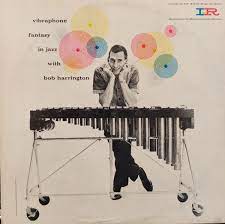
Bob Harrington was born Robert Maxon Harrington in Marshfield, Wisconsin on January 30, 1912. He played piano with Charlie Barnet in the early 1950s and worked with both Red Nichols and Bud Freeman during that decade as a drummer.
On vibraphone, he played with Georgie Auld, Buddy DeFranco, Vido Musso, Ben Webster, Ann Richards, and Harry Babasin’s Jazzpickers. He released one solo album, Vibraphone Fantasy in Jazz, on Imperial Records in 1957, which is now a collector’s item.
Vibraphonist Bob Harrington, who was adept on drums and piano, transitioned on August 20, 1983 in Kona, Hawaii.

More Posts: bandleader,drums,history,instrumental,jazz,music,piano,vibraphone
Daily Dose Of Jazz…
Lawrence Benjamin Bunker was born November 4, 1928 in Long Beach, California. At first he played primarily drums, but increasingly he focused on vibraphone. He was later highly regarded for his playing of timpani and various percussion instruments.
Bunker is a dependable and in-demand studio drummer and vibist who achieved distinction recording with Billie Holiday, Ella Fitzgerald, Peggy Lee, Diana Krall, and many other jazz greats. In 1952, he was the drummer in one of Art Pepper’s first groups. The next two years he played drums in some of the earliest of Gerry Mulligan’s groups.
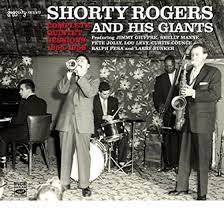
In the 1950s and 1960s he appeared at Howard Rumsey’s Lighthouse in Hermosa Beach, and performed with Shorty Rogers and His Giants and others. The Sixties had him intermittently drumming in the Bill Evans trio and played timpani with the Los Angeles Philharmonic orchestra.
His work in movie soundtracks spanned over fifty years, from Stalag 17 in 1953 and Glengarry Glen Ross in ‘92) to The Incredibles in 2004. Larry’s work included soundtracks by John Williams, Henry Mancini, Quincy Jones, Miklós Rózsa, Jerry Goldsmith, Johnny Mandel, Lalo Schifrin and many other composers.
Drummer, vibraphonist, and percussionist Larry Bunker, who was a central figure on the West Coast jazz scene, transitioned from complications of a stroke in Los Angeles, California at age 76 on March 8, 2005.
More Posts: bandleader,drums,history,instrumental,jazz,music,percussion,timpani,vibraphone