


Daily Dose Of Jazz…
Ernst Heinrich “Teddy” Stauffer was born May 2, 1909 In Murten, Fribourg, Switzerland He was dubbed Germany’s “Swing-King” of the 1930s. He formed the band known as the Teddies, which is also billed as the Original Teddies or the International Teddies, which continued after he left in 1941.
Annual trips to the Swiss cities of St. Moritz, Arosa and also a guest appearance in London, England were responsible for the international fame of the Teddies band. Until 1939, he appeared with his Original Teddies-Band especially in Berlin and Hamburg, Germany. He enjoyed his popularity at the 1936 Olympics, had hits with Goody~Goody, and turned Horst Wessel Lied, the National Socialist’s anthem, into a jazz number in 1938. With his jazzy swing music, however, Stauffer increasingly got in trouble with the Reichsmusikkammer, a Nazi institution that promoted “good German music” which was composed by Aryans and seen as consistent with Nazi ideals.
Returning to Switzerland in 1939, he eventually emigrated to the United States and then to Mexico. His reputation as a playboy and a well~known womanizer who was married to Hedy Lamar, did not sway him from also having affairs with Rita Hayworth and Barbara Hutton.
Violinist, saxophonist and bandleader Teddy Stauffer who was also an actor, nightclub owner, and restaurateur transitioned on August 27, 1991 in Acapulco, Mexico at the age of 82.

More Posts: bandleader,club owner,history,hotelier,instrumental,jazz,music,saxophone,violin
Daily Dose Of Jazz…
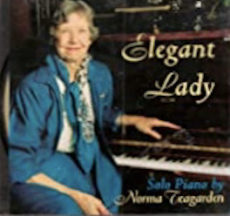
Norma Louise Teagarden was born in Vernon, Texas on April 28, 1911 into a musical family that consisted of her mother Helen, who played ragtime piano and taught; her brothers Charlie, a trumpeter, Clois, a drummer, and Jack, a trombonist. She performed with the latter in the 1940s and 1950s.
She performed on piano and violin during the early part of her career, which began in Oklahoma City, Oklahoma. In the 1920s she moved to New Mexico and worked in territory bands, returning to Oklahoma City in the 1930s. After another stint there she moved to California in the 1940s touring with her brother Jack from 1944–1947 and from 1952–1955.
Outside the Teagarden family, Norma worked with Ben Pollack, Matty Matlock, and Ray Bauduc. Eventually settling in San Francisco, California she often performed on solo piano and with bandleader Turk Murphy.
Pianist and violinist Norma Teagarden transitioned on June 6, 1996.
More Posts: bandleader,history,instrumental,jazz,music,piano,violin
Daily Dose Of Jazz…
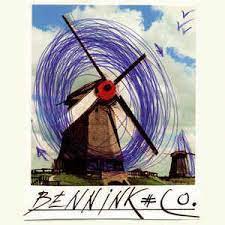
Han Bennink was born April 17, 1942 in Zaandam, Netherlands, the son of a classical percussionist. He began playing the drums and the clarinet during his teens. He also went on to learn to play the violin, banjo and piano, which feature him on some of his recordings.
Through the 1960s, while in his t,wenties he was the drummer with a number of American musicians visiting the Netherlands, including Dexter Gordon, Wes Montgomery, Sonny Rollins and Eric Dolphy.
He subsequently became a central figure in the emerging European free improvisation scene. In 1963 he formed a quartet with pianist Misha Mengelberg and saxophonist Piet Noordijk which performed at the 1966 Newport Jazz Festival. The following year Han co-founded the Instant Composers Pool with Mengelberg and Willem Breuker, which sponsored Dutch avant garde performances. Late in the decade he played in a trio with saxophonist Peter Brötzmann and Belgian pianist Fred Van Hove, which became a duo after Van Hove’s departure in 1976.
From the late 1980s through the early 2000s, Bennik collaborated closely with Dutch post-punk band The Ex, simultaneously playing through the 1990s in Clusone 3, a trio with saxophonist/clarinetist Michael Moore and cellist Ernst Reijseger.
He has recorded twenty albums as a solo or leader and recorded over a eight dozen albums as a sideman with the likes of Derek Bailey, Conny Bauer, Don Cherry and Alexander von Schlippenbach, Steve Lacy, Lee Konitz, Ray anderson, Gary Bartz, Jckie McLean, Paul Bley, Annette Peacock, Anthony Braxton, Marion Brown, Uri Caine, Myra Melford, and Sonny Rollins. (partial list)
His style is wide-ranging, running from conventional jazz drumming to highly unconventional free improvisation. Drummer Han Bennink is best known as one of the pivotal figures in early European free jazz and free improvisation, and he continues to push forward the envelope of his music at 80.
More Posts: bandleader,banjo,clarinet,drums,history,instrumental,jazz,music,piano,violin
Daily Dose Of Jazz…
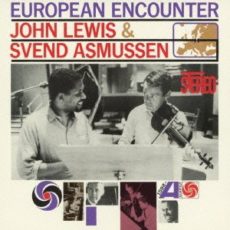
Svend Asmussen was born on February 28, 1916 in Copenhagen, Denmark into a musical family. He started taking violin lessons at the age of seven and by 16 he first heard recordings by jazz violinist Joe Venuti and began to emulate his style. He started working professionally as a violinist, vibraphonist, and singer at 17, leaving his formal training behind for good.
Early in his career he worked in Denmark and on cruise ships, with artists such as Josephine Baker and Fats Waller. Asmussen later was greatly influenced by Stuff Smith, whom he met in Denmark. During World War II he played with Valdemar Eiberg and Kjeld Bonfils, during which time jazz had moved to the underground and served as a form of political protest.
The late 1950s saw Svend forming the successful trio Swe-Danes with singer Alice Babs and guitarist Ulrik Neumann. The group gained a dance hall reputation and toured the United States. He worked with Benny Goodman, Lionel Hampton, and Duke Ellington. Asmussen was invited by Ellington to play on his Jazz Violin Session recording in 1963 with Stéphane Grappelli and Ray Nance.
In 1966, Asmussen performed alongside Grappelli, Stuff Smith, and Jean-Luc Ponty in a jazz Violin Summit in Switzerland, appeared at the ‘67 Monterey Jazz Festival,and guested on Snakes in a Hole, an album by the jazz-rock band, Made in Sweden.
Actively playing violin at the age of 94, he became a centenarian in 2016, and his collection of jazz music, photographs, posters and other material is held in the jazz collections at the University Library of Southern Denmark. Violinist Svend Asmussen transitioned peacefully in his sleep on February 7, 2017.

More Posts: bandleader,history,instrumental,jazz,music,violin
Daily Dose Of Jazz…
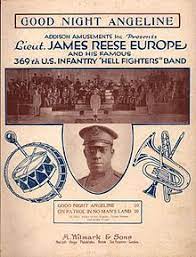
James Reese Europe was born on February 22, 1881 in Mobile, Alabama and in 1891 his family moved to Washington, D.C. In 1904 he moved to New York City and six years later he organized the Clef Club, a society for Black Americans in the music industry. In 1912, the club, with its 125 members who played in various configurations, made history when they became the first band to play a proto-jazza concert at Carnegie Hall for the benefit of the Colored Music Settlement School.
The importance of this historic concert is that it took place 12 years before the Paul Whiteman and George Gershwin concert at Aeolian Hall, and 26 years before Benny Goodman’s famed concert at Carnegie. The Clef Club’s performances played music written solely by Black composers, including Harry T. Burleigh and Samuel Coleridge-Taylor.
In 1913 and 1914 Jim made a series of phonograph records for the Victor Talking Machine Company. These recordings are some of the best examples of the pre-jazz hot ragtime style of the U.S. Northeast of the 1910s, predating and protecting the idea that the Original Dixieland Jass Band recorded the first jazz pieces in 1917 for Victor.
Europe was known for his outspoken personality and unwillingness to bend to musical conventions, particularly in his insistence on playing his own style of music. During World War I, Europe obtained a commission in the New York Army National Guard, where he fought as a lieutenant with the 369th Infantry Regiment otherwise known as the “Harlem Hellfighters” when it was assigned to the French Army. He went on to direct the regimental band to great acclaim. They made their first recordings in France for the Pathé Brothers.
Returning home in 1919 he made more records for Pathé with Noble Sissle and continued to lead his band. During a talk backstage with two of his drummers, Steve and Herbert Wright about their stage behavior, Herbert got agitated and stabbed Europe in the neck with a pen knife. The show went on, Jim went to the hospital but doctors were unable to stem the flow of blood.
Arranger, composer and bandleader Jim Europe, who also played piano and violin, and was the leading ragtime and early jazz figure on the Negro music scene of New York City in the 1910s, transitioned on May 9, 1919.
More Posts: arranger,bandleader,composer,history,instrumental,jazz,music,piano,violin