

Daily Dose Of Jazz…
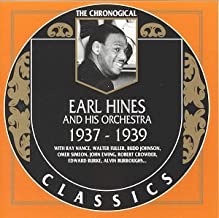
Edward Burke was born on January 13, 1909 in Fulton, Ohio. Adept at both violin and trombone, he played both professionally in jazz bands. He worked with Walter Barnes late in the 1920s, then with Cassino Simpson and Ed Carry in the early 1930s.
He worked with Kenneth Anderson in 1934 before joining Erskine Tate’s band through the end of 1935. Following a stint with Horace Henderson, Ed then joined Earl Hines’s band in 1938.
The 1940s saw Burke playing with Walter Fuller and Coleman Hawkins and later in the decade he was with first Duke Ellington and then Cootie Williams. In the early 1950s he joined Cab Calloway’s outfit before working with Buddy Johnson a few years later.
By the 1960s and through the 1970s he essentially went into retirement, though he occasionally played with musicians such as Lem Johnson and Wally Edwards. Violinist and trombonist Ed Bure transitioned on April 19, 1988 in East Elmhurst, New York.
Daily Dose Of Jazz…
Bud Scott was born Arthur Budd Scott on January 11, 1890 in New Orleans, Louisiana. He played guitar and violin as a child and performed professionally from an early age. His first job was with New Orleans dance band leader John Robichaux in 1904 and as a teenager he played with Buddy Bolden. In 1911 he was playing guitar with Freddie Keppard’s Olympia Orchestra. In 1912 he left New Orleans with a large travelling show.
As a violinist he performed with James Reese Europe’s Clef Club Orchestra at a historic 1912 concert at Carnegie Hall, and the following year worked with Europe’s ensemble on the first jazz recordings on the Victor label.He would go on to play on a number of Victor Talking Machine Company ragtime recordings with James Reese Europe’s Society Orchestra in 1913.
A graduate of the Peabody School of Music, he was a notable rhythm guitarist in Chicago, Illinois’s Jazz Age nightclubs of the 1920s. Moving there in 1923, he became a member of King Oliver’s Creole Jazz Band, originating the now traditional shout, Oh, play that thing!, on Oliver’s recording of Dippermouth Blues. He also worked with Johnny Dodds and Jimmy Blythe, Erskine Tate, Jelly Roll Morton’s Red Hot Peppers and Richard M. Jones’ Jazz Wizards.
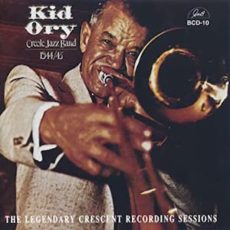
Scott was the first person to use a guitar in a modern dance orchestra, in Dave Peyton’s group accompanying Ethel Waters at Chicago’s Cafe de Paris. After performing and recording with Jimmie Noone’s Apex Club Orchestra in 1928 he moved to California. Making a living as a professional musician through the 1930s, when traditional jazz was eclipsed by big-band swing music, he formed his own trio. In 1944 Scott joined an all-star combination that evolved into Kid Ory’s Creole Jazz Band. This was an important force in reviving interest in New Orleans-style jazz in the 1940s, and he wrote the majority of the band’s arrangements.
In 1944 Bud joined an all-star traditional New Orleans band that was a leader of the West Coast revival, put together for the CBS Radio series The Orson Welles Almanac. He arranged most of the songs for Kid Ory’s band, of which he was a part. His talent for arranging earned him the title of The Master.
A stroke in 1948 forced his retireent from music. Guitarist, banjoist, violinist and vocalist Bud Scott, whose obituary ran on the front page of the Los Angeles Sentinel, transitioned in Los Angeles, California on July 2, 1949, aged 59.
More Posts: arranger,banjo,buitar,history,instrumental,jazz,music,violin,vocal
Daily Dose Of Jazz…
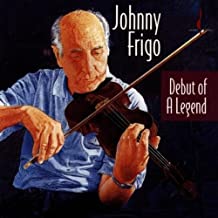
Johnny Frigo was born on December 27, 1916 in Chicago, Illinois and studied violin for three years beginning at age seven. In high school he started to play double bass in dance orchestras. In 1942 he played with Chico Marx’s orchestra and performed a comedy routine on violin with Marx on piano.
Entering the United States Coast Guard during World War II, he played in an Ellis Island band with Al Haig and Kai Winding. After his brief turn at active service near the end of the war he moved to New Jersey and from 1945 to 1947 he toured with Jimmy Dorsey’s band. He later formed the Soft Winds trio with Dorsey’s guitarist Herb Ellis and pianist Lou Carter. During this time he wrote the music and lyrics to Detour Ahead and I Told Ya I Love Ya, Now Get Out.
In 1951, returning to Chicago, Johnny primarily worked as a studio bassist and arranger. He also led the band at Mr. Kelly’s, and until 1960 he played fiddle hoedowns and novelties with the Sage Riders, WLS radio house band for the National Barn Dance. Then in 1961 WGN revived the show and he played with the Sage Riders for another fourteen years.
He went on to work with Chicago jazz vocalist Anita O’Day in live and studio recordings. In the mid-1980s Frigo largely abandoned playing bass and concentrated on violin. He performed as a jazz violinist at festivals worldwide. Frigo also was a published poet and artist and played flugelhorn. He wrote and performed the 1969 Chicago Cubs fight song Hey Hey, Holy Mackerel.
Violinist and bassist Johnny Frigo, who was also a composer, lyricist, published poet and artist, passed away of cancer on July 4, 2007 at age 90.

More Posts: composer,history,instrumental,jazz,lyricist,music,piano,violin
Daily Dose Of Jazz…
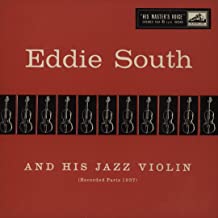
Edward Otha South, born November 27, 1904 in Louisiana, Missouri, studied classical music in Budapest, Hungary, Paris, France and Chicago, Illinois. In the 1920s he was a member of jazz orchestras led by Charlie Elgar, Erskine Tate, and Jimmy Wade.
In the early 1930s Eddie led a band that included Milt Hinton and Everett Barksdale. In 1937 he recorded in Paris with Stephane Grappelli, Django Reinhardt, and Michel Warlop. In 1945 he worked for the studio band at WMGM in New York City. During the 1950s, he was a guest on television with Fran Allison and Dave Garroway and on WGN in Chicago.
South was among hundreds of artists whose material was destroyed in the 2008 Universal fire. On September 2, 2020, The New York Times consulted violinist Mazz Swift, who selected Eddie South’s performance of Black Gypsy for a feature on 5 Minutes That Will Make You Love the Violin.
Violinist Eddie South passed away on April 25, 1962 in Chicago, Illinois.
More Posts: bandleader,history,instrumental,jazz,music,violin
Daily Dose Of Jazz…
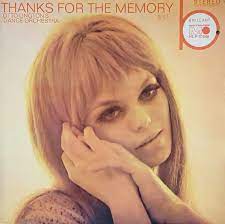
Otto Lington was born on August 5, 1903 in Copenhagen, Denmark. The son of a clown, he showed an early interest in music and got his first professional arrangement as a musician at 14 years old. During the 1920s and 1930s he led his own orchestras and held jobs as a leader of orchestras, such as Kai Ewans in Denmark , Jack Harris in Sweden and Bernard Etté in Germany.
He was one of the pioneers of jazz in Denmark and was nicknamed The White Negro. In 1929, Otto performed the first major jazz concert in Denmark, where, among other things, George Gershwin’s Rhapsody In Blue was performed.
For many years during 1951 ~ 1952 and 1958 ~ 1972 Lington led the orchestra at the Tivoli in Copenhagen, but also at many theaters, revue establishments and the like.
Violinist., composer, music publisher and bandleader Otto Lington, was a pioneer of jazz in Denmark, passed away on December 15, 1992 and interred at Søndermark Cemetery in Frederiksberg, Denmark.
More Posts: bandleader,composer,history,instrumental,jazz,music,publisher,violin