

Daily Dose Of Jazz…
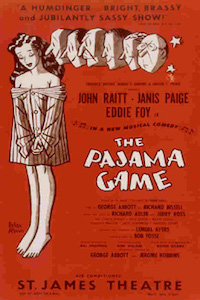
Jerry Ross was born Jerold Rosenberg on March 9, 1926 in Bronx, New York to Russian parents of the Jewish faith. Growing up, he was a professional singer and actor in the Yiddish theater. Following high school, he studied at New York University under Rudolph Schramm and introductions to singer Eddie Fisher and others brought him into contact with music publishers at the Brill Building, the center of songwriting activity in New York.
Ross met Richard Adler in 1950 and as a duo they became protégés of composer, lyricist, and publisher Frank Loesser. They began their career in the Broadway theater with John Murray Anderson’s Almanac, a revue for which they provided most of the songs, resulting in recordings of Acorn in the Meadow by Harry Belafonte and Fini by Polly Bergen.
Their second effort, The Pajama Game, opened on Broadway in May 1954. It ran for 1063 performances, produced the jazz standard Hey There, won a Tony Award, Donaldson Award and the Variety Drama Critics Award. Two songs from the show,
Their next musical, Damn Yankees, opened on Broadway in 1955, starring Gwen Verdon. It ran for 1019 performances and produced the jazz standard Whatever Lola Wants, and won the Tony Award for Composer/Lyricist and Musical.
Composer and lyricist Jerry Ross, who wrote, alone or in collaboration more than 250 songs and was entered posthumously into the Songwriters Hall of Fame, transitioned on November 11, 1955, at the age of 29, from complications related to the lung disease bronchiectasis.

More Posts: composer,history,instrumental,jazz,lyricist,music,vocal
Daily Dose Of Jazz…
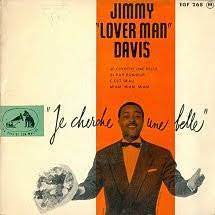
James Edward Davis was born in 1915 in Madison, Georgia. He and his family moved to Gary, Illinois, and then to Englewood, New Jersey, where he completed his high school education. Being musically gifted, he was accepted into the Juilliard School in New York City to study piano and composition, his fees being paid by a benefactress.
In the late 1930s he wrote the song Lover Man (Oh, Where Can You Be?) with Ram Ramirez but could not initially place it, until he offered it to Billie Holiday in 1942. However, due to the 1942–44 musicians’ strike Holiday didn’t record the song until 1944. Although at first it was only a minor hit, it soon achieved widespread success and went on to become a jazz standard.
During the early 1940s Davis struggled to make a living as a songwriter and supplemented his meagre royalties by giving piano lessons. Drafted in 1942, but as a member of the NAACP, refused enlistment into the segregated regiment, was ultimately imprisoned for thirteen days, then inducted into the army, serving three and a half years. By 1945, as a warrant officer, he was sent to France for six months, and learned the language. Back home, upon his discharge he left for Hollywood, joined the Actors’ Laboratory Theatre, however his acting career only offered stereotypical racial roles. At the end of 1947 he emigrated to France.
Warmly welcomed in Paris, in part, due to the fame of the song Lover Man, he styled himself Jimmy “Lover Man” Davis and entered a highly creative period, writing a number of songs and placing them with major French performers, such as Yves Montand, Maurice Chevalier, and Joséphine Baker. His songwriting royalties were still insufficient to live on, so he began singing his own songs in solo performances, touring through France, Italy, Holland, Spain, Switzerland and other countries.
Composer, songwriter, vocalist, pianist and actor Jimmy Davis, whose birth and death dates are currently unknown, and who was a close friend of Langston Hughes, transitioned in Paris, France in 1997. His biography, In Search of Jimmy ‘Lover Man’ Davis, was written by Professor François Grosjean.
More Posts: composer,history,instrumental,jazz,music,piano,songwriter,vocal
Three Wishes
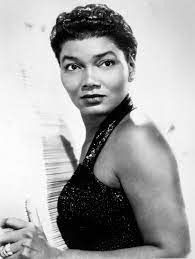
When the ladies got together for a bit of girl talk Pannonica put for the th question of three wishes to Pearl Bailey who responded to her inquiry with this answer:
-
-
“I only need one. I wish that humans would learn to live together with love, and then they wouldn’t need the other two wishes.”
-
*Excerpt from Three Wishes: An Intimate Look at Jazz Greats ~ Compiled and Photographed by Pannonica de Koenigswarter

More Posts: baroness,history,instrumental,jazz,music,pannonica,three,vocal,wishes

Daily Dose Of Jazz…
Clotilde Rullaud was born March 1, 1978 in Reims, France and was immersed in the performing arts of music, theatre and dance from early childhood. At five, she began studying flute and singing at the conservatoire, before going on to complete her studies in jazz and improvised music at IACP in Paris, France and EDIM in Cachan, France. She explored opera singing with the tenor singer, Peterson Cowan.
Her musical identity developed through her travels through the Balkans, Ireland, Lebanon, the United States. Clotilde’s study of vocal techniques, inspired by Meredith Monk, fado, tango, Romani music, Turkish music, Persian music, Inuit throat singing and Bulgarian voices were also great influences.
She has recorded three albums as a vocalist and flutist, her 2007 debut with Hugo Lippi, Live au 7 Lézards She has also directed and produced a short film, and written and directed a multidisciplinary performance. With a repertoire spanning jazz, free improvisation and folk music, her career as a musician has led her to perform in France, Germany, Australia, Burkina Faso, China, South Korea, Japan, Luxembourg, the Netherlands, Switzerland, Taiwan, the United Kingdom and the United States.
Since 2007, Rullaud has taught at Martina A. Catella’s school, Les Glotte-Trotters in Paris, and conducted workshops for the festival Les Suds in Arles and for the Ateliers d’ethnomusicologie (ADEM) in Geneva, Switzerland. Moving to New York City in 2017 she collaborated with American pianist Chris McCarthy, producing Pieces of a Song, a repertoire of dark and beautiful pieces based on the writings of Diane di Prima, poetess of the Beat Generation.
She has performed with Olivier Hutman, Dano Haider, Antoine Paganotti, Tristan Macé, Albin Lebossé, Emmanuel Bex, Yann Cléry, Laurent Salzard, Gautier Garrigue, and Alexandre Saada, the latter collaboration produced A Woman’s Journey, a homage to American female protest songstresses.
She has received numerous awards for her work in both jazz and film. Vocalist, flutist and composer Clotilde Rulllaud, who is also an artistic director, filmmaker, producer and facilitator, continues to pursue the limits of her creativity.
More Posts: composer,flute,history,instrumental,jazz,music,vocal

Review: Denise Donatelli | Whistling In The Dark
Whistling In The Dark is the latest offering from Grammy nominated vocalist Denise Donatelli. Paying tribute to Burt Bacharach is nothing less than amazing as she continuously illustrates her interpretive range. She masterfully weaves a story through nine songs that fill us with desire, love, heartbreak, separation and loneliness, which are trademarks of this composer.
For those of us who have long been fans and admirers of Denise Donatelli’s work, this is not her usual upbeat and fun engagement that has been her wheelhouse. Dark, as in the title track, is the cornerstone of this project, yet she moves through the doubts, fears, sadness and tears of love with an emotional acumen that delivers and raises our own memories of those moments we humans experience throughout our lives.
The orchestration is minimal, a juxtaposition from the composer’s earlier arrangements on Warwick’s recordings that were filled with lushness, accentuating the lyric for effect. Less is often more and the simplicity in the accompaniment allows her to artfully capture our imaginations.
Of the Bacharach/David songs executive producer Denise Donatelli and producer Larry Klien selected for this recording, five are immediately recognizable, on which Dionne put her indelible stamp during their Sixties reign. There is no comparison, however, in their individual delivery, and no doubt that Ms. Donatelli has set herself apart by raising a quieter, more subtle bar for those jazz vocalists to aspire to.
The title track was composed with Daniel Tashian and Mexican Divorce with Bob Hilliard, the latter was written for the Drifters and where Bacharach met backup singer Dionne Warwick. For those of us who haven’t followed Bacharach since his Sixties heyday, Klein and Donatelli also chose two refreshing Bacharach/Elvis Costello compositions, Toledo and In The Darkest Place from their 1998 collaborative album Painted From Memory.
Recorded during the height of Covid in late September 2020 over a five day period, there is a relevant sadness to the loneliness society often felt evidenced with a national shutdown, homebound, socially-distanced, eating and/or living alone. The cover photograph embodies that tangible space between shadow and light, a place in which each of us exists, emphasized with the softer interior photo of the artist. The lowercase lettering epitomizes her sense of familiarity with her audience, conveying a cordial invitation to listen.
As for me, I’ve whistled in the dark and found it to be pleasurable, just like this contribution to the jazz canon. Darkness always withdraws with the approaching twilight, heralding the dawn of the new. Endings are where beginnings launch the next chapter, and Denise Donatelli is already underway to create her next masterpiece. Meanwhile, enjoy this gem.
carl anthony | notorious jazz | february 1, 2022
Give A Gift Of Jazz ~ Share 
#preserving genius
More Posts: bandleader,history,instrumental,jazz,music,review,vocal