


Daily Dose Of Jazz…
Sy Oliver was born Melvin James Oliver on December 17, 1910 in Battle Creek, Michigan. His mother was a piano teacher and his father was a multi-instrumentalist who made a name for himself demonstrating saxophones at a time that instrument was little used outside of marching bands. Showing a proclivity for singing as a child, he also learned to lay trumpet during these formative years.
Oliver left home at 17 to play with Zack Whyte and his Chocolate Beau Brummels and later with Alphonse Trent. He sang and played trumpet with these bands, becoming known for his “growling” horn playing. In 1933, he joined the Jimmie Lunceford band, contributing many hit arrangements for the band, including My Blue Heaven and Ain’t She Sweet as well as his original composition For Dancers Only which in time became the band’s theme song.
By 1939 Sy became one of the first Black musician with a prominent role in a white band when he joined Tommy Dorsey as an arranger, though he ceased playing trumpet at that time. He led the transition of the Dorsey band from Dixieland to modern big band. His joining was instrumental in Buddy Rich’s decision to join Dorsey. His arrangement of On The Sunny side Of The Street, Yes Indeed!, Opus One, The Minor Is Muggin’ and Well, Git It were big hits for Dorsey,
After leaving Dorsey, Oliver continued working as a freelance arranger and as music director for Decca Records. One of his more successful efforts as an arranger was the Frank Sinatra album I Remember Tommy, a combined tribute to their former boss.
In 1950 the Sy Oliver Orchestra released the first American version of C’est Si Bon with the interpretation of Louis Armstrong to worldwide success. In his later years, up until 1980, he reformed his own big and small bands, with which he also played his trumpet again after having set it aside so many years earlier.
He arranged and conducted many songs for Ella Fitzgerald during her Decca years. As a composer, one of his most famous songs was T’ain’t What You Do (It’s The Way You Do It, which he co-wrote with Trummy Young. On May 28, 1988 arranger, composer, bandleader, trumpeter and singer Sy Oliver passed away in New York City. He was 77.

Jazz Is Global – Share
Daily Dose Of Jazz…
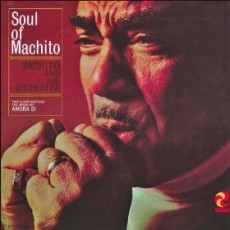
Machito was born Francisco Raúl Gutiérrez Grillo on December 3, 1909 in Havana, Cuba. He began playing music as a child and started playing professionally in his teens before emigrating to America in 1937 as a vocalist with La Estrella Habanera.
In the late 30s he worked with several Latin artists and orchestras, recording with bandleader Xavier Cugat. An attempt to launch a band with his brother-in-law Mario Bauzá failed, but in 1940 Machito founded the Afro-Cubans and was the front man, singer, conductor and maraca player. The following year he hired Bauzá as his music director, a working relationship that lasted for 35 years.
Under Bauzá’s influence, Machito began hiring jazz-oriented arrangers and his bands of the 40s were among the first to fuse Afro-Cuban rhythms with jazz improvisation that greatly inspired jazz giants Dizzy Gillespie and Stan Kenton. Throughout his career he played and recorded with Charlie Parker, Dizzy Gillespie, Buddy Rich, Cannonball Adderley, Herbie Mann, and Johnny Griffin, held a spot at the Palladium and recorded Decca, Mercury and Clef labels.
In 1983 he won the Grammy Award for Best Latin Recording for Machito & His Salsa Big Band ’82. In 2005, his 1957 album, “Kenya”, was added to the list of “1001 Albums You Must Hear Before You Die”. He played a huge role in the history of Latin jazz and passed away after suffering a fatal stroke on April 15, 1984 while playing on stage at Ronnie Scott’s in London. He was 74. A documentary of the great Cuban musician, Machito: A Latin Jazz Legacy was released in 1987.
Take A Dose On The Road
Daily Dose Of Jazz…
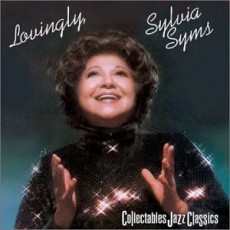
Sylvia Syms was born Sylvia Blagman on December 2, 1917 in Brooklyn, New York. As a child she contracted polio but overcame it and by the time she was a teenager she was hanging in the infamous jazz haunts on 52nd Street. She received informal training from Billie Holiday and in 1941 she made her debut at Kelly’s Stable.
In 1948, performing at the Cinderella Club in Greenwich Village she was seen by Mae West, who gave her a part in a show she was doing. Among others who observed her in nightclubs was Frank Sinatra who considered her the “world’s greatest saloon singer.” Sinatra subsequently conducted her 1982 album, Syms by Sinatra.
Signing a redocrd deal with Decca Records in 1956, Sylvia had her major success with a recording of I Could Have Danced All Night selling over a million copies garnering a gold disc. She would appear regularly at the Carlyle in Manhattan, at times, impromptu, while enjoying a cocktail in the bar of the Carlyle, she would walk on stage and perform with the cabaret’s other regular, Bobby Short.
She had a lung removed in 1972, despite which, she shortly thereafter performed as a well received Bloody Mary in South Pacific for several months at the Chateau de Ville Dinner. Vocalist Sylvia Syms, who recorded seventeen albums, appeared in six films and guested on The Tonight Show, Merv Griffin, Dinah Shore, Mike Douglas, Dick Cavett, Playboy’s Penthouse, and American Masters, passed away of a heart attack while on stage at the Oak Room in the Algonquin Hotel in New York City at age 74 on May 10, 1992.
Give The Gift Of Knowledge
More Posts: vocal
Daily Dose Of Jazz…
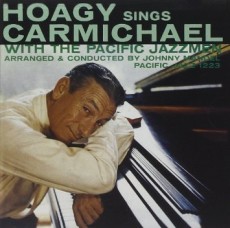
Hoagy Carmichael was born Howard Hoagland Carmichael on November 22, 1899 in Bloomington, Indiana. He was named Hoagland after a circus troupe “The Hoaglands” who stayed at the Carmichael house during his mother’s pregnancy. His mother was a versatile pianist who played accompaniment at silent movies and for parties and by age six, he started to sing and play the piano, easily absorbing his mother’s keyboard skills.
Never having formal piano lessons by high school, the piano was the focus of his after-school life, and for inspiration he would listen to ragtime pianists Hank Wells and Hube Hanna. By eighteen he was living in Indianapolis, working in manual jobs in construction, a bicycle chain factory, and a slaughterhouse to help out the family’s income. During this period he befriended the Black bandleader and jazz pianist Reg DuValle, the elder statesman of Indiana and Rhythm King, who taught his jazz improvisation.
Carmichael went on to attend Indiana University and Indiana University School of Law graduating with a bachelor degree and law degree, respectively. He played with Bix Beiderbecke who introduced him to future collaborator, Louis Armstrong.
He began to compose song like Washboard Blues, Boneyard Shuffle and Riverboat Shuffle. In 1927 Hoagy composed and recorded Stardust, one of his most famous songs. His first major song with his own lyrics was Rockin’ Chair recorded by Armstrong and Mildred Bailey. He recorded it himself in 1930 with Beiderbecke, Bubber Miley, Benny Goodman, Tommy Dorsey, Bud Freeman, Eddie Lang, Joe Venuti and Gene Krupa.
He would go on to team up with Johnny Mercer and Frank Loesser, composing Georgia On My Mind, Up A Lazy River, In The Still Of The Night, Skylark, I Get Along Without You Very Well, The Nearness Of You and Baltimore Oriole among some many other jazz standards.
With his financial and social condition improved dramatically he began hobnobbing with George Gershwin, Fred Astaire, Duke Ellington and other music giants in the New York scene. He appeared in fourteen films, always performing one of his songs, appeared in numerous television roles, hosted musical variety radio and television programs, received Academy Awards for Best Original Song, was awarded an honorary doctorate in music by Indiana University, inducted into the Gennett Records Walk of Fame, recorded with Annie Ross and Georgie Fame, and penned two autobiographies.
Composer, pianist, singer, songwriter and actor, Hoagy Carmichael, passed away of heart failure in Rancho Mirage, California on December 27, 1981.
Jazz Is Global – Share
Daily Dose Of Jazz…
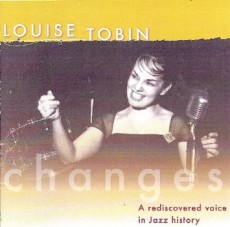
Born Mary Louise Tobin on November 14, 1918 in Aubrey, Texas and at age fourteen in 1932 she won a CBS Radio Talent Contest. Following a tour with society dance orchestras in Texas, she joined Art Hicks and his Orchestra in 1934. At that time, Harry James was playing first trumpet in the band and a year later she and James were married.
Tobin brought Frank Sinatra to James’ attention in 1939 after hearing him sing on the radio. James subsequently signed Sinatra to a one-year contract at $75 a week. While she was singing with trumpeter Bobby Hackett at Nick’s in the Village, jazz critic and producer John Hammond heard her and brought Benny Goodman to a performance and soon joined the Goodman band.
Louise went on to record There’ll Be Some Changes Made, Scatterbrain, Comes Love, Love Never Went To College, What’s New? and Blue Orchids. Johnny Mercer wrote Louise Tobin Blues for her while she was with Goodman and was arranged by Fletcher Henderson. In 1940 Tobin recorded Deed I Do and Don’t Let It Get You Down with Will Bradley and His Orchestra.
By 1945 Tobin was recording with Tommy Jones and His Orchestra, Emil Coleman and His Orchestra and through the decade performed and recorded with Skippy Anderson’s Band at the Melodee Club in Los Angeles, and with Ziggy Elman and His Orchestra.
Taking a long hiatus to raise her children, Louise came back in 1962 at the Newport Jazz Festival, met second husband Peanuts Hucko, acquired a regular gig at Blues Alley on Washington, DC and moved to Denver, Colorado and opened the Navarre Club as co-owners. They would go on to lead and sing with the Glenn Miller Orchestra, touring worldwide with Louise singing and recording various numbers with the band.
In 2008 Tobin donated her extensive collection of original musical arrangements, press clippings, programs, recordings, playbills and photographs to create the Tobin-Hucko Jazz Collection at Texas A&M University-Commerce.
Give A Gift Of Jazz – Share
More Posts: vocal