

Jazz Poems
POEM IN WHICH I MAKE THE MISTAKE
OF COMPARING BILLIE HOLIDAY TO A
COSMIC WASHERWOMAN
We were driving back from the record store at the mall
when Terrance told me that Billie Holiday
was not a symbol for the black soul.
He said, The night is not African American either for
your information,
it is just goddamn dark,
and in the background
she was singing a song I never heard before
moving her voice like water moving
along the shore of a lake
reaching gently into the crevices, touching the pebbles
and sand.
Once through the dirty window of a train
on the outskirts of Hoboken, New Jersey,
I swear I saw a sonnet written high up in a
concrete wall,
rhymed quatrains rising from the
dyslexic alphabet of gang signs and obscenities
and Terrance said he saw a fresco
of brown and white angels flying
on a boarded-up building in Chinatown
and everybody knows
there’s a teenager genius somewhere out there,
a firebrand out of Ghana by way of Alabama,
this very minute in a warehouse loft,
rewriting Moby-Dick-The Story of the Great
Black Whale
When he burst out of the womb
of his American youth
with his dictionary and his hip-hop shovel,
when he takes his place on stage
dripping the amniotic fluid of history,
he won’t be any color we ever saw before,
and I know he’s right, Terrance is right, it’s
so obvious
But here in the past of that future,
Billie Holiday is still singing
a song so dark and slow
it seems bigger than her, it sounds very heavy
like a terrible stain soaked into the sheets,
so deep that nothing will ever get it out,
but she keeps trying,
she keeps pushing the dark syllables under the water
then pulling them up to see if they are clean
but they never are
and it makes her sad
and we are too
and it’s dark around the car and inside also is very
dark
Terrance and I can barely see each other
in the dashboard glow.
I can only imagine him right now
pointing at the radio
as if to say, Shut up and listen.
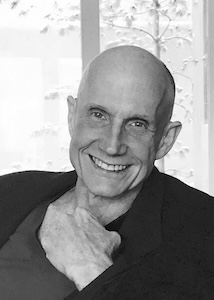
TONY HOAGLAND | 1953~2018
from Jazz Poems ~ Selected and Edited by Kevin Young

More Posts: book,classic,collectible,history,jazz,library,poet

Daily Dose Of Jazz…
Denys Justin Wright, known professionally as Denny Wright, was born on May 6, 1924 in Deptford, London, England. He grew up in Brockley with frequent forays to the Old Kent Road and the Elephant and Castle. His first instrument was the piano. His older brother was a semi-professional guitarist and soon he was trying to play his brother’s guitar. He began playing professionally before the Second World War, while at school.
A session musician for many years, he frequently acted as arranger and fixer for recording sessions. As a prolific jazz and orchestra composer Wright led many bands, from small ensembles and night club bands to orchestras. He worked with Latin American and Jamaican bands, Afro-Cubists and the Decca Records house band.
In the Forties Wright played in jazz clubs in the West End of London, doing session work, performed in bands on radio shows, and medically unfit to serve due to a childhood injury, he entertained the troops. In 1945 he started the first bebop club in London.
He went on to form several bands, tour the Soviet Union, and continued his work as a session musician, producing Tribute To The Hot Club as The Cooper-Wright Quintet. Denny gave private lessons and at London comprehensive schools, and he lectured at the Royal College of Music on the life of a session musician.
During his career he worked with Stéphane Grappelli, Lonnie Donegan, Johnny Duncan, Digby Fairweather, Ella Fitzgerald, Ken Snakehips Johnson, Billy Eckstine, Fapy Lafertin, Russ Conway, Biréli Lagrène, Humphrey Lyttelton, Marie Bryant, Nigel Kennedy, and George Shearing.
Guitarist and pianist Denny Wright, who was voted the 1980 BBC Jazz Society Musician of the Year, died on February 8, 1992.
More Posts: bandleader,guita,history,instrumental,jazz,music,piano
Daily Dose Of Jazz…
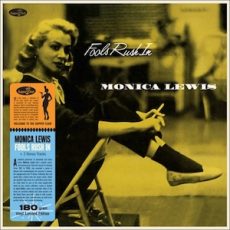
Monica Lewis was born May Lewis in Chicago, Illinois on May 5, 1922, the youngest of three children. Her father was a pianist, composer and musical director for CBS, while her mother was a singer with the Chicago Opera Company. She studied voice with her mother and when she was eleven the family moved to New York City due to The Great Depression.
She began singing on radio after a successful audition with WMCA in New York City, which led to her own program. At age seventeen she started working as a singer for a radio show titled Gloom Dodgers in order to support her family while studying at Hunter College. Shortly afterwards Lewis had a radio show titled Monica Makes Music and went on to co-star on The Chesterfield Supper Club radio show.
Winning a part as a singing cigarette girl in the Broadway show Johnny 2X4, her work on Broadway led to performing at the Stork Club. She dropped out of school, changed her name from May to Monica because she thought it was sexier. In 1943 at an audition in Times Square with hundreds of women participating, she earned the part as a singer.
She started singing on Hotel Astor’s roof with Goodman’s orchestra and established her career through nationally broadcast shows. Lewis went on to record for Signature Records, MGM Records, Decca Records, Capitol Records, and Verve Records.
She went on to sing in commercials, became the voice of Miss Chiquita Banana, and appeared on the Toast of the Town which would become the Ed Sullivan Show. It was created and produced by her brother Marlo Lewis.
By 1950 she was signed to a contract with MGM and movies were added to her trades. Over the next three decades she appeared in romantic comedies and disaster films along with television action, crime and western series. Resuming her singing career in the 1980’s and 1990s, she performed at popular clubs in Los Angeles and New York City.
Vocalist Monica Lewis died ten days after an interview with The New Yorker, on June 12, 2015. The article was posthumously published in the September 7, 2015 edition.
More Posts: bandleader,history,instrumental,jazz,music,vocal
Requisites
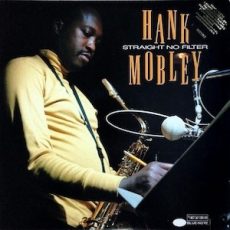
Straight No Filter ~ Hank Mobley | By Eddie Carter 5.4.25
This morning’s album from the library is one of my favorites by tenor man Hank Mobley. Straight No Filter (BlueNote BST 84435) is a 1986 release of previously unreleased tracks culled from three sessions in 1963, 1965, and 1966. Hank composed all the tracks on this album. He’s joined by Donald Byrd (track: B3), Freddie Hubbard (B1,B2), and Lee Morgan (A1 to A3) on trumpet, Herbie Hancock (B3), Barry Harris (B1, B2), and McCoy Tyner (A1 to A3), Paul Chambers (B1, B2), Bob Cranshaw (A1 to A3), and Butch Warren (B3) on bass, Billy Higgins (A1 to B2), and Philly Joe Jones (B3) on drums. My copy is the U.S. Direct Metal Mastering stereo release.
The title track, Straight No Filter, kicks off the album with the rhythm section’s lively introduction to the ensemble’s melody. Hank launches into the opening statement. Lee maintains the spirited groove in the following solo, and then McCoy takes the energy to a new level. Hank and Lee exchange a few choruses, leading back to the theme and climax. Chain Reaction starts swiftly from the trio’s introduction into the front line’s uptempo theme. Tyner leads the way with an infectiously energetic solo. Morgan swings into the second solo with considerable zest and a bright tone, then Mobley soars briskly through the finale into the theme’s restatement and a slow fade.
Soft Impressions opens with the rhythm section setting a soothing mood for the quintet’s theme. Hank establishes a smooth and easy groove in the opening statement. Lee adds to the relaxing atmosphere in the second interpretation, and then McCoy’s closing solo is as refreshing as an oasis in the desert until the theme’s reprise and climax. Third Time Around begins the second side with Chambers’s introduction ahead of the group’s medium melody. Mobley gets right down to business in the lead solo, then Hubbard provides a beautifully executed statement. Harris provides a pleasantly relaxing reading next, and Chambers walks with a bluesy bounce before the closing ensemble exits.
Hank’s Waltz is a catchy blues that Barry introduces ahead of the ensemble’s entrance. Hank breaks the ice with an infectious swing, then Lee adds a spicy touch in the second solo. Barry further elevates the mood in the final statement, before the theme is revisited and the rhythm section gently fades out. The group serves up a delicious plate of Syrup and Biscuits for the album’s finale. After the engaging theme is established, Mobley fires up the joyful energy in the opening solo. Byrd maintains a cheerful vibe in the following performance. Both horns engage in a vibrant exchange preceding the closing chorus.
Alfred Lion produced the original sessions, and Michael Cuscuna produced this release. Rudy Van Gelder was behind the dials on each date. The album boasts an excellent soundstage, transporting the musicians to the sweet spot in your listening room. Mobley was one of the best tenor men in jazz, with an outstanding discography as both leader and sideman. If you enjoy hard bop, consider adding Straight No Filter by Hank Mobley to your list on your next vinyl hunt. It’s a delightful surprise featuring some excellent playing by Hank and his bandmates across three stellar sessions, making it a highly recommended addition to any jazz library!
© 2025 by Edward Thomas Carter

More Posts: choice,classic,collectible,collector,history,instrumental,jazz,music,saxophone
Daily Dose Of Jazz…
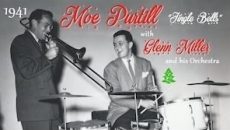
Maurice “Moe” Purtill was born May 4, 1916 in Huntington, New York and] dropped out of high school to start his career as a freelance drummer in New York Studios. At the age of 20 at the outset of 1936 he became a member of the Red Norvo band.
Later he joined Mildred Bailey, played briefly with Glenn Miller in 1937, then worked with Tommy Dorsey in 1938 for a year before picking up with Miller again from 1939 to 1942, when Miller had the bulk of his hits. After Miller’s band broke up in 1942, Moe played with Kay Kyser until 1944, then joined the U.S. Navy. After his discharge, he played briefly in 1946 with the reformed Glenn Miller Orchestra directed by Tex Beneke.
Purtill went on to record in the studio on various projects and participated in a few Miller reunions. He was good friends with Buddy Rich, Trigger Alpert and saxophonist Jack Palmer. He lived in New York City until the early 1970s, retired in 1978 and moved to Sarasota, Florida.
Drummer Moe Purtill died at Valley Hospital in Ridgewood, New Jersey on March 9, 1994.
More Posts: drums,history,instrumental,jazz,music