

Daily Dose Of Jazz…
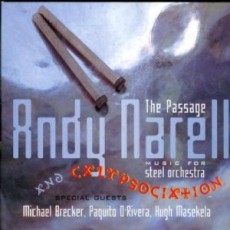
Andy Narell was born March 18, 1954 in New York City and took up the steelpan at a very young age after his father invited Ellie Mannette to bring steel pan to Queens, New York in an attempt to get kids off the street and out of gangs.
Moving with his family to California in his teens he eventually studied music at the University of California, Berkeley. He played piano with UC Jazz Ensembles and graduated in 1973. In the 1980s he worked in the project Bebop & Beyond, recording tribute albums to Dizzy Gillespie and Thelonious Monk. He has performed with the Caribbean Jazz Project, Montreux, Sakésho, and Bela Fleck and the Flecktones.
A composer and arranger Andy has created music for Trinidad’s national steelband competition Panorama, and has also performed in South Africa. He has performed and recorded with Spyro Gyra, Taj Mahal, Toto and Mike Marshall and has recorded more than two dozen albums for Windham Hill, Inner City and Heads Up record labels. Steel panist Andy Narell continues to compose, arrange, perform and tour.
More Posts: steel drums
Daily Dose Of Jazz…
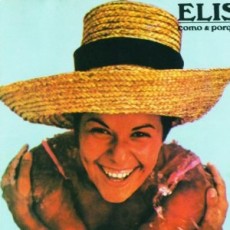
Elis Regina was born Elis Regina Carvalho Costa in Porto Alegre, Sao Paulo Brasil on March 17, 1945. She began her career as a singer at age 11 on a children’s radio show, O Clube Do Guri on Rádio Farroupilha. In 1959, Rádio Gaúcha contracted her and the next year she travelled to Rio de Janeiro where she recorded her first LP, Viva a Brotolândia (Long Live Teenage Land).
Following this debut she won her first festival song contest in 1965 singing Arrastão that launched her solo career. Recording her sophomore project Dois na Bossa, that became the first album to sell over a million copies, is considered the beginning of the new musical style MPB, Musica Popular Brasileira.
In the late 1960s and early 1970s, along with Gal Costa, Caetano Veloso and Gilberto Gil, she helped to popularize the work of the tropicalismo movement. Her 1974 collaboration with Antonio Carlos Jobim, Elis & Tom, has been cited as one of the greatest bossa nova albums of all time. Her earlier records were mostly apolitical but from the mid-’70s on, her music became more engaged, and she began to choose compositions and structure her conceptually complex live shows in ways as to criticize the military government, capitalism, racial and sexual injustice and other forms of inequality.
Her death from a cocaine, alcohol and temazepan interaction on January 19, 1982 at the age of 36 shocked Brazil. Elis Regina, singer of MPB, samba, jazz, bossa nova, rock and pop, is widely regarded as the best Brazilian singer of all times by many critics, musicians, and commentators.
More Posts: vocal

Daily Dose Of Jazz…
Leon Joseph Roppolo was born on March 16, 1902 in Lutcher, Louisiana but by age ten was living in New Orleans. Young Leon’s first instrument was the violin, but being a fan of the New Orleans marching bands he wanted to play clarinet. Soon excelling on clarinet, he played youthful jobs for parades, parties and at Milneburg on the shores of Lake Pontchartrain. By his teens he left home with Bee Palmer’s group that evolved into the New Orleans Rhythm Kings, that become one of the hot jazz bands in 1920s Chicago along with King Oliver’s band. Leon’s style influenced many younger Chicago musicians, most famously Benny Goodman.
Following the breakup of the Rhythm Kings he went to New York City jazz scene and recorded with the Original Memphis Five and the California Ramblers. Returning to New Orleans he briefly reformed the Rhythm Kings, made a few recordings but primarily worked with other bands like the Halfway House Orchestra, with whom he recorded on saxophone.
Roppolo soon began exhibiting more eccentric behavior and violent temper outbursts. Too much for his family to take, Leon was committed to the state mental hospital. Aging and feeble far beyond his years in his later life, he would come home for periods when a relative or friend could look after him, and he would sit in with local bands on saxophone or clarinet.
Leon Roppolo, nicknamed “Rap” and who played clarinet, saxophone and guitar, passed away in New Orleans at the age of 41 on October 5, 1943. He left for posterity such compositions as Farewell Blues, Gold Leaf Strut and Make Love To Me, the latter recorded by Jo Stafford in 1954 and that hit No. 1 on the Billboard charts and #2 on Cashbox.
Requisites
After The Morning ~ John Hicks | By Eddie Carter
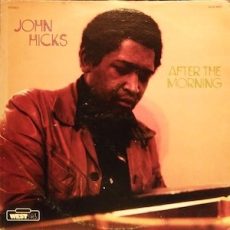
Feeling exhausted after a long week, I sought an album that offered a gentle, soothing escape. I went to the turntable, and put on After The Morning (West 54 WLW 8004) by John Hicks, and playing it was like a thoughtful act of self-kindness, gently easing my tension. Hicks’ piano work is both delicate and confident, creating a sense of tranquility reminiscent of a fresh morning. This album marks his third session as a band leader, but it was his first release. Joining him are Walter Booker, Jr. on bass (tracks: A1, A3, B1, B3), and Clifford Barbaro on drums (track: B1). The copy I own is the 1979 U.S. stereo release.
Side One opens with the title tune, After The Morning, by John Hicks. John is merry and playful as the melody is skillfully presented, and he continues swinging softly through the song’s only solo. Walter provides excellent support throughout, leaving the listener spellbound as the duo’s theme reprise gently closes. Serenata by Leroy Anderson and Avery Parrish provides Hicks with an unrestricted canvas in which to work in a solo performance. The song opens with a tranquil introduction and theme, then transitions into a breezy solo that captivates the listener, culminating in an exquisite ending.
Dierdre de Samba by Clifford Barbaro is a beautiful ballad that begins with a short introduction from the duo and unfolds into a lush, rich melody. John shines again as the song’s only soloist, playing with elegance and sensitivity ahead of a gorgeous reprise and a peaceful climax. Some Other Spring by Arthur Herzog, Jr. and Irene Kitchings is Hicks’ second solo performance, and a song he associated with the early morning of the day. Here, he delivers a delicately passionate and tender performance, and every note and phrase weaves a haunting spell ahead of the pianist’s return to take the song out softly.
The Duke by Dave Brubeck is a tribute to Duke Ellington, and John’s final solo performance of the first side. His introduction and melody feel like the calm of a new morning, showcasing his virtuosity in one of the album’s most beautiful moments. Impact by Charles Tolliver is the trio’s only appearance together and is the most adventurous song on the album. The cascading introduction rolls in like a severe, sudden thunderstorm, before Hicks takes charge of the theme ahead of a sizzling interpretation propelled by Booker’s bass and Barbaro’s brushwork, preceding a quick return to end on a sudden stop.
Until The Morning by John Hicks opens with a very pretty introduction that blossoms into a beautifully flowing theme of refined elegance. As the song’s only soloist, he offers an interpretation that’s both carefully crafted and deeply expressive, culminating in a touchingly delicate finale. Night Journey by Andrew “Tex” Allen wraps up the album with a delightful introduction by John and Walter into a vivacious theme. As the song’s only soloist, his tone is as airy as ever, and he explores several points of interest as the interpretation unfolds before the duo reprises the theme and brings the song to a graceful conclusion.
Roger Pola produced After The Morning, and Bob Cubbage was the recording engineer behind the dials. The album’s sound quality is excellent, with an outstanding soundstage. Your sweet spot will feel like you’re in the studio with the musicians as they’re recording. John Hicks recorded over 30 albums as a leader and contributed as a sideman to more than 300 releases. If you’re a fan of jazz piano and looking for something soothing, I offer After The Morning by John Hicks for your consideration on your next record-shopping trip. It’s a perfect album to begin your journey into his music, and after a tough day or week, a terrific companion to help you unwind and catch your breath!
© 2026 by Edward Thomas Carter

More Posts: choice,classic,collectible,collector,history,instrumental,jazz,music,piano
Daily Dose Of Jazz…
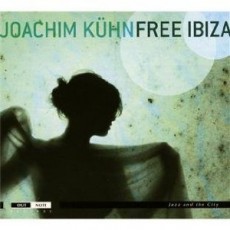
Joachim Kühn was born March 15, 1944 in Leipzig, Germany. He was a musical prodigy and made his debut as a concert pianist, having studied classical piano and composition. Influenced by his elder brother, clarinetist Rolf Kühn, he simultaneously got interested in jazz and in 1961 he became a professional jazz musician.
He put together a trio in 1964 and presented the first free jazz in East Germany. In 1966 he left the country and settled in Hamburg and together with his brother played the Newport Jazz Festival and recorded with Jimmy Garrison on the Impulse Record label.
Kühn moved to Paris in 1968 and has since worked with Don Cherry, Karl Berger, Slide Hampton, Phil Woods and Jean-Luc Ponty among others. As a member of Association P.C. he turned to electronic keyboards and during the second half of the 70’s he lived in California and joined the West Coast fusion scene. This period saw him recording with Alphonse Mouzon, Billy Cobham, Michael Brecker and Eddie Gomez.
Returning to Europe and settled near Paris again, he has played in an acoustic trio with Jean-Francois Jenny-Clark and Daniel Humair since 1985. In the summer of 1996, he joined Ornette Coleman for two concerts at the Verona and Leipzig festivals, which opened the way for his Diminished Augmented System. He continues to perform and record.
More Posts: piano