

Daily Dose Of Jazz…
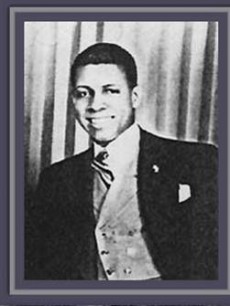
Hayes Pillars was born on April 30, 1906 in North Little Rock, Arkansas and began playing tenor saxophone as a teenager. Playing locally around Little Rock and Jackson, Tennessee initially, Hayes joined the territory band of Alphonse Trent in 1927. A year later he was back freelancing until he united with his boyhood friend James Jeter and organized the Jeter-Pillars Orchestra in Cleveland, Ohio.
Pillars secured a six-week engagement in 1934 at the Club Plantation in St. Louis, becoming so popular that they stayed for eleven years. The band was so influential that some of its players who held tenure were Walter Page, Sid Catlett, Jo Jones, Kenny Clarke, Jimmy Forrest, Charlie Christian, Jimmy Blanton and an 18 year old Harry “Sweets” Edison, who all went on to make names for themselves.
The orchestra would play New York and Chicago prior to Pillars leaving the orchestra. He then became a mainstay on the St. Louis scene for nearly three decades from the 1950s till his retirement in the Eighties. He was honored for his contributions to jazz by the Institute for Jazz Studies at Rutgers University and the Smithsonian Institute in 1981.
Tenor saxophonist and bandleader Hayes Pillars passed away on August 11, 1992 in Richmond Heights, Missouri.
More Posts: saxophone
Daily Dose Of Jazz…
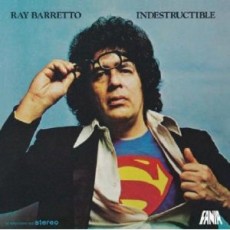
Ray Barretto was born on April 29, 1929 in New York City of Puerto Rican descent. Raised in Spanish Harlem he was influenced by his mother’s love of music and the jazz of Duke Ellington and Count Basie. At 17 he was in the Army, met Belgium vibist Fats Sadi and realized his true calling when hearing Chano Pozo and Dizzy Gillespie play Manteca.
After his return in 1949 Barretto started joining in on jam sessions perfecting his conga style, played with Charlie Parker, Jose Curbelo and Tito Puente, with whom he would play for four years. He was soon sought by other jazz bandleaders and as a result of Ray’s musical influence, Latin percussionists started to appear in jazz groups.
By 1960, Barretto was a house musician for the Prestige, Blue Note, and Riverside labels. He also recorded on Columbia Records with jazz flautist Herbie Mann. New York had become the center of Latin music in the U.S. from which “pachanga” arose as the Latin music craze of the time. In 1961, Barretto recorded his first hit, “El Watusi” that became the first Latin song to enter the Billboard charts. He would go on to record 41 records as a leader, 11 with the groups Guarare and New World Spirit and seven as a sideman working with Dizzy Gillespie, Yusef Lateef, Herbie Mann, Celia Cruz, Red Garland and Kenny Burrell.
Ray became musical director of Fania All Stars, played with the Rolling Stones, and Bee Gees, was nominated for three Grammys, won one for Ritmo en el Corazon was crowned Conga Player of the Year in 1980 and inducted into the International Music Hall Of Fame. On February 17, 2006 conguero and percussionist Ray Barretto passed away from heart failure.
More Posts: percussion
Daily Dose Of Jazz…
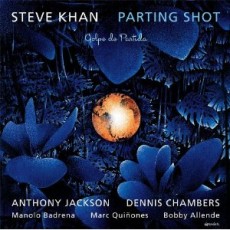
Steve Khan was born April 28, 1947 in Los Angeles, California to lyricist Sammy Cahn. As a teenager he was a terrible drummer but grew a love for guitar and switched at around age 19. He would go on to matriculate through U.C.L.A. and move to New York, performing one of his first guitar duos with Larry Coryell in 1974.
During the 80s he was a member of the group Elements. Khan has worked with Jack DeJohnette, Maynard Ferguson, Billy Cobham, Hubert Laws, Steely Dan, Billy Joel, Michael Franks and Weather Report on his short list.
He toured with the CBS Jazz All Stars in Japan, led a band called Eyewitness, authored five jazz books, was nominated for a Grammy in the Best Latin Jazz Album category for his album “Borrowed Time” and recorded over thirty albums as a leader and sideman for such labels as Concord, Arista, Columbia, Flying Dutchman and Novus to name a few. He continues to perform, record and tour.
More Posts: guitar
Daily Dose Of Jazz…
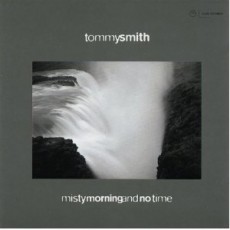
Tommy Smith was born April 27, 1967 in Edinburgh, Scotland and grew up in Wester Hailes. Encouraged to lean the tenor saxophone from age 12, by sixteen he had a scholarship to Berklee College of Music. While at Berklee he formed his first group ”Forward Motion” with Laszlo Gardony, Ian Froman and Tene Gewelt and joined Gary Burton’s group.
During his tenure with Burton at age eighteen he toured and recorded “Whiz Kids”, worked in jazz groups and big bands, and has recorded and toured with world-renowned jazz musicians including Joe Lovano, David Liebman, Benny Golson, Joe Locke, Chick Corea, Tommy Flanagan, John Scofield, Joanne Brackeen, Jack DeJohnette and Kenny Wheeler to name a few.
He has recorded twenty-three albums as a leader Hep, GFM, Linn, Blue Note and his own record label Spartacus and since the late-1980s and the musical director and driving force behind the Scottish National Jazz Orchestra and his own Youth Jazz Orchestra.
He has composed for and performed with classical orchestras and ensembles including the Orchestra of St. John’s Square, the Scottish Ensemble, the Edinburgh Youth Orchestra, BBC Symphony Orchestra and the Scottish National Jazz Orchestra. His work in jazz education has him presenting master classes all over the world, teaching at Broughton High School, Napier University and created the curriculum for the National Jazz institute and is Artistic Director of a new conservatoire-level course in jazz at the Royal Scottish Academy of Music and Drama. He continues to perform, record and tour.
More Posts: saxophone
Requisites
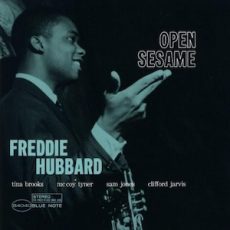
Open Sesame ~ Freddie Hubbard | By Eddie Carter
I’ve been a huge Freddie Hubbard fan since I was ten years old, and he’s always been one of my favorite trumpet players. It was while listening to a few of his albums that the inspiration for this morning’s discussion was born. Submitted for your consideration is his first release as a leader, a 1960 release, Open Sesame (Blue Note BLP4040/BST 84040). Freddie was 22 years old when he recorded it, and he’s joined by an excellent ensemble: Tina Brooks on tenor saxophone, McCoy Tyner on piano, Sam Jones on bass, and Clifford Jarvis on drums. The copy I own is the 1999 Classic Records U.S. stereo audiophile reissue sharing the original catalog number.
The title tune, Open Sesame by Tina Brooks, gets the first side off to a good start with the rhythm section’s intro to the quintet’s lively theme. Freddie launches into the first solo with vigorous zest. Tina follows him into the second statement enthusiastically, then McCoy explores the third reading at a consistently high level before the group reassembles for the closing chorus and ending. But Beautiful by Jimmy Van Heusen and Johnny Burke is a pretty ballad whose gentle melody begins with Freddie leading the group. Brooks starts the first solo gracefully, then Tyner continues with a wonderfully rich interpretation. Hubbard shares the song’s final elegant reflection, leading to the ensemble’s reprise and tender close.
Gypsy Blue by Tina Brooks is a medium blues that the quintet brings to life with an easygoing melody. Tina starts the opening solo at an unhurried pace, then Freddie takes over, giving a soulful interpretation. McCoy follows, feeding fresh ideas into the third statement, and Sam takes a carefree walk toward the ensemble’s restatement of the theme and fadeout. Tyner’s introduction sets the stage for the group’s speedy melody of All or Nothing at All by Arthur Altman and Jack Lawrence. Hubbard flies swiftly out of the gate first, then Brooks swings to perfection next. Tyner follows with a spirited statement, and Hubbard and Jarvis share a short exchange preceding the group’s return to the theme.
The trio’s bluesy introduction segues to the ensemble’s relaxed theme, One Mint Julep by Rudolph Toombs. Tina opens with a laid-back swing as comfortable as a favorite outfit. Freddie follows, demonstrating great poise and precision in every note. McCoy then steps into the spotlight for a few easy, flowing lines before the theme returns and the song fades out. The closer is a toe-tapper original by Freddie Hubbard, Hub’s Nub. After the sextet establishes the theme, Freddie takes the lead and constructs a joyous interpretation. Tina is right on his heels with a sprightly statement, and McCoy gets the last word before the theme’s reprise and fadeout.
The original session was produced by Alfred Lion, with Rudy Van Gelder at the controls. The Classic Records audiophile edition was expertly remastered by Bernie Grundman, delivering exceptional audio quality and an outstanding soundstage that places the musicians right in your listening room. Pressed on 180-gram vinyl, the record is perfectly quiet until the music fills the room. Fans of Freddie Hubbard’s Blue Note releases will find this album essential for their library. Open Sesame is a remarkable showcase of musicianship, and this album marks the beginning of a remarkable career. It’s also a title I’m proud to own and wholeheartedly recommend for your shelves!
~ But Beautiful – Source: JazzStandards.com ~ All or Nothing at All – Source: Wikipedia.org © 2026 by Edward Thomas Carter

More Posts: choice,classic,collectible,collector,history,instrumental,jazz,music,trumpet