

Daily Dose Of Jazz…
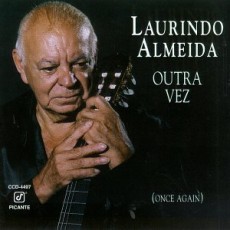
Laurindo Almeida was born Laurindo Jose de Araujo Almeida Nobrega Neto was born in the village of Prainha, Brazil on September 2, 1917. A self-taught guitarist, during his teenage years, he moved to São Paulo, worked as a radio artist, staff arranger and nightclub performer. At 19, he worked his way to Europe playing guitar in a cruise ship orchestra. While in Paris, he attended a performance at the Hot Club by Stephane Grappelli and Django Reinhardt, who became a lifelong artistic inspiration.
Returning to Brazil, Laurindo composed, performed and became known for playing classical Spanish and popular guitar. He moved to the United States in 1947 when one of his songs “Johnny Peddler” became a hit record by the Andrews Sisters. Once in Los Angeles, Almeida immediately went to work in film studio orchestras.
Almeida was first introduced to the jazz public as a featured guitarist with the Stan Kenton band in the late 1940s during the height of its success. His recording career enjoyed auspicious early success with the 1953 recordings now called Brazilliance No. 1 and No. 2 that was widely regarded as “landmark” recordings. Almeida and Shank’s combination of Brazilian and jazz rhythms in which Almeida coined the term “samba-jazz” and he recorded Sammy Davis Jr. Sings and Laurindo Almeida Plays in 1966. He would go on to have a classical solo recording career with Capitol Records beginning in 1954, winning a Grammy at the first awards ceremony.
Almeida won five career Grammys, toured, recorded and performed with the Modern Jazz Quartet, Charlie Byrd, Baden Powell, Stan Getz, Herbie Mann, Larry Coryell, Ray Brown, Shelly Manne and Jeff Hamilton to name a few. In addition he performed on more than 800 motion picture and television soundtracks such as The High Chaparral, Peter Gunn, Funny Girl, The Godfather and Unforgiven. He has been inducted into Fanfare’s Classical Recording Hall of Fame, received the Latin American & Caribbean Cultural Society Award and was awarded the “Comendador da Ordem do Rio Branco” by the Brazilian government.
Guitarist, composer and educator Laurindo Almeida was taught, recorded and performed until the week before passing away from leukemia on July 26, 1995 at age 77 in Van Nuys, California.
More Posts: guitar
Daily Dose Of Jazz…
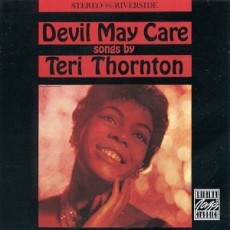
Teri Thornton was born Shirley Enid Avery on September 1, 1934 in Detroit, Michigan. Encouraged by her mother to study classical music, as a teenager she turned to jazz, singing and playing piano. Thornton first performed in local Detroit clubs in the 1950s but her debut as a professional took place at the Ebony Club in Cleveland, Ohio. She moved to Chicago, Illinois and worked with Cannonball Adderley and Johnny Griffin Her debut release of “Devil May Care ” in 1961 for Riverside brought her national attention, with and a subsequent move to New York City where she established herself on the jazz and club scene. She would go on to work with Duke Ellington and Clark Terry.
Scoring her biggest hit with the theme to the television show Naked City “Somewhere in the Night ” in 1963, she would next appear on the Ed Sullivan Show, get a recording contract from Columbia Records and receive a personal stamp of approval from Ella Fitzgerald as her favorite singer. Thornton also found work during this period singing for television ads and recording for several different labels.
By the late Sixties, Teri faded from public view, due to poor managers, alcohol, drugs and her unfailing dedication to taking care of her children. She moved to Los Angeles and it wasn’t until 1979 that she reemerged singing in small piano bars. It was decades later that she was discovered to have been singing on various song poem records in Los Angeles on the Preview label as “Teri Summers.”
Teri moved back to New York in 1983 and once again started performing on the club circuit. In 1998 she fully revived her career after a surprise win at the Thelonious Monk Institute of Jazz Vocal Competition. Thornton signed with Verve Records, releasing I’ll Be Easy to Find. Fame short-lived however, diagnosed with bladder cancer, jazz vocalist Teri Thornton passed away of the disease on May 2, 2000 in Englewood, New Jersey.
More Posts: vocal

Daily Dose Of Jazz…
Tineke Postma was born on August 31, 1978 in Heereveen, The Netherlands. At the age of eleven she began playing the saxophone and studied at the Amsterdam Conservatory. Graduating the conservatory in 2003, Tineke received a Masters from the Manhattan School of Music in New York and during this period of her education Tineke was taught by David Liebman, Dick Oatts and Chris Potter. She has been teaching at the Amsterdam Conservatory since 2005.
Performing internationally the saxophonist and composer has worked with Esperanza Spaulding, Terri Lyne Carrington and Wayne Shorter; she has received numerous recognitions from Down Beat Poll, won the Dutch Edison Award, the Jazz Juan Revelations Award, the Midem International Jazz Revelation of the Year Award and The Sisters in Jazz All Star Award.
Postma leads the Tineke Postma Quartet and The Tineke Postma International Quartet featuring Geri Allen on piano, Scott Colley on bass and Terri Lyne Carrington on drums. They have played festivals around the globe and recorded five albums under the leaders name. Postma has recorded as a sideman and collaborator and continues to compose, perform and tour.
More Posts: saxophone
Requisites
Doin’ Allright ~ Dexter Gordon | By Eddie Carter
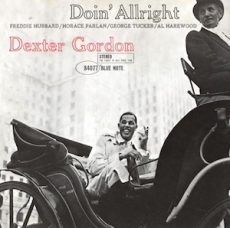
This morning’s discussion came up after dinner a few nights ago, when I chose a few titles to play and considerreviewing for our jazz members. After listening, I’d settled on one of my favorite tenor saxophonists, Dexter Gordon. Doin’ Allright (Blue Note BLP 4077/BST 84077) was released in 1961 and is his Blue Note debut, celebrating his comeback from personal struggles and incarceration. The album showcases Gordon at his very best, backed by Freddie Hubbard on trumpet, Horace Parlan on piano, George Tucker on bass, and Al Harewood on drums. I own the 1992 Toshiba-EMI Japanese Stereo reissue in the Blue Note 4000 Series Ultra Collection, sharing the original catalog number.
The album opens with a classic by George and Ira Gershwin, I Was Doin’ All Right. The quintet gets things going with an easy medium groove on the melody. Dexter makes a relaxed entrance for the first solo, followed by Freddie, who swings smoothly and confidently in the second statement. Horace comes in last, complementing the horns with a laid-back reading before the group returns to reprise the theme and fade out gradually. You’ve Changed by Carl Fischer and Bill Carey slows down to a ballad tempo for an emotionally sensitive melody by Dexter. He continues communicating his heart and soul in the opening statement. Freddie speaks next in a warm, emotional tone, and Horace has a deeply expressive moment before the front line returns and slowly takes the song out.
Dexter’s For Members Only ends the first side with an infectious ensemble theme that gets things started. Dexter goes right to work with a relaxing opening statement. Freddie is next, swinging effortlessly with a bright tone and articulate, precise notes. Horace takes his turn last with a laid-back solo ahead of the ensemble’s restatement of the melody and close. Society Red, a funky blues by Dexter Gordon, gets the second side underway with the quintet’s easy-flowing melody. Freddie puts together the first appetizer of this soulful meal. Dexter then shares a rich, bluesy flavor, simmered to perfection, inviting the listener to savor every note. Horace adds a delightful touch of seasoning, and George adds the final ingredient, wrapping up a musical feast that feels like home ahead of the close.
It’s You or No One by Sammy Cahn and Jule Styne wraps up the album on a brisk note, beginning with Dexter’s introduction before the quintet’s lively theme. Dexter takes center stage first with an energetic solo. Freddie adds some bite with the second statement. Horace follows, delivering exuberant verses with an aggressive impact. George takes a short, robust walk in the fourth reading, and Al brings plenty of heat in the finale preceding the group’s return to take the song out. Alfred Lion produced the session, and Rudy Van Gelder managed the recording console. The album’s sound quality is demonstration-class, with a stunning soundstage that if you close your eyes, you’ll swear the musicians are playing right in front of your sweet spot. The front and back covers are glossy, and the record is absolutely quiet until the music starts.
If you’re in the mood for a terrific hard bop album to enjoy anytime of the day or evening, I highly recommend you check out Doin’ Allright on your next record store visit. It makes a great introduction for jazz newcomers discovering Dexter Gordon, and a title I’m sure will also please seasoned fans. It also proves that the tenor saxophonist was not only back, but definitely Doin’ Allright!
~ I Was Doin’ All Right, You’ve Changed – Source: Wikipedia.org © 2026 by Edward Thomas Carter

More Posts: choice,classic,collectible,collector,history,instrumental,jazz,music,saxophone
Daily Dose Of Jazz…
Jewel Brown was born on August 30, 1937 in Houston, Texas and her first professional performance was at the age of 12 in the Manhattan Club in Galveston, Texas. Before she graduated from Jack Yates High School Lionel Hampton heard her sing and offered the opportunity to tour professionally in Europe.
In 1957 while on a vacation in Los Angeles, California, Jewel sat in with organist Earl Grant at the Club Pigalle and he hired her that night. Their collaboration lasted for a year. She went on to work for nightclub owner Jack Ruby in Dallas, Texas.
In the Sixties she was offered singing positions with Duke Ellington and Louis Armstrong, and she chose the later, appearing with Armstrong in the films, “Louis Armstrong and All Stars” and “Solo”.
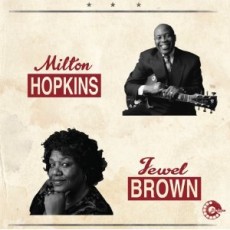
Brown recorded an exuberant solo of “Jerry” and vocal backup and “twist choreography” on “When the Saints” on the 1962 live performance “Jazz Festival, Vol. 1 with ‘Louis Armstrong All Stars”, “With Louis Armstrong: Best Live Concert 1: Jazz In Paris” and also recorded with Milton Hopkins.
She retired in 1971 to care for ailing members of her family, establishing a successful hair salon in Houston. In recent years she has revived her career, singing in the Heritage Hall Jazz Band. Vocalist Jewel Brown’s publicist announced her death from colon cancer on June 26, 2024 at the age of 86.
More Posts: vocal