

Daily Dose Of Jazz…
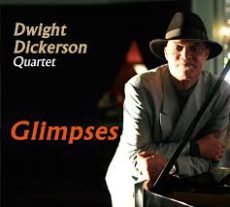
Lowell Dwight Dickerson was born in Los Angeles, California on December 26, 1944 and grew up in the city where his influences were Horace Silver, McCoy Tyner, Kenny Barron, and Bud Powell, among others. He became active on the local jazz scene in the 1960s.
In the early Sevenites he appeared on the Chicago, Illinois tenor titan Gene Ammons’ Free Again album on Prestige, and the latter part of the decade found him being featured on a few LPs by baritone saxophonist Nick Brignola. In the 1980s Dickerson started recording as a leader when he provided his debut album, Sooner or Later, for Discovery. In 1992,
Dickerson recorded Dwight’s Rights which features Red Holloway on tenor sax for the small Night Life label. He has played as a sideman in the 1990s with saxman Rickey Woodard, singer Michael Martin and Albert “Tootie” Heath. The early 2000s saw him featured on singer David Coss’ Simple Life album.
Pianist Dwight Dickerson, who occasionally sings and plays a variety of genres ranging from hard bop, funk and soul jazz, to modal post-bop, continues to perform and record at 80.

More Posts: bandleader,history,instrumental,jazz,keyboard,music,piano
Daily Dose Of Jazz…
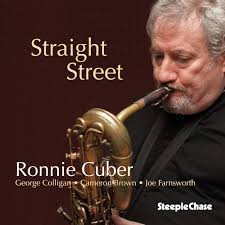
Ronald Edward Cuber was born on December 25, 1941 in Brooklyn, New York. In 1959 he was playing tenor saxophone when he joined Marshall Brown’s Newport Youth Band at eighteen, but switched to the baritone. His first notable work was with Slide Hampton in 1962 and then went with Maynard Ferguson the following year until 1965. George Benson recruited him for a year in ‘66 to 1967.
As a leader he was known for hard bop and Latin jazz, the latter with Eddie Palmieri, As a sideman he played outside the genre with B. B. King, Paul Simon, Eric Clapton, J. Geils Band, and one of his most spirited performances is on Dr. Lonnie Smith’s 1970 Blue Note album Drives. He was also a member of the Saturday Night Live Band.
Ronnie played with Frank Zappa on the live album Zappa in New York, which was recorded in 1976. He went on to gain membership in the Lee Konitz nonet from 1977 to 1979.He was a member of the Mingus Big Band from its inception in the early 1990s until his death. He performed as an off-screen musician for the movie Across the Universe.
Baritone saxophonist Ronnie Cuber, who also played soprano and tenor saxophones, clarinet and flute, died at the age of 80 on October 7, 2022 in his New York’s Upper West Side studio from internal injuries sustained after a fall that could not be treated due to overwhelming Covid patients at the start of the pandemic.
More Posts: bandleader,clarinet,flute,history,instrumental,jazz,music,saxophone
Jazz Poems
ROSE SOLITUDE
For Duke Ellington
I am essence of Rose Solitude
my cheeks are laced with cognac
my hips sealed with five satin nails
i carry dream and romance of new fools and old flames
between the musk of fat
and the side pocket of my mink tongue
Listen to champagne bubble from this solo
Essence of Rose Solitude
veteran from texas tiger from chicago that’s me
i cover the shrine of Duke
who like Satchmo like Nat (King) Cole
will never die because love they say
never dies
I tell you from stair steps of these navy blue nights
these metallic snakes
these flashing fish skins
and the melodious cry of Shango
surrounded by sorrow
by purple velvet tears
by cockhounds limping from crosses
from turtle skinned shoes
from diamond shaped skulls and canes
made from dead gazelles
wearing a face of wilting potato plants
of grey and black scissors
of bee bee shots and fifty red boils
yes the whole world loved him
I tell you from suspenders of two-timing dog odors
from inca frosted lips
nonchalant legs
i tell you from howling chant of sister Erzulie
and the exaggerated hearts of a hundred pretty
women
they loved him
this world sliding from a single flower
into a caravan of heads made into ten thousand
flowers
Ask me
Essence of Rose Solitude
chickadee from arkansas that’s me
i sleep on cotton bones
cotton tails
and mellow myself in empty ballrooms
i’m no fly by night
look at my resume
i walk through the eyes of staring lizards
i throw myneck back to floorshow on bumping goat skins
in front of my stage fright
i cover the hands of Duke who like Satchmo
like Nat (King) Cole will never die
because love they say
never dies
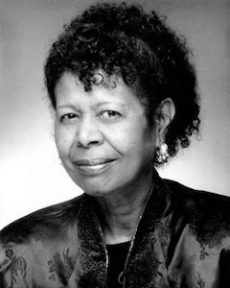
JAYNE CORTEZ
from Jazz Poems ~ Selected and Edited by Kevin Young

More Posts: book,classic,collectible,history,jazz,library,poet
Daily Dose Of Jazz…
Tatsuya Takahashi was born on December 24, 1931 in Tsuruoka, Yamagata, Japan.
In the early 1950s Tatsuya played on US military bases and later in the decade moved to Tokyo, Japan. He worked with Keiichiro Ebihara from 1961, and by 1966 was leading his own ensemble, Tokyo Union, which remained active until 1989.
The 1970s saw him playing at the Monterey and Montreux Jazz Festivals. After leaving Tokyo Union, Takahashi worked in jazz education, and in 1996 founded a new ensemble, Jazz Groovys.
Saxophonist Tatsuya Takahashi died on February 29, 2008 in Tokyo, Japan.
More Posts: bandleader,history,instrumental,jazz,music,saxophone
Daily Dose Of Jazz…
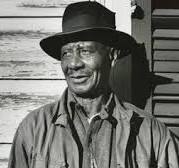
Tom “Kid” Albert was born on December 23, 1877 on a plantation field in Plaquemines Parish, Louisiana.. He later relocated to New Orleans, Lousiana sometime in his early childhood, settling in the Algiers neighborhood. Living in a run-down shack on Saux Lane, an impoverished strip near the Naval station. He initially played the guitar before learning how to play the violin and was taught basic methods for each instrument by Jimmy Palao.
In the 1890s he began working with the bands with violinist Johnny Gould, and with “Big Eye” Louis Nelson Delisle on clarinet. Soon after he mastered the cornet and the violin Albert’s first band in 1908 was his own which included Papa Celestin and Manuel Manetta. In 1920, he founded the Eureka Brass Band and during the earlier years his band played in Algiers with Henry Red Allen Sr. Band.
In his late thirties, Albert moved across the river to the French Quarter and reformed his band, branding it the Kid Albert Band. The band then began performing in several halls around the city, mostly in the Storyville and Treme sections. For a decade the Kid Albert Band played alongside jazz pioneers Louis Armstrong, Kid Thomas Valentine and other small brass bands but never recorded.
In 1949 trumpeter, violinist and bandleader Kid Albert retired from the bands and died on December 12, 1969, at the age of 91.
More Posts: bandleader,cornet,guitar,trumpet