

The Jazz Voyager
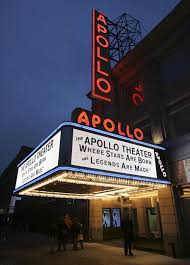
Off to the City That Never Sleeps aka The Big Apple on my way to Harlem and the venue that still represents the standard of the community. It is still called The Apollo. After a fantastic performance in Boston it is good to be back home to experience the delights of the neighborhood.
Critically acclaimed composer and trumpeter Russell Gunn and his Royal Krunk Jazz Orkestra brings to life poet and author Amiri Baraka’s groundbreaking work, Blues People: Negro Music in White America. Special guests include Weedie Braimah, Davell Crawford, Miles Griffith, Craig Harris, Stefon Harris, Jazzmeia Horn, Oliver Lake, Jessica Care Moore, and Leon Timbo.
The building that later became the Apollo Theater was built in 1913 and was designed by architect George Keister. It was originally Hurtig and Seamon’s New (Burlesque) Theater, which enforced a strict “Whites Only” policy. The theater was operated by noted burlesque producers Jules Hurtig and Harry Seamon. They made alterations to the theater that same year and renamed it The Apollo.
In 1924, the Minskys took a long-term lease for burlesque shows, some of which included integrated casts with black performers such as Pigmeat Markham. After New York City mayor Fiorello La Guardia cracked down on burlesque, the theater was purchased in 1933 by Sidney Cohen, who owned other theaters in the area. Lavish renovations were made and it re-opened on January 26, 1934 catering to the Black community of Harlem. On February 14, 1934, the first major star to appear at the Apollo was jazz singer and Broadway star Adelaide Hall in Clarence Robinson’s production Chocolate Soldiers, which featured Sam Wooding’s Orchestra. The show ran for a limited engagement and was highly praised by the press, which helped establish Apollo’s reputation.
The Apollo’s number is 212-531-5300. If you want to get more show information visit https://notoriousjazz.com/event/russell-gunn-the-royal-krunk-jazz-orchestra.

More Posts: adventure,album,club,festival,genius,jazz,museum,music,preserving,restaurant,travel,trumpet
Daily Dose Of Jazz…
Paul Crawford was born on February 16, 1925 in Atmore, Alabama, to parents who were a Baptist minister and a music teacher. After serving in the Navy during World War II he graduated from the Eastman School of Music in Rochester, New York where he studied trombone in a classical style. He went on to study under trombonist and teacher Emory Remington, pursued for a time graduate studies at the University of Alabama. Moving to New Orleans, Louisiana in 1951 he became a specialist in the Dixieland style of Jazz.
Crawford initially took up residence in the French Quarter of New Orleans where he became acquainted with people in the local arts and music scene. He also started performing at the New Orleans Jazz Club and learned to play Dixieland. Soon after he became co-bandleader of the Crawford-Ferguson Night Owls, with Leonard Ferguson, frequently performing on the steamboat President.
He made his first recordings on trombone in 1957 with the Lakefront Loungers. During this time, Paul played the trombone on non-paying gigs, and participated in jam sessions. He performed with Sharkey Bonano and with bandleader Paul “Doc” Evans.
By the 1950s, with Deep South laws prohibiting white musicians from performing with Black musicians, jobs dried up. As these laws were struck down in the 1960s, opportunities opened up for Crawford to perform with various notable Black jazz musicians in New Orleans. In 1964, Crawford was approached by Allan Jaffe, who was the owner of Preservation Hall, about performing at the Preservation Hall venue. With Punch Miller, he became a part of the Preservation Hall Jazz Band.
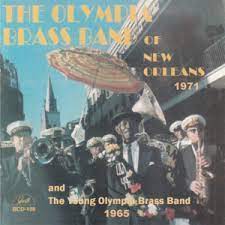
Shortly thereafter, he became a part of the Olympia Brass Band, marched in many New Orleans Jazz Funerals and often performed with the baritone horn. He was a founding member of the New Orleans Ragtime Orchestra. As a member of this group and others, he helped make the soundtrack for the movies “Pretty Baby” and “Live and Let Die”, as well as many other recording sessions. Crawford played the baritone horn in many performances of the musical “One Mo’ Time”.
Crawford was an associate curator at the Tulane University Hogan Jazz Archive. As curator, conducted numerous interviews for an oral history of jazz, and resurrected many forgotten pieces of jazz music and developed arrangements of them. He also developed a significant number of photos of jazz musicians and performances, in a private collection.
Trombonist, baritone hornist, arranger and music historian Paul Crawford, who specialized in Dixieland jazz, transitioned on July 31, 1996 of lung cancer. He had been living in a New Orleans skilled nursing facility at the time.

More Posts: arranger,bandleader,baritone horn,curator,historian,history,instrumental,jazz,music,trombone
Daily Dose Of Jazz…
Csaba Deseo was born February 15, 1939 in Budapest, Hungary. His mother was a violin teacher and he began playing the instrument at the age of 10. He continued his musical education at Béla Bartók Conservatory in Budapest, and got his diploma in 1961. He taught in music schools until 1967 when he became a member of the Hungarian National Philharmonic Orchestra, where he played until 1999. During the time he played innumerable concerts in Hungary and in many countries of the world from Japan to the United States. He performed with artists like Sir Georg Solti, Leonard Bernstein, Ádám Fischer, and Yehudi Menuhin, to name a few.
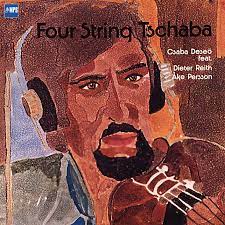
His career took off in 1963 when he appeared with his first group at the legendary Dalia Club in his hometown. From 1964 they gave regular concerts and were frequently featured on Hungarian Radio and TV. He would play at festivals and jamborees in the Sixties, then recorded his debut album under his own name Four String Tschaba in 1975 for MPS Records in West Germany. In that session Deseo played both violin and viola, and he would go on to record 4 LPs and 6 CDs with Hungarian and foreign musicians.
1975 saw Csaba meeting Zagreb vibraphonist Bosko Petrovic, with whom he played regularly until 2011. He also appears as a guest star in Germany, where he usually solos with the group of Walter Kurowski.
Since 1980 Deseo has fronted bands with different line-ups. His more important partners were pianist Laszlo Gardony, vibraphonist Richard Kruza, guitarist Andor Kovacs, bassist Bela Lattmann and drummer Imre Koszegi. Since 1990 he’s been working mainly in a trio and is a regular guest artist at the concerts of the Benko Dixieland Band and the Budapest Ragtime Band.
During the past few decades he has also played with international stars and is a regular contributor to the specialist Hungarian music magazine, Gramofon ~ Classical and Jazz. Violinist Csaba Deseo continues to perform and record.
More Posts: bandleader,history,instrumental,jazz,music,viola,violin

Three Wishes
While hanging out one evening during the conversation with Al Dreares, the Baroness asked him his three wishes. He told her this:
-
- “I wish that I may become a great musician.”
- “And I also wish that I can be successful with my fellow musicians.”
- “And I wish my son grows up to be a fine young man. He’s four and a half months old.”
*Excerpt from Three Wishes: An Intimate Look at Jazz Greats ~ Compiled and Photographed by Pannonica de Koenigswarter
More Posts: baroness,drums,history,instrumental,jazz,music,pannonica,three,wishes
Daily Dose Of Jazz…
Glenn Spearman was born on February 14, 1947 in New York City, New York. music was a part of his life from an early age. His father was a singer and academic who performed on stage in Broadway musicals as well as in opera. By the age of six, the young lad was playing piano, but throughout the years he tried his hand at different instruments. By the time he was in high school he had settled on the tenor sax.
Attending college in Colorado on a sports scholarship, Glenn realized that music held a stronger attraction for him than sports, and he eventually dropped out of school to focus on his music. He became active in Oakland, California in the late 1960s, however, he moved to Paris, Francein 1972 and founded the band Emergency with bassist Bob Reid. This group recorded two albums, performed on radio and television in France, and appeared at the festival in Avignon. He was artist-in-residence in Rotterdam, Netherlands and toured through Europe before returning to the United States in 1978.
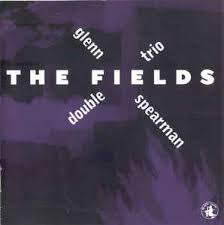
Following his return he worked in the Cecil Taylor Unit, primarily out of San Francisco, California though he performed on both sides of the Atlantic through the 1980s. In the 1990s, he led the Double Trio which included Larry Ochs, William Winant, and Lisle Ellis as sidemen; this ensemble played at the Monterey Jazz Festival and the Vancouver International Jazz Festival. They were commissioned for a piece by the Move Dance Theater which was performed at Laney College.
He worked with the Rova Saxophone Quartet and with filmmaker Lynn Marie Kirby in addition to teaching at Mills College. Tenor saxophonist Glenn Spearman, who was associated with free jazz and experimental music, transitioned from cancer on October 8, 1998 in Berkeley, California.
More Posts: bandleader,history,instrumental,jazz,music,saxophone