

Daily Dose Of Jazz…
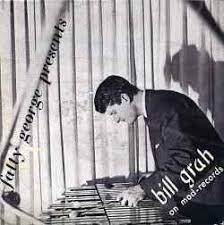
Wilhelm Josef Grah was born on June 24, 1928 in Bergisch-Gladbach, Germany. He led his own quintet from 1949 to 1953, then performed and recorded with Fatty George 1954-1959. I
During the 1960s he moved to Austria where he hosted a radio show in Vienna. He officially became a citizen in 1970. In the 1970s he played with the Austrian Barrelhouse Jazz Band and also led his own quintet.
Pianist and vibraphonist, who led a trio, quintet, sextet, big band and orchestra, transitioned on September 17, 1996 in Vienna.

More Posts: bandleader,history,instrumental,jazz,music,piano,vibraphone
The Quarantined Jazz Voyager
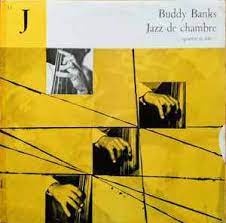
This week the Jazz Voyager is choosing from the library of rare gems seldom heard on this side of the pond. Thanks to the internet, as you listen to the twenty-nine minutes of the album, remember to keep vigilant about the safety of your health and others. On the turntable is the hard bop Jazz De Chambre, a 1954 recording by double bassist Buddy Banks.
Buddy Banks, originally a saxophonist who switched to bass, had arrived in Europe after World War II. On this session he is accompanied by drummer Roy Haynes, pianist Bob Dorough, and guitarist Jimmy Gourley. The leader takes the spotlight in a subtle take of Yesterdays, though a strange clicking mars an otherwise swinging “I Love You.” Banks’ group also offers serviceable interpretations of modern pieces like Gerry Mulligan’s Line for Lyons and Milt Jackson’s Bag’s Groove.
The album was recorded at Geneix Studio in Paris, France and was produced by Frank Ténot. The liner notes were provided by Alain Tercinet with English translation by Martin Davies.
Tracks | 32:56- A Night In Tunisia (Dizzy Gillespie / Frank Paparelli) ~ 4:26
- Almost Like Being In Love (lan Jay Lerner / Frederick Loewe) ~ 3:19
- Bag’s Groove (Milt Jackson) ~ 3:47
- Yesterdays (Otto Harbach / Jerome Kern) ~ 3:29
- I Love You (Cole Porter) ~ 5:58
- Line For Lyons (Gerry Mulligan) ~ 3:46
- You Go To My Head (J. Fred Coots / Haven Gillespie) ~ 4:29
- Buddy Banks Blues (Buddy Banks) ~ 3:27
- Bob Dorough ~ piano
- Buddy Banks ~ double bass
- Jimmy Gourley ~ guitar
- Roy Haynes ~ drums

More Posts: adventure,album,club,double bass,genius,jazz,museum,music,preserving,restaurant,travel

Daily Dose Of Jazz…
Luther Thomas was born on June 23, 1950 in St. Louis, Missouri. Known for his free jazz playing and drawing from funk. Coming out of the Black Artists Group (BAG) of St. Louis in the late Sixties, he was one of the original voices from a scene that also bred such names as Oliver Lake, Julius Hemphill, Baikida Carroll, John Zorn and Joseph Bowie.
Luther played in the Human Arts Ensemble with Charles Bobo Shaw in the 1970s, and led a group called Dizzazz in the early 1980s. He played saxophone for James Chance and the Contortions.
As a leader he had recording sessions from the early 1970s he has recorded eleven albums. They have been reissued on CD as part of Atavistic Records’ Unheard Music Series. In 1998 he settled in Denmark and became a cult musician in Christiania Freetown, performing there weekly.
Alto saxophonist and multi-instrumentalist Luther Thomas was a completely intuitive improvisor and a free spirit who reached a level of intensity on the saxophone reached by very few others, transitioned at the age of 59 on September 8, 2009 in Denmark.
More Posts: bandleader,history,instrumental,jazz,music,saxophone

Daily Dose Of Jazz…
Julia Feldman was born on June 22, 1979 in Samara, Soviet Union to Israeli parents and into a family with a large musical background; her father wa ajeweler who played jazz piano, and a grandfather who was an accomplished conductor and a leader of the city philharmonic orchestra. Classically trained by studying the piano from the age of 5 until the family’s immigration to Israel in 1990 where she continued her piano studies along with jazz improvisation at the High School Of Arts in Jerusalem.
Becoming interested in jazz singing in the last year of her high school studies Feldman began studying voice technique and jazz improvisation along with intensive studies of jazz with the saxophonist Arnie Lawrence at the International Music Center of Jerusalem. While there she studied and performed with known American jazz musicians, such as Evelyn Blakey, Larry Goldings, Armen Donelian, Bob Meyer, Sheila Jordan, Judi Silvano and composer Allen Gershwin, performing the latter’s Walk In The Wilderness.
The late Nineties had her continuing her education and performing with a host of musicians. She has put together her self-titled ensemble and quartet with the former releasing a tribute album in 2006 Words Are Worlds inspired and featuring many standards by Billie Holiday. Other projects she has worked on as a vocalist have delved her into progressive rock Musicca Ficta, vocalist in Radical Shlomo, as pianist, vocalist, co-composer and co-lyricist in Ayulyul and collaboration with ethno-core Jerusalem band Shoom.
Vocalist, composer and educator Julia Feldman, whose singing combines elements of multiple jazz genres, free improvisation and modern classical music, continues to explore, perform and record.
More Posts: bandleader,composer,educator,history,instrumental,jazz,music,vocal
Three Wishes
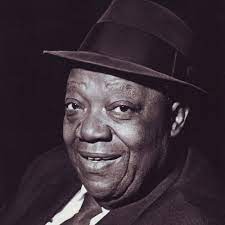
Nica never missed a chance to travel and while in conversation with Jimmy Rushing she asked if he was given three wishes that would be granted what would they be and he said:
- “I’m doing one of my wishes right now! Being in Japan.”
- “If I had my life to live over, I wouldn’t mind. I’ve always enjoyed every part of it.”
- “One thing I’d like to see is colored shows come back like it used to be in the twenties. Like Cotton Club days ~ entertainers going from table to table! And I’d like to see colored shows on TV, at the right times: not too early or too late. To see a complete show and band, and see the reactions of young people.”
*Excerpt from Three Wishes: An Intimate Look at Jazz Greats ~ Compiled and Photographed by Pannonica de Koenigswarter

More Posts: baroness,history,instrumental,jazz,music,pannonica,piano,three,vocal,wishes