

Daily Dose Of Jazz…
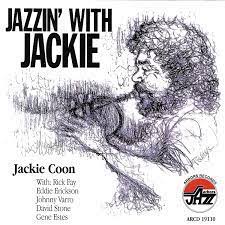
Jackie Coon was born in Beatrice, Nebraska on June 21, 1929 and grew up in Southern California. He was inspired to play trumpet after hearing Louis Armstrong’s West End Blues. He spent a few months with Jack Teagarden’s band and had gigs with Charlie Barnet, Louis Prima, and Earl Hines.
Making his recording debut with Barney Bigard in 1957 and he also played the mellophone on Red Nichols’ version of Battle Hymn of the Republic. Jackie’s decision to stay in California cost him the fame that eluded him, but he worked at Disneyland for nine years, and performed regularly in local clubs and jazz festivals.
It was until 1986 that Coon led his first record session for Sea Breeze. Since 1991 he has recorded fairly often for Arbors. Trumpeter, flügelhornist and cornetist Jackie Coon has become less active in his Eighties.

More Posts: bandleader,cornet,flugelhorn,history,instrumental,jazz,music,trumpet
Daily Dose Of Jazz…
Joseph A. Venuto, Jr. was born on June 20, 1929 in Bronx, New York into an Italian immigrant family where he received his first drum kit from his grandfather. Having had lessons with Henry Adler, he moved on to Phil Kraus to learn mallet percussion. After earning a master’s degree from the Manhattan School of Music, he became a member of the Sauter-Finegan Orchestra, with whom he made his first recordings Doodletown Races on the RCA label in 1953. He was a featured soloist with the orchestra on Solo for Joe and Swingcussion. The DownBeat Reader’s Poll voted him the best vibraphonist that year.
From the mid-1950s, Venuto worked with Billy Byers in the Westchester Workshop, the Kent Harian Orchestra, Bobby Dukoff, and the Johnny Richards Orchestra before joining Radio City Music Hall as a session musician in the recording and television studios. By 1959 he recorded his debut album for Everest Records under his own name.
Between 1953 and 1975 Joe was involved in 104 recording sessions with Jack Teagarden, Kenyon Hopkins, Rex Stewart, The Creed Taylor Orchestra, Irene Kral/Al Cohn Orchestra, Mary Ann McCall, Don Costa, Hal Mooney, Ruth Brown, Gene Krupa and His Orchestra, LaVern Baker, Budd Johnson, Marion Montgomery, Benny Goodman, Shirley Scott, Solomon Burke, Gary McFarland, Johnny Hodges, Hank Jones/Oliver Nelson, and numerous more.
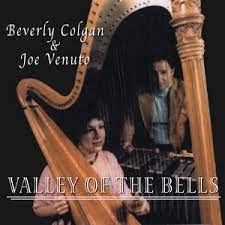
the early 1970s when he was in his Forties, he left New York City and moved to Reno, Nevada. He met, married, performed and recorded with his wife, harpist Bev Colgan, in a harp/vibes duo. Percussionist Joe Venuto, who also played the vibraphone, marimba, bongos and drums, transitioned on Feb. 14, 2019 at age 89.
More Posts: bongos,drums,history,instrumental,jazz,marimba,music,percussion,vibraphone
Requisites
Eastern Rebellion ~ Cedar Walton, George Coleman, Sam Jones, Billy Higgins | By Eddie Carter
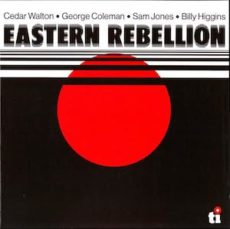
This morning’s subject submitted for your examination was released in 1976 by a quartet who had been playing together for a year before recording their first collaborative album. Eastern Rebellion (Timeless Records SJP 101) is the record that launched the Netherlands label, and also marked the first-time pianist Cedar Walton doubled as a producer. The group is a first-rate ensemble featuring George Coleman on tenor sax, Sam Jones on bass, and Billy Higgins on drums. 2021 marked the 45th Anniversary of its debut, so to commemorate this event, Music on Vinyl launched the Timeless Jazz 45th Anniversary Series. My copy used in this report is their 2022 European Stereo Audiophile reissue (Music on Vinyl MOVLP2950).
The album opener, Bolivia by Cedar Walton begins with the trio’s infectious introduction that gets the listener’s foot moving immediately, setting up the quartet’s spirited theme with Coleman leading the charge. George is up first, taking no prisoners with a heated performance. Cedar tackles the second interpretation exuberantly. Sam keeps it going with a joyful finale preceding the quartet’s conclusion. Naima by John Coltrane starts with a sparkling example of sensitivity and delicacy by Walton that shifts upward for Coleman’s melody. The saxophonist leads off with a radiantly beautiful presentation, followed by Walton who answers with a tenderly passionate interpretation leading to the group’s gorgeous finale.
5/4 Thing by George Coleman starts Side Two with the tenor’s warm introduction that softly evolves to the quartet’s collective melody. George takes the lead and dazzles on the opening statement, then Cedar excels with meticulous strokes on the second solo. Billy wraps up everything in splendid style before Coleman takes the group gently out. Bittersweet by Sam Jones offers everyone solo space and is anything but. Jones begins this cheery, uptempo tune with an enthusiastic exercise. Coleman keeps the tension up with an energetic reading that bounces off the rhythm section effectively. Walton gets a good thing going in the next performance and Higgins provides a perfect summation culminating with the theme’s reprise and an abrupt stop.
Cedar Walton’s Mode For Joe is dedicated to Joe Henderson and was the title tune of the saxophonist’s 1966 album which Cedar played on as well. The quartet begins the melody, then Cedar shines like a beacon on the opening statement. Billy gives a delightful solo next, followed by George who moves with agility. Jones’ bass is the exclamation point before the quartet’s lively exit. Elvin Campbell was the recording engineer for Eastern Rebellion. This audiophile reissue was pressed on 180-gram silver vinyl and is incredibly quiet until the music begins. It’s also an excellent-sounding album that fills your listening room with superb definition. If you’re in the mood for swinging jazz and tight musicianship, I invite you to check out Eastern Rebellion, the next time you go vinyl shopping. It’s an engaging set by Cedar Walton, George Coleman, Sam Jones, and Billy Higgins that’s worth every penny for a spot in your library!
~ Mode For Joe (Blue Note BLP 4227/BST 84227) – Source: Discogs.com © 2022 by Edward Thomas Carter
More Posts: choice,classic,collectible,collector,history,instrumental,jazz,music,piano
Daily Dose Of Jazz…
Tamm E. Hunt was born into a musical family in New York City, New York on June 19, 1954. The niece of jazz and blues singer Hannah Sylvester and record company owner Benny Clark, she is the daughter of K.D. Searcy, a tap dancer who danced at the Apollo Theater with Tip Tap & Toe. Growing up around music when she heard Dakota Staton’s The Late Late Show, she knew early on that she wanted to sing jazz.
Despite that prophetic introduction, Hunt started out singing other styles of music. In her childhood she sang with a variety of R&B girl groups. She had some commercial success in the early ’80s singing disco, but then switched to jazz. Inspired by Betty Carter, Sarah Vaughan and pianist Dorothy Donegan, she has sung with such notables as alto saxophonist Gary Bartz, tenor saxophonist Clifford Jordan, pianists Ronnie Matthews and Larry Willis, bassist Buster Williams, and drummer T.S. Monk among others.
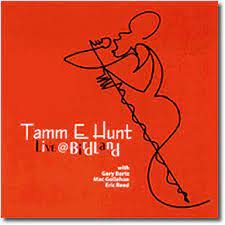
She has performed throughout the U.S. in addition to Europe, Canada, and Japan. Hunt has thus far recorded one CD, Live @ Birdland, for her New Jazz Audience label. She founded the Harlem Jazz Foundation, and has written jazz education programs including Adopt a Kid 4 Jazz and Jazz 4 the Beginner.
She starred in and produced the off-Broadway show Billie Holiday: The Legend, and appeared in a short dramatic film with Bartz called A Jazz Story. Moving to Baltimore, Maryland she has been an important force in the city’s jazz community, both as a singer and behind the scenes. Vocalist Tamm E. Hunt, who is also the executive/artistic director of the Maryland Center for the Preservation of Jazz & Blues, continues to sing, educate and promote jazz.
More Posts: bandleader,educator,history,instrumental,jazz,music,vocal
Daily Dose Of Jazz…
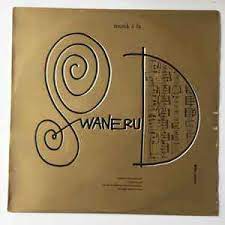
Thore Swanerud was born June 18, 1919 in Stockholm, Sweden. He started out his professional career playing extensively with major Swedish dance bands in the 1940s, such as those of Simon Brehm, Miff Görling, and Stan Hasselgård.
In 1949-1951 Thore led his own six-piece ensemble, then led smaller groups in the 1950s and 1960s. His associations include work with Ernestine Anderson and James Moody.
He is best remembered for an eight-bar improvised solo he made during a 1949 recording of I’m In The Mood For Love, in a quintet headed by Moody while touring Sweden. Eddie Jefferson created the 1952 song Moody’s Mood For Love in vocalese style by adapting lyrics to Moody’s song. The song later became a jazz standard, covered by many singers.
Pianist, vibraphonist, arranger, conductor, and composer Thore Swanerud, who scored three films, appeared in two and recorded five albums and five singles, transitioned in Stockholm on December 8, 1988.
More Posts: arranger,composer,conductor,history,instrumental,jazz,music,piano,vibraphone