

Daily Dose Of Jazz…
Bobby Nichols was born on September 15, 1924 in Boston, Massachusetts. He began playing trumpet when he was nine and later attended the New England Conservatory. His biggest job before joining the military was as a trumpeter with Vaughn Monroe’s Orchestra from 1940 to 1943, impressive for a 15-year old. Joining the Army in 1943 he became a member of the Glenn Miller Army Air Force Band and during its two years of existence, his advanced swing solos gave the huge group much of its jazz credibility.
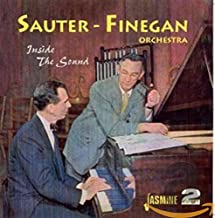
After his discharge, staying busy for the next 15 years, Bobby never became known to the general public. He worked with Tex Beneke between 1946-47, led his own group, and worked with Ray McKinley in 1948. After playing with Tommy Dorsey in 1951, he became a longtime member of the Sauter-Finegan Orchestra from 1952-61 and a studio musician. When the Sauter-Finegan big band eventually broke up, having never led his own record date, he slipped completely into obscurity.
Trumpeter Bobby Nichols, who at nineteen exhibited fire in his playing but never made it big despite his many solos, at 95 years old is sought by collectors of the Glenn Miller Army Air Force Band recordings, died in 1975 in Aruba.

More Posts: history,instrumental,jazz,music,trumpet
Daily Dose Of Jazz…
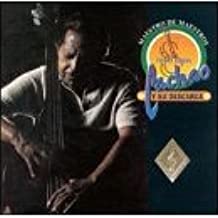
Israel López Valdés was born into a family of musicians on September 14, 1918 in Havana, Cuba. Better known as Cachao, a nickname and stage name given to him by his grandfather, as an 8-year-old bongo player, he joined a children’s son Cubano septet directed by a 14-year old Roberto Faz. A year later, already on double bass, he provided music for silent movies in his neighborhood theater, in the company of a pianist who would become a true superstar, the great cabaret performer Ignacio Villa, known as Bola de Nieve.
His parents made sure he was classically trained, first at home and then at a conservatory. In his early teens, Lopez was already playing contrabass with the Orquesta Filarmónica de La Habana, of which Orestes was a founding member. Under the baton of guest conductors such as Herbert von Karajan, Igor Stravinsky, and Heitor Villa-Lobos, he played with the orchestra from 1930 to 1960.
He and his older brother Orestes were the driving force behind one of Cuba’s most prolific charangas, Arcaño y sus Maravillas. As members of the Maravillas, Cachao and Orestes pioneered a new form of ballroom music derived from the danzón, the danzón-mambo, which subsequently developed into an international genre, mambo.
In the 1950s, Cachao became famous for popularizing improvised jam sessions known as descargas. In 1961, Cachao went into exile. He crossed the Atlantic by boat, reaching Madrid thanks to Ernesto Duarte, who demanded him to play with his orchestra–Orquesta Sabor Cubano–and where he spent a few years touring the country until the orchestra finally broke up in 1963. Moving to the United States that same year, Cachao became a session musician and was one of the most in-demand bassists in New York City, along with Alfonso “El Panameño” Joseph and Bobby “Big Daddy” Rodríguez.
Joseph and López substituted for each other over a span of five years, performing at New York City clubs and venues such as the Palladium Ballroom, The Roseland, The Birdland, Havana San Juan and Havana Madrid. While Cachao was performing with Machito’s orchestra in New York, Joseph was recording and performing with Cuban conga player Cándido Camero. When Joseph left Cándido’s band to work with Charlie Rodríguez and Johnny Pacheco, it was Cachao who took his place in Cándido’s band. In the 1970s, Cachao fell into obscurity after moving to Las Vegas, Nevada and then later Miami, Florida releasing albums sporadically as a leader.
The 1990s saw his re-discovery by actor Andy García, who brought him back to the forefront of the Latin music scene with the release of a documentary and several albums. Throughout his career, he performed and recorded in a variety of music styles ranging from classical music to salsa.
Double bassist and composer Cachao Lopez, who rose to prominence during the boogaloo years, who recorded sixteen albums as a leader and another twenty as singles, collaborator, and sideman, passed away in Coral Gables, Florida at age 89 on March 22, 2008.
More Posts: bandleader,bass,composer,history,instrumental,jazz
Requisites
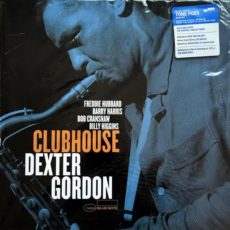
Clubhouse ~ Dexter Gordon | By Eddie CarterAny opportunity I get to discuss an album by tenor saxophonist Dexter Gordon is always welcome, so I begin September with a recent addition to the library. Clubhouse (Blue Note Classic LT-989) is a date from 1965 that also produced the album, Gettin’ Around, but was shelved until 1979. The ensemble is a stellar one, Freddie Hubbard on trumpet; Barry Harris on piano; Bob Cranshaw on bass and Billy Higgins on drums. My copy used in this report is the 2019 Blue Note Tone Poet Series Stereo Audiophile reissue (Blue Note B0029356-01 – LT-989).
The quintet gets into some Hanky Panky to begin Side One with a melody march. Dexter swings with a bluesy beat on the opening statement. Freddie takes over for a neatly paced reading next. Barry ices the closer with a laid-back attitude into a marvelous finale. I’m A Fool To Want You is from 1951 by Frank Sinatra, Jack Wolf, and Joel Herron. Sinatra co-wrote the lyrics and recorded it for Columbia that year. Gordon expresses personal thoughts of lyrical reflection on the opening chorus and first solo. Hubbard and Harris also arouse tender emotions on two beautiful readings before the luxurious coda.
Devilette is by bassist Ben Tucker and was first heard on the 1971 live album, The Montmartre Collection, Vol. 1. This midtempo swinger makes a wonderful vehicle for the quintet to swing easily on the melody. Dexter struts smoothly into the first solo, then Freddie speaks proficiently next. Barry closes with an articulate, passionate interpretation ahead of the conclusion. The quintet convenes inside Gordon’s Clubhouse to start Side Two for a laid-back meeting offering everyone a solo opportunity. Harris gives a charming introduction blossoming into the ensemble’s collective theme. Gordon starts with a soulfully, mellow statement, then Hubbard offers some rhythmically incisive ideas. Harris follows for a melodic mix of grace and fire that’s especially effective. Bob has a definitive moment on the fourth interpretation and Billy wraps things up in a brief exchange with the front line. Jodi is a thoughtfully provocative tribute to Gordon’s wife at the time. Dexter opens with a perfect evocation of love on the melody and first solo. Freddie creates a concise mood of ecstasy next, and Barry adds a touch of sweet lyricism preceding the romantic ending.
The album ends with a tune by guitarist Rudy Stevenson that I first heard on the 1961 album Two Feet In The Gutter, Lady Iris B. The solo order is Gordon, Hubbard, Harris, Cranshaw, and their messages are full of joy and happiness into an immensely satisfying ending that’s positive and upbeat. Clubhouse was produced by Joe Harley of Music Matters Jazz and mastered by Kevin Gray of Cohearent Audio from Rudy Van Gelder’s original analog master tape utilizing 180-gram audiophile vinyl.
The Blue Note Tone Poet Series reissues include high-definition gatefold photos that are worthy of wall art and superb packaging of the covers. The music is simply amazing, and the sound is reference quality with a breathtaking soundstage that’s thrilling, to say the least. Dexter Gordon was a jazz master in every sense as a bandleader, composer, and tenor saxophonist. Clubhouse is nearly forty-minutes of exceptional jazz and an excellent choice for Blue Note to rescue from oblivion for any fan who loves Hard-Bop that you shouldn’t miss on your next vinyl hunt!
~ Gettin’ Around (Blue Note BLP 4204/BST 84204); I’m A Fool To Want You (Columbia 39425); The Montmartre Collection, Vol. 1 (Black Lion BL-108); Two Feet In The Gutter (Epic LA 16021/BA 17021) – Source: Discogs.com
~ I’m A Fool To Want You – Source: Wikipedia.org
© 2020 by Edward Thomas Carter
More Posts: choice,classic,collectible,collector,history,instrumental,jazz,music,saxophone
Daily Dose Of Jazz…
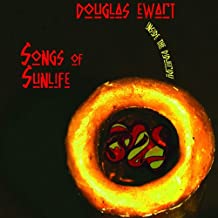
Douglas Ewart was born on September 13, 1946 in Kingston, Jamaica and emigrated to the United States in 1963. Settling in Chicago, Illinois he became associated with the Association for the Advancement of Creative Musicians (AACM) in 1967, studying with Joseph Jarman and Roscoe Mitchell. He served as that organization’s president from 1979 to 1986.
Douglas recorded eight albums as a leader and has performed or recorded fifteen with J. D. Parran, Muhal Richard Abrams, Art Ensemble of Chicago, Anthony Braxton, Alvin Curran, Anthony Davis, Robert Dick, Von Freeman, Joseph Jarman, Amina Claudine Myers, Roscoe Mitchell, James Newton, Rufus Reid, Wadada Leo Smith, Cecil Taylor, Richard Teitelbaum, Henry Threadgill, Hamid Drake, Don Byron, Malachi Favors Maghostut, Muhal Richard Abrams, Spencer Barefield, Tani Tabbal, Jean-Luc Cappozzo, Joëlle Léandre, Bernard Santacruz, Michael Zerang, Chico Freeman, Dennis González, Yusef Lateef, Adam Rudolph,
In 1992 he collaborated with Canadian artist Stan Douglas on the video installation Hors-champs which was featured at Documenta 9 in Kassel, Germany. The installation features Ewart in improvisation of Albert Ayler’s Spirits Rejoice with musicians George Lewis, Kent Carter, and Oliver Johnson.
Douglas Ewart has lived in Minneapolis, Minnesota since 1990 and plays sopranino and alto saxophones, clarinets, bassoon, flute, bamboo flutes, panpipes, and didgeridoo; as well as Rastafarian hand drums.
More Posts: bamboo flute,bassoon,clarinet,didgeridoo,flute,hand drums,history,instrumental,jazz,music,panpipe,saxophone
Daily Dose Of Jazz…
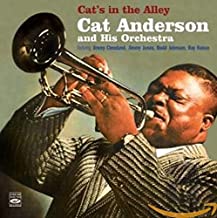
Cat Anderson was born William Alonzo Anderson on September 12, 1916 in Greenville, South Carolina. Losing both parents when he was four years old, he was sent to live at the Jenkins Orphanage in Charleston, South Carolina where he learned to play the trumpet. It was his classmates that gave him the nickname “Cat” based on his fighting style.
He toured and made his first recording with the Carolina Cotton Pickers, a small group based at the orphanage. After leaving the Cotton Pickers, Anderson played with guitarist Hartley Toots, the Claude Hopkins Big Band, Lucky Millinder, the Erskine Hawkins Orchestra, the Sabby Lewis Orchestra, the Lionel Hampton Orchestra, with whom he recorded the classic Flying Home No. 2, and the Doc Wheeler Sunset Orchestra with whom he also recorded from 1938–1942.
His career took off in 1944 when he joined Duke Ellington’s orchestra at the Earle Theater in Philadelphia, Pennsylvania. He quickly became a central part of Ellington’s sound. Although Anderson was a very versatile musician, capable of playing in a number of jazz styles, he is most renowned for his abilities in the extreme high or “altissimo” range. He had a big sound in all registers but could play up to a “triple C” with great power, able to perform his high-note solos without a microphone.
A master of half valve and plunger mute playing, Cat was capable of filling in for anyone else who was not there. He led and fronted his own big band and in addition, he was a very skilled arranger and composer. He performed his own compositions El Gato and Bluejean Beguine with Ellington, and others of his compositions and arrangements with his own band, for example on his 1959 Mercury recording, Cat on a Hot Tin Horn.
After 1971, he settled in the Los Angeles, California area, where he continued to play studio sessions, perform with local small and big bands, and to tour Europe. He recorded seven albums as a leader, and as a sideman recorded sixty-four with Johnny Hodges, Quincy Jones, Rosemary Clooney, Frances Faye, Mel Torme, Earl Hines, Bell Berry, Benny Carter, Claude Bolling, Gene Ammons, Louis Bellson, Duke Ellington, Ella Fitzgerald, and Lionel Hampton. Trumpeter Cat Anderson passed away from cancer on April 29, 1981.
More Posts: arranger,bandleader,composer,history,instrumental,jazz,music,trumpet