

Daily Dose Of Jazz…
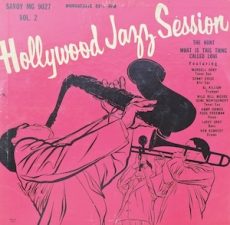
Albert Killian was born in Birmingham, Alabama, on October 15, 1916 and got his start playing with Charlie Turner’s Arcadians in the mid-1930s. He went on to play with big bands led by Baron Lee, Teddy Hill, Don Redman, and Claude Hopkins. The early to mid-1940s saw him swapping between bands led by Count Basie and Charlie Barnet, as well as being with Lionel Hampton for a period in 1945.
He appeared on film several times, played with Norman Granz’s Jazz at the Philharmonic concert series, and his interest in bebop led to Albert forming his own band to play the new music in 1947, but this was short-lived. Following this he briefly toured with bands led by Earle Spencer and Boyd Raeburn, before landing a the year residency in Duke Ellington’s band.
Trumpeter and bandleader Al Killian who was prominent during the big band era, died, murdered in his home at the hands of a psychopathic landlord on September 5, 1950 in Los Angeles, California.

More Posts: bandleader,history,instrumental,jazz,music,trumpet

On The Bookshelf
A Life In Jazz | Danny Barker
Since the 1950s, when Nat Hentoff and Nat Shapiro published Heah Me Talkin’ to Ya, an oral history of jazz which drew heavily on Danny Barker’s reminiscences, jazz buffs have waited impatiently for Barker’s full account of his life in jazz.
Danny Barker was born January 13, 1909 when jazz was still in its infancy, and by the time of his death he was known as both a master of the idiom and a guardian of its history. Storyteller, researcher, songwriter, performer, and mentor, Barker was a true griot – an elder statesman of jazz and an international representative of New Orleans and African American culture.
In more than 60 years as a working musician, he followed the evolution of jazz from its New Orleans roots to mainstream success during the swing era to canonization as America’s first wholly original art form. In his career as a songwriter, which yielded the hit Don’t You Feel My Leg, Barker combined traditional song forms with sly humor about sex and human nature.
More than any other jazz artist, he worked to document the music’s history and to tell the stories of its people. A Life in Jazz, first published in 1986 and edited by British jazz scholar Alyn Shipton, captures the breadth of Barker’s knowledge and the scope of his vision as a storyteller.
His carefully crafted set pieces range from hilarious to harrowing, and he shares memories of jazz greats such as Jelly Roll Morton, Cab Calloway, and Dizzy Gillespie. Barker’s prose reflects the freedom and creativity of jazz while capturing the many injustices, both casual and grand, of life as a Black man in mid-century America.
This illustrated edition of A Life in Jazz brings Barker’s autobiography back into print by the Macmillan Press Ltd., accompanied by more than 100 images that bring his story to life. Gwen Thompkins, host of public radio’s Music Inside Out, reflects on Barker’s legacy in her introduction, and the complete discography and song catalog showcase the breadth of Barker’s work.
Danny Barker died on March 13, 1994. Through his struggles, triumphs, escapades, and musings, A Life in Jazz reflects the freedom, complexity, and beauty of this thoroughly American, Black music tradition.

Daily Dose Of Jazz…
Martin Jones was born in Hull, England on October 14, 1955. He gained his experience playing trumpet first in school bands, and then Hull school bands with many concerts with orchestra’s, concert bands and a jazz swing band.
Leaving those to form his own bands he started working with his own band commercially in the jazz field in the late Seventies. By 1982 Martin was working professionally on the club and theatre circuits in cabaret. He started a residency at two clubs in the Latin Quarter in Paris. Returning to the UK he was trumpeter, front-man and vocalist at the City of London Tavern. He worked between London and Paris over the next two years, eventually joining the international cabaret group, The English Eccentric Ragtime Four.
He became a session trumpet player and vocalist in the London area. then spent some time working for New York Network Television while he was with this band. In 1987 Jones left the band to tour Europe, worked doing broadcasts on several TV shows and eventually left London and returned to his roots back in Hull.
He soon got work with a regional band called The Casablanca Boys, led six of his own bands and taught trumpet and vocal at The Keech School of Music. He developed a new Jazz Course at Access to Music in partnership with East Riding College as well as Jazz Summer Schools.
Trumpeter Martin Jones has currently published eleven books and continues performing, recording and teaching.
More Posts: educator,history,instrumental,jazz,music,trumpet

Daily Dose Of Jazz…
Tommy Whittle was born on October 13, 1926 in Grangemouth, Scotland. He started playing clarinet at the age of twelve before taking up tenor saxophone at 13, guided by Alan Davie. When he was sixteen he moved to Chatham, Kent, England and in 1943 started playing in Claude Giddins’ dance-hall band in nearby Gillingham.
The 1940s saw Whittle playing with Johnny Claes, Lew Stone, Carl Barriteau, and Harry Hayes. In the middle of the decade he joined Ted Heath’s band, playing with him until 1952 when he moved on to play in Tony Kinsey’s small group. In the 1950s he joined Cyril Stapleton’s BBC Show Band where he became a featured soloist in nationwide broadcasts.
Forming a quintet in 1954 with Harry Klein and Dill Jones, and later toured with a ten-piece band for nealy a year and a half. He went on to lead small groups and performed in clubs. In 1955 he was voted Britain’s top tenor-sax player in the New Musical Express and Melody Maker polls, topping the latter the following year.
During the 1950s his sextet performed in France and the United States, where in 1956 he also participated in an exchange visit with Gerry Mulligan. He briefly worked in the Stan Kenton Band, was hired as bandleader at the Dorchester Hotel in London, then followed a period of 12 years with the Jack Parnell ATV Orchestra, accompanying Bing Crosby, Peggy Lee, and Barbra Streisand.
He went on to run a weekly club at the Hopbine pub, worked with Laurie Johnson’s London Big Band and recorded with Benny Goodman. During the 1980s and 1990s, he was in demand as a session musician, performed with his quartet and wife Barbara Jay and became a member and then leader of the Pizza Express All Stars Jazz Band.
Saxophonist Tommy Whittle while on holiday in Spain died on his 87th birthday after contracting pneumonia on October 13, 2013.
More Posts: bandleader,history,instrumental,jazz,music,saxophone
Requisites
Blue Seven ~ Shirley Scott With Joe Newman and Oliver Nelson | By Eddie Carter
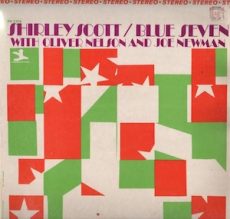
I was still in a jazz organ mindset after listening to Jimmy Smith when I decided to explore a lesser-known, underappreciated gem by Shirley Scott. Blue Seven (Prestige PR 7376/PRST 7376) was recorded in 1961, yet remained on the shelf until its 1965 release. For her fourteenth album, Shirley’s working with an outstanding ensemble: Joe Newman on trumpet, Oliver Nelson on tenor sax, George Tucker on bass, and Roy Brooks on drums. Together, they create a jazz session that’s laid-back and refined, filled with understated groove and energy. Unlike some organists who favor a bold, party-heavy approach, Shirley brings a softer, blues-influenced touch, letting her organ blend with the ensemble rather than dominating it. My copy of this album is the 1965 U.S. stereo release.
Side One opens with the title tune, Blue Seven by Sonny Rollins. George and Roy’s soulful, bluesy introduction eases into the quintet’s mellow theme. Joe opens gently and evolves into a warm, inviting interpretation. Oliver explores intriguing avenues in the following reading. Shirley showcases her expressive touch and impressive technique until the group returns for the finale. Don’t Worry ‘Bout It Baby, Here I Am by Shirley Scott starts on a bright note with the horns merging into the rhythm section’s cheerful melody. Scott opens the first solo with some good, honest soul. Nelson follows with a relaxing performance, then Newman delivers a soothing interpretation that gradually builds to a few final thoughts by Scott before the song ends.
Nancy (With The Laughing Face) by Phil Silvers and Jimmy Van Heusen gently shifts the album’s pace to a tender ballad. Shirley’s delicately gentle melody creates a soft, inviting backdrop for both horns. She then caresses each note of the song’s only solo with elegance and deep emotion, leading to the ensemble’s touching ending. Wagon Wheels by Billy Hill and Peter DeRose was the title tune of the 1934 Western film. Newman steps forward with his muted trumpet, guiding the ensemble through the easygoing melody. Nelson makes a brief, tasteful entrance before Newman continues the mellow mood. Nelson follows with smooth, unhurried lines, then Scott delivers a reading as comforting as a hearty, satisfying meal, before the quintet returns for the closing chorus and gentle fadeout.
The album closer is Give Me The Simple Life, by Rube Bloom and Harry Ruby, kicking off with the quintet’s bright, upbeat melody. Oliver steps forward first to deliver a spirited and swinging interpretation. Joe maintains the momentum in an energetic statement, and then Shirley’s robust performance leaves a lasting impression. All three soloists trade upbeat ideas, leading to the ensemble’s closing chorus. Esmond Edwards supervised the album, and Rudy Van Gelder was behind the dials. The album’s excellent sound quality transports the listener into the heart of the quintet’s lively interaction, with warm, crystal clear acoustics that create the sensation of a live performance happening right in your listening room.
If you love jazz groups that feature the Hammond organ up front and blend the lively drive of hard bop with the soulful rhythms of soul jazz, I offer for your consideration, Shirley Scott’s Blue Seven, the next time you’re out record shopping. This album is a delightful listen, filled with inventive solos and tight group interplay. You’ll experience everything from the upbeat energy of Don’t Worry ‘Bout It Baby, Here I Am and Give Me The Simple Life, to the relaxed swing of Blue Seven and Wagon Wheels, as well as the tender emotion of Nancy (With The Laughing Face). After you spin it on the turntable, it’s likely to earn a permanent spot among the favorites in your library, encouraging you to return to it again and again!
~ Give Me The Simple Life, Nancy (With The Laughing Face), Wagon Wheels – Source: Wikipedia.org
p>© 2025 by Edward Thomas Carter

More Posts: choice,classic,collectible,collector,history,instrumental,jazz,music,organ,saxophone,trumpet