

Daily Dose Of Jazz…
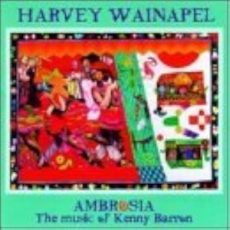
Harvey Wainapel was born in Ellenville, New York on March 31, 1951. Growing up in the small town in the Catskills, he started his musical journey on clarinet at the age of eight. By high school he discovered jazz by playing along with tunes on New York City radio stations. Longing to play saxophone he didn’t get his first horn, an alto, until his freshman year at the University of Pennsylvania. Working at the college radio station, he discovered the music of Cannonball Adderley, John Coltrane and Joe Henderson.
Initially intending to follow the family tradition of pursuing a career in medicine or science, he ended up taking the plunge into music at Berklee in 1971. It was a heady era, and Wainapel played with fellow students, guitarist John Scofield, pianist Kenny Werner, trumpeter Claudio Roditi, and tenor saxophonist Joe Lovano.
During his Boston years Harvey recorded and performed in Carnegie Hall with vibraphonist Gary Burton. After two years at Berklee he toured Tunisia with drummer Jamey Haddad, and made the trip to North Africa. Settling in Amsterdam, Netherlands he made a living before moving to Frankfurt, Germany with the HR Radio Big Band.
By 1979 he returned stateside, landing in New York City, and became enamored with Brazilian music. He quickly landed a gig playing with Thiago de Melo, alongside drummer Duduka da Fonseca, trumpeter Roditi and pianist Marcos Silva, the latter turning Wainapel on to other Brazilian artists. Not cut out for the city, he relocated to the San Francisco Bay Area, after a year on the road with Ray Charles. He became one of the most in-de-mand players in the region while keeping his European presence. Back at home, Wainapel can often be found playing Brazilian music, performing with Rio-born vocal improviser Claudia Villela.
Saxophonist and clarinetist Harvey Wainapel, who debuted as a leader with 1994’s At Home/On the Road, leads his own post-bop combos, freelances extensively, and performs with Beth Custer’s Clarinet Thing.
More Posts: bandleader,clarinet,history,instrumental,jazz,music,saxophone
Daily Dose Of Jazz…
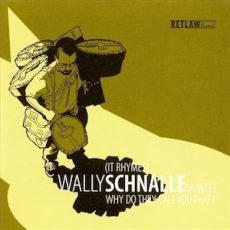
Wally Schnalle was born on March 30, 1957 in Santa Clara, California. Graduating from San Jose State University he recorded early on with Francis Wong and performed with the Nova Vista and San Jose Symphonies.
In 1994 Wally recorded his debut set as a leader for the small Tree Fort label and he soon formed a regularly working quintet although the drummer had been leading groups on and off since 1989. His quintet with tenor saxophonist Dann Zinn and trumpeter John Worley appeared at the Monterey Jazz Festival.
He recorded for Retlaw in 1997 and played often in northern California. In addition to his work as a drummer, Schnalle has been the music editor for the International Drum! magazine and has been active as a teacher.
Drummer and bandleader Wally Schnalle continues to perform and record.
More Posts: bandleader,drums,history,instrumental,jazz,music

Daily Dose Of Jazz…
Bill Ohashi was born on March 29, 1949 in New York City, New York. His formative years were spent learning at Julliard, Mannes College, U. of PA, Berkley School of Music, and bandstands in NYC, New England and the southern corridor. He was making the jam session rounds in the city with jazz legends Kenny Dorham, Roy Eldridge, Charlie Mingus, Jack DeJohnette, Joe Henderson, Jaki Bayard, Carla Bley, George Cables, Lenny White, Billie Cobham and Art Blakey’s Messengers, among others.
Bill’s early work was with Willie Colon, Eddie Palmieri, Larry Harlow, Machito, Slide Hampton, Chuck Israels, Chico O’Farrill, Joe Farrell, Elvin Jones, Bruce Fowler, Ray Charle’s Big Band, Thad Jones-Mel Lewis Jazz Orchestra, Charlie Mingus, Gil Evans, as well as Paul Butterfield Blues Band, Eddie Kendricks & The Temptations, Franki Valli & The Four Seasons, Marvin Gaye, The Spinners, Aretha Franklin, The Four Tops, Jay & the Americans, Yoko Ono, The O’Jays & Stevie Wonder.
After a brief to move to the west coast and a short hiatus from playing, the legendary Ray Charles wisely gave Bill the opportunity to join his band on the road for about a year, bringing Bill back into the working music scene; Bill subsequently toured Europe three times with Lionel Hampton, playing around NYC and began his own record label, EAR Records, Inc.
As an educator he taught at NYC’s Third St. Music School, Henry St. Settlement, Boy’s Harbor, New England Conservatory, Metropolitan School of Music and others. Trombonist Bill Ohashi, who subs on Saturday Night Live, continues to perform and record.
More Posts: bandleader,educator,history,instrumental,jazz,music,trombone
Daily Dose Of Jazz…
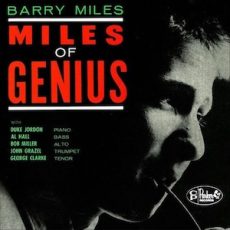
Barry Miles was born Barry Miles Silverlight on March 28, 1947 in Newark, New Jersey and grew up in North Plainfield, New Jersey. In 1956 he joined the musicians union at age nine as a child prodigy on drums, piano and vibraphone appearing with Miles Davis and John Coltrane among other talents of the day. He appeared live and on television shows including To Tell the Truth, Dick Van Dyke’s variety show, and The Andy Williams Show.
In 1961 at age fourteen he made his solo artist debut recording, “Miles of Genius”, as drummer and composer with sidemen Al Hall and Duke Jordan. Miles continued to perform with his own band in the early 1960s in which he composed the material that enabled up and coming talents such as Woody Shaw, Eddie Gómez and Robin Kenyatta to display their talents.
While a student at Princeton University he concentrated on his piano playing, recording a live album in 1966 entitled Barry Miles Presents His Syncretic Compositions. He followed in 1969 with the eponymously titled album, Barry Miles, incorporating electric instruments.
The Seventies saw him recruiting his brother Terry Silverlight on drums along with guitarists Pat Martino and John Abercrombie to record his White Heat album, which is regarded as one of the pioneering fusion jazz recordings. For the next decade, Miles recorded several albums in which he developed the principle of fusing styles together in jazz.
In the late 1970s and throughout the 1980s, Barry went on to work as Roberta Flack’s musical director for a stint that lasted fifteen years. During that time he composed, produced and recorded songs that Flack recorded in the film Bustin’ Loose, and on her album Oasis. He established a long-lasting relationship with Al Di Meola as his performing, recording and co-producing keyboardist.
He wrote the instruction book, “Twelve Themes With Improvisations”, and is currently out of print. In 2013, he released Home and Away, Volume One, his first album as a leader in 27 years. Pianist, record producer and author Barry Miles continues to perform, record and produce.
More Posts: author,bandleader,history,instrumental,jazz,music,piano,record producer
Daily Dose Of Jazz…
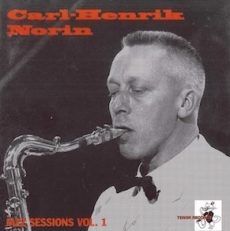
Carl-Henrik Norin was born on March 27, 1920 in Västerås, Sweden. He first began playing professionally in the early 1940s with Gösta Tönne and Thore Ehrling. As a member of Ehrling’s ensemble, he composed the piece Mississippi Mood.
He led a sextet in Stockholm, Sweden in the 1950s and early 1960s, which played jazz as well as accompanying popular singers such as Bibi Johns. Among his sidemen were Jan Allan and Rolf Billberg.
He played with Harry Arnold, Roy Eldridge, Lars Gullin, Peanuts Holland, and Bjarne Nerem. Saxophonist Carl-Henrik Norin died on May 23, 1967, Stockholm, Sweden.
More Posts: bandleader,history,instrumental,jazz,music,saxophone