

Daily Dose Of Jazz…
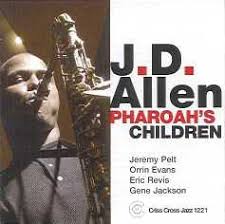
J. D. Allen III was born John Daniel Allen III on December 11, 1972 in Detroit, Michigan. His apprenticeship was anchored by his lengthy tenure with jazz vocalist Betty Carter.
After moving to New York City, Allen played with George Cables, Betty Carter, Ron Carter, Jack DeJohnette, Frank Foster, Butch Morris, David Murray, and Wallace Roney. Closer to his generation, he has played with Lucian Ban, Cindy Blackman, Gerald Cleaver, Dave Douglas, Orrin Evans, Duane Eubanks, Marcus Gilmore, Russell Gunn, Winard Harper, Elisabeth Kontomanou, Meshell Ndegeocello, Jeremy Pelt, and Eric Revis.
His debut solo album, In Search Of, released in 1999, garnered his selection as Best New Artist in Italy. In 2002, his second album was chosen a top ten album of the year by Jazziz magazine. Ten years later he was named best composer and best tenor saxophonist in the DownBeat Critics’ Poll.
He also works under the pseudonyms Bigger Thomas and Cross Damon. Tenor saxophonist and composer J.D. Allen continues to perform and record.

More Posts: bandleader,history,instrumental,jazz,music,saxophone
Daily Dose Of Jazz…
George Andrew Tucker was born on December 10, 1927 in Palatka, Florida. He studied bass at the New York Conservatory of Modern Music in the late 1940s. Early in his career, he played with Earl Bostic, John Coltrane, and Jackie McLean. He worked in the house bands of several lauded New York jazz venues and played and recorded with Eric Dolphy, Clifford Jordan, Horace Parlan, Booker Ervin, Jerome Richardson, and Junior Mance during this time.
In 1958, he recorded with Melba Liston on her jazz classic Melba Liston and Her ‘Bones. 1960–61 saw him recording with Stanley Turrentine, Horace Parlan, Ervin, Dexter Gordon, and Shirley Scott. Over the next two years he toured and recorded with the trio of Dave Lambert, John Hendricks and Yolande Bavan. Near the end of his life Tucker recorded with Coleman Hawkins and Jaki Byard.
He recorded at total of fifty-eight albums as a sideman with Ted Curson, Walt Dickerson, Lou Donaldson, Booker Ervin, Curtis Fuller, Bennie Green, Slide Hampton, John Handy, Willis Jackson, Etta Jones, Gildo Mahones, Charles McPherson, Jackie McLean, Oliver Nelson, Dave Pike, Pony Poindexter, Sonny Red, Freddie Redd, Zoot Sims, Johnny “Hammond” Smith, Buddy Tate, Lucky Thompson, Jimmy Witherspoon and Jimmy Woods.
Double-bassist George Tucker transitioned from a cerebral hemorrhage while performing with guitarist Kenny Burrell on October 10, 1965 in New York City.
More Posts: bass,history,instrumental,jazz,music
Daily Dose Of Jazz…
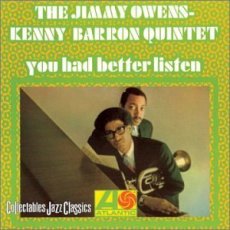
Jimmy Owens was born December 9, 1943 in New York City, New York. In the 1960s, he was a member of the hybrid classical and rock band Ars Nova, and then became a member of the New York Jazz Sextet playing with at times were Sir Roland Hanna, Ron Carter, Billy Cobham, Benny Golson, Hubert Laws, and Tom McIntosh.
Between 1969 and 1972, Jimmy was a sideman on the David Frost Show under musical director Dr. Billy Taylor. During this stint he played alongside Frank Wess, Seldon Powell Barry Galbraith and Bob Cranshaw.
As an educator Jimmy is an active member of the jazz education community, sitting on the board of the Jazz Foundation of America and the Jazz Musicians’ Emergency Fund to help individual musicians.
Over the course of his career the trumpeter, composer, arranger, lecturer and music education consultant has performed and recorded as a leader and sideman with Lionel Hampton, Charles Mingus, Archie Shepp, Joe Zawinul, Gerald Wilson, Duke Ellington, Hank Crawford, Dizzy Gillespie, Count Basie and Herbie Mann among many others.
Trumpeter, composer, arranger and educator Jimmy Owens, who sits on the board of the Jazz Foundation of America, since 1969, he has led his own group, Jimmy Owens Plus.
More Posts: arranger,bandleader,composer,educator,history,instrumental,jazz,music,trumpet

Daily Dose Of Jazz…
Allison Philips was born on December 8, 1991 in South Orange, New Jersey. She began playing the trumpet at the age of 9 and began performing regularly since she was fourteen. She went on to receive a BFA in Jazz Performance from the New School for Jazz and Contemporary Music of New York City and a Masters in Jazz Performance at The Conservatorium Van Amsterdam in Amsterdam, The Netherlands.
She has studied under several trumpet luminaries including Laurie Frink, Ingrid Jensen, Chris Jaudes, Tatum Greenblatt, Joe Magnarelli, Jimmy Owens, Ruud Breuls and Jan Oosthof.
From the traditional trio setting to genre-bending explorations via electronics, Allison is always searching for new ground. She has created her own trio, co-leads the DeiCont | Philips Collective, and both groups have toured domestically and throughout Europe and Canada.
She has performed with Sara McDonald’s “NY Chillharmonic”, The Chronometer’s Orchestra, Phil’s Music Lab, Charlie Rosen’s Broadway Bigband, the BVR Flamenco Orchestra, Zulema’s Mambo Queens, and many others.
Trumpeter, bandleader and educator Allison Philips continues to perform, record and tour.
More Posts: bandleader,history,instrumental,jazz,music,trumpet
Daily Dose Of Jazz…
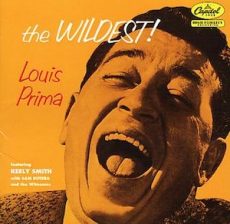
Louis Leo Prima was born December 7, 1910 in New Orleans, Louisiana into a musical Italian American family. His mother, a music lover, made sure that each child played an instrument, assigning him the violin and started out playing at St. Ann’s Parish. His interest in jazz came when he heard black musicians, including Louis Armstrong at a time Italians and Blacks in New Orleans frequently socialized together in the same clubs and bars.
He practiced continuously on his worn-down cornet and formed a band in 1924 with his childhood friends, bassist Candy Candido, Irving Fazola on clarinet and drummer Johnny Viviano. Prima attended Jesuit High School but transferred to Warren Easton High in 1926. There he played with the Eastonites, the school band. The next year he partnered with fellow musician Frank Federico and they played in the French Quarter.
By 1928 his decision was made to become a professional musician. After finishing high school he joined the Ellis Stratako Orchestra in 1929 then the Joseph Cherniavsky Orchestrafollowed by a temporary job playing on the steamship Capital that docked on Canal Street. His first break was when Lou Forbes hired him for daily afternoon and early evening shows at The Saenger.
1934 saw him begin recording for the Brunswick label. He recorded That’s Where the South Begins, Long About Midnight, Jamaica Shout, and StarDust. Prima and his New Orleans Gang featured Frank Pinero playing piano, Jack Ryan bass, Garrett McAdams guitar, and Pee Wee Russell clarinet. at the Famous Door. HIs recordings from 1935 were a combination of Dixieland and swing. He and Russell recorded The Lady in Red, a national jukebox hit. They also recorded Chinatown, Chasing Shadows and Gypsy Tea Room.
Martha Raye played a role in Prima’s professional and personal life and with her got his first national debut on The Fleischman Hour. He recorded Sing, Sing , Sing in 1936, which subsequently became a hit for Benny Goodman. Moving to California he expanded his music, joining the movement for big bands and orchestras. However for him the configuration was not successful.
He returned to New York City in 1937 with his quintet at the Famous Door. Then on to Billy Rose’s Casa Mañana club in 1938, earning nearly a quarter million dollars throughout seven weeks. This led to an East Coast to mid-West tour. During the war years, Louis was experiencing great success regardless of anti-Italian sentiment. He would go on to have several big hits but by the end of the war years, the popularity of big band music was diminishing. By 1947 he was playing more jazzy versions of his music for the next decade and a half.
Trumpeter, singer, entertainer and bandleader Louis Prima suffered a heart attack in 1973. Two years later he was diagnosed with a brain stem tumor, suffered a cerebral hemorrhage, went into a coma following surgery and never recovered. He moved back to New Orleans and transitioned three years later on August 24, 1978 at 67 in his hometown.
More Posts: bandleader,history,instrumental,jazz,music,trumpet