

Daily Dose Of Jazz…
Alvin “Abe” Aaron was born on January 27, 1910 in Toronto, Canada on January 27, 1910. His father, a bandleader with a theater band in Milwaukee, Wisconsin, had him playing reeds in the band for more than ten years. Early in the 1940s he left this group to play alto saxophone in the big band of Jack Teagarden, with which he recorded in 1942.
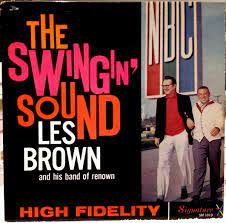
Moving to Hollywood, California in 1943, Abe played with Horace Heidt on radio. From 1945 to 1947 he played with Skinnay Ennis, then returned to work under Heidt through 1949. Through the 1950s he played in Les Brown’s Band of Renown, touring Europe and East Asia. He recorded often as a member of Brown’s band for Coral and Capitol record companies. In the band, he played clarinet and alto saxophone in the early 1950s, then switched to tenor and baritone. He also recorded on bass clarinet with Billy Usselton.
Clarinetist and saxophonist Abe Aaron transitioned on January 31, 1970.
More Posts: clarinet,history,instrumental,jazz,music,saxophone
Daily Dose Of Jazz…
David Black, born January 23, 1928 in Philadelphia, Pennsylvania, started out as the drummer in the house band at the Philadelphia Blue Note Jazz Club where he played with the likes of Charlie Parker, Buddy DeFranco and Zoot Sims.
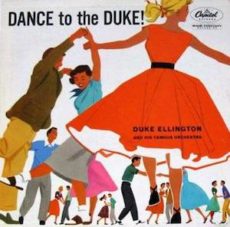
From 1953 to 1955 Black was a part of Duke Ellington’s Orchestra until he contracted polio, forcing him to leave the band. After recovering, he moved to the San Francisco Bay Area and partnered with Bob Scobey until the latter’s death in 1963.
Continuing to perform with Bay Area and various international jazz musicians, drummer Dave Black, most notable for his work with Duke Ellington, transitioned on December 4, 2006
More Posts: bandleader,drums,history,instrumental,jazz,music
Daily Dose Of Jazz…
Irving “Mouse” Randolph was born in St. Louis, Missouri on January 22, 1909 and started off playing on riverboats with Fate Marable’s ensemble. Following this he played in numerous territory bands, including those of Walt Farrington, Willie Austin, Art Sims, Norman Mason, Floyd Campbell, Alphonse Trent, and J. Frank Terry.
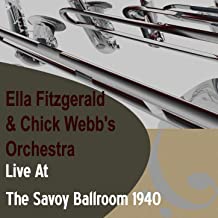
From 1931 to 1933 he was in Kansas City, Missouri playing in Andy Kirk’s Twelve Clouds of Joy, and then played briefly with Fletcher Henderson and Benny Carter in 1934. 1935 to 1939 saw Mouse playing in Cab Calloway’s orchestra, then departed to play with the Ella Fitzgerald Orchestra under the direction of Chick Webb for three years ending in 1942.
By 1943 he was playing with Don Redman and from 1944 to 1947 he did a stint with Edmond Hall. Randolph continued to play into the Seventies, including with the Chick Morrison Orchestra. He never recorded as a bandleader, though he recorded copiously with Henderson, Carter, and Calloway.
Trumpeter Mouse Randolph, who was prominent during the swing era, transitioned on December 12, 1997 in New York City, just six weeks shy of his 89th birthday.
More Posts: history,instrumental,jazz,music,trumpet

Daily Dose Of Jazz…
Bob Whitlock was born on January 21, 1931 in Roosevelt, Utah and began playing bass as a teenager. After relocating to Los Angeles, California was active as a session musician from the early 1950s. He was heard working with Gerry Mulligan, Art Pepper, Chet Baker, Stan Getz, Buddy DeFranco, Joe Albany, Jack Sheldon, Warne Marsh, and numerous others.
Late in the Fifties decade Bob led his own small group while attending the University of California. He went on to work in France in the early 1960s, playing with Zoot Sims, Vi Redd, Curtis Amy, Peggy Lee and Victor Feldman. Towards the end of the Sixties he worked with Joe Pass and extensively with George Shearing. In the 1970s he worked with Albany once again.
Between 1957 and 1972 he recorded fourteen albums as a sideman, never as a leader. Double-bassist Bob Whitlock transitioned on June 20, 2015 in Long Beach, California
More Posts: bandleader,bass,history,instrumental,jazz,music
Daily Dose Of Jazz…
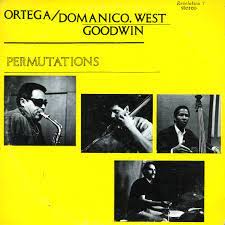
Charles Louis Domanico, better known professionally as Chuck Domanico, was born on January 20, 1944 in Chicago, Illinois. Settling in Los Angeles, California in the mid-1960s, for nearly forty years, he was a central jazz figure in Hollywood who contributed to many movies and TV programs.
Domanico worked with Frank Sinatra, Barbra Streisand, Carmen McRae, Joni Mitchell, Taj Mahal, Diane Schuur, Natalie Cole, and The Manhattan Transfer. He participated in instrumental jazz performances by Chet Baker, Henry Mancini, Shelly Manne, Oliver Nelson, John Klemmer, Roger Kellaway, Barney Kessel, and Art Pepper.
His bass can be heard in themes for television shows like M*A*S*H, Cheers and Frasier, and he contributed to the soundtracks of more than two thousand films.
Double bassist and bass guitarist Chuck Domanico, who played on the West Coast jazz scene, transitioned from lung cancer on October 17, 2002 at the age of 58.
More Posts: bass,bass guitar,history,instrumental,jazz,music