

Daily Dose Of Jazz…
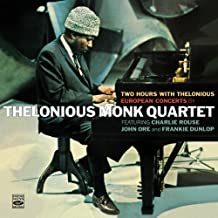
John Ore was born on December 17, 1933 in Philadelphia, Pennsylvania. Attending the New School of Music in Philadelphia from 1943 to 1946, he studied cello followed this with studies on bass at Juilliard.
In the 1950s he worked with Tiny Grimes, George Wallington, Lester Young, Ben Webster, Coleman Hawkins, Elmo Hope, Bud Powell and Freddie Redd. From 1960 to 1963 he played in Thelonious Monk’s quartet, and then with the Les Double Six of Paris in 1964.
Later in the 1960s he returned to Powell’s band, also recording with Teddy Wilson. In the 1970s he worked with Earl Hines and was with the Sun Ra Arkestra in 1982.
Following this he became less active, never recorded an album as a leader, however recorded fifty~one albums as a sideman with not only the above but with Hank Mobley, Cecil Payne, Bud Powell, Sun Ra, Charles Tyler, Lester Young, Eric Alexander, Billy Bang, Andrew Cyrille, Earl Hines, Marva Josie, Steve Lacy, Freddie Redd, and Hampton Hawes. Bassist John Ore passed away on August 22, 2014.

More Posts: bass,history,instrumental,jazz,music
Daily Dose Of Jazz…
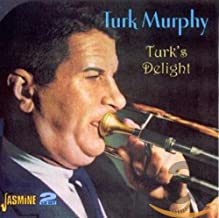
Turk Murphy, born Melvin Edward Alton Murphy on December 16, 1915 in Palermo, California. Serving in the Navy during World War II, during which he played and recorded with Lu Watters and Bunk Johnson. In 1952, he headed Turk Murphy’s Jazz Band, which included pianist Wally Rose, clarinetist Bob Helm, banjoist Dick Lammi, and tubist Bob Short, and had a residency at San Francisco North Beach’s Italian Village. The band appeared twice on The Ed Sullivan Show, in 1959 and 1965.
1979 saw Robert Schulz joining the band for eight years with various members joining as others departed. They included trumpeters Don Kinch and Leon Oakley; pianists Pete Clute and Ray Skjelbred; banjoist Carl Lunsford, tubist and trombonist Bill Carroll, singers Pat Yankee and Jimmy Stanislaw.
Murphy was the singer for the 1971 Sesame Street cartoon shorts, The Alligator King and No. 9 Martian Beauty, animated and produced by his friend Bud Luckey. Murphy arranged and performed on many of Luckey’s other Sesame Street animated shorts.
Murphy’s band played his nightclub, Earthquake McGoons, which opened in 1960 and moved three times before closing in 1984. He got an opportunity to play Carnegie Hall in 1987. Trombonist and bandleader Turk Murphy, who played traditional and Dixieland jazz, passed away on May 30, 1987 in San Francisco, California.
Daily Dose Of Jazz…
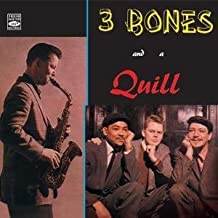
Daniel Eugene Quill was born on December 15, 1927 in Atlantic City, New Jersey. He played often with Phil Woods in the duet Phil and Quill. The two often engaged in celebrated alto battles, exemplifying musical sportsmanship at its finest. As a leader, he recorded three albums and collaborating with Phil Woods recorded six albums between 1956 and 1959.
Recording for Roost and Dawn on his own dates, Quill certainly had no problem playing melodically and was in very melodic settings when employed in Claude Thornhill’s big band and Gerry Mulligan Concert Jazz Band from 1960-1962.
Working as a sideman, Gene recorded forty-three albums for Buddy DeFranco, Quincy Jones, Gene Krupa, Gerry Mulligan, Manny Albam, Bob Brookmeyer, Al Cohn, Michel Legrand, Joe Newman, Johnny Richards, Steve Allen, Buddy Arnold, Gil Evans, Dick Garcia, Billie Holiday, Teddi King, Jimmy Knepper, Mundell Lowe, Oscar Pettiford, Pony Poindexter, Bill Potts, Buddy Rich, Jimmy Rushing, and George Williams.
During the last years of his life, he was in extremely poor health during the last years of his life, after suffering brain damage and partial paralysis. On December 8, 1988 alto saxophonist Gene Quill passed away at the age of 60 in his hometown of Atlantic City.
More Posts: bandleader,history,instrumental,jazz,music,saxophone
Daily Dose Of Jazz…
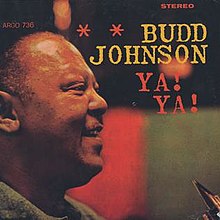
Budd Johnson was born Albert J. Johnson III on December 14, 1910 in Dallas, Texas. He initially played drums and piano before switching to tenor saxophone. In the 1920s he performed in Texas and parts of the Midwest, working with Jesse Stone among others.
Making his recording debut while working with Louis Armstrong’s band from 1932 to 1933, he is more known for his work, over many years, with Earl Hines. He was an early figure in the bebop era, doing sessions with Coleman Hawkins in 1944. The 1950s saw Budd leading his own group and doing session work for Atlantic Records, being the featured tenor saxophone soloist on Ruth Brown’s hit Teardrops From My Eyes.
In the mid-1960s he began working and recording again with Hines. His association with Hines is his longest lasting and most significant. In 1975 he began working with the New York Jazz Repertory Orchestra. In 1993 he was inducted into the Big Band and Jazz Hall of Fame.
Throughout his career, he recorded ten albums as a leader and played and recorded thirty~two albums as a sideman with among others, Cannonball Adderley, Ben Webster, Benny Goodman, Big Joe Turner, Dizzy Gillespie, Carmen McRae, Bud Powell, Carrie Smith, Duke Ellington, Quincy Jones, Count Basie, Roy Eldridge, Claude Hopkins, Etta Jones, Jimmy Smith, Randy Weston, Gil Evans, and Billie Holiday.
Tenor and soprano saxophonist and clarinetist Budd Johnson passed away of a heart attack on October 20, 1984 at the age of 73 in Kansas City, Missouri.
More Posts: bandleader,clarinet,history,instrumental,jazz,music,saxophone
Daily Dose Of Jazz…
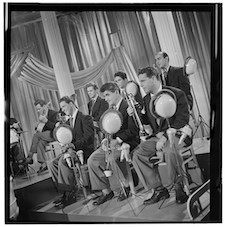
Louis Raphael Mucci was born on December 13, 1909 in Syracuse, New York and began as a baritone horn player. By age ten, he was appearing in professional settings. As a teenager, he switched to trumpet and worked in the late 1930s with Mildred Bailey and Red Norvo before joining Glenn Miller’s ensemble in 1938-1939.
During World War II he played in the bands of Bob Chester, Hal McIntyre, Claude Thornhill, and Benny Goodman. In the first half of the 1950s, he worked as a house musician for CBS and also recorded with Buddy DeFranco and Artie Shaw.
The late 1950s saw him working with Miles Davis, Helen Merrill, and John LaPorta. His association with Davis lasted into the early 1960s and he played with Kenny Burrell in 1964. Trumpeter Lou Mucci passed away on January 4, 2000.
More Posts: history,instrumental,jazz,music,trumpet