

Daily Dose Of Jazz…
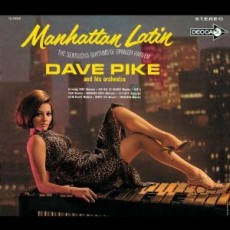
David Samuel Pike was born March 23, 1938 in Detroit, Michigan and learned drums at the age of eight and is self-taught on vibraphone. He made his recording debut with the Paul Bley Quartet in 1958. While working with flautist Herbie Mann in the early Sixties he began putting an amplifier on his vibe. By the late 1960s, Pike’s music became more exploratory, contributing a unique voice and new contexts that pushed the envelope in times remembered for their exploratory nature.
Dave’s release Doors of Perception produced by Mann in 1970 on Vortex Records explored ballads, modal territory, musique concrete, and free and lyrical improvisation. He has recorded as a leader and sideman with Lee Konitz, Chuck Israels, Herbie Mann, Bill Evans, Nick Brignola, and Kenny Clarke.
Pike’s move to Europe and his tenure at MPS Records produced some of the most original jazz of the period. He formed the Dave Pike Set and recorded six albums between 1969 and ’72 that ran the gamut from funky grooves to free, textural territory. The group, though short-lived, created a unique identity and textural palette.
Collaborating with Volker Kriegel during this period provided compositional and instrumental contributions to the group, playing acoustic, classical, and electric guitar as well as sitar, that helped set the Dave Pike Set’s sound apart, organically incorporating influences from jazz, soul jazz, psychedelia, avant-garde music, and World music. With 19 albums to his credit, vibraphonist Dave Pike continued exploring different realms of music until his passing away of lung emphysema on October 3, 2015 in Del Mar, California.
More Posts: drums,marimba,vibraphone
Daily Dose Of Jazz…
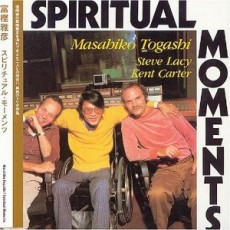
Masahiko Togashi was born in Tokyo, Japan on March 22, 1940 and began his musical education with the violin at age 6. It was some time later that the young man took up drums. He made his debut as a professional drummer at 14 with his father’s swing band and appeared on his first recording three years later with Sadao Watanabe’s Cozy quartet.
Togashi would go on to form his own quartet, releasing his group’s debut album, We Now Create, in 1969. However, a spinal injury in 1970 left the jazz percussionist permanently paralyzed from the waist down, and he would play the rest of his life seated in a specially designed wheelchair.
His physical disability limited his international travels and festival appearances, but frequently played with visiting musicians most notably saxophonist Steve Lacy who performed and recorded extensively with Togashi during his 12 tours in Japan, in particular Bura-Bura featuring Lacy along with Don Cherry and Dave Holland.
Drummer Masahiko Togashi passed away of heart failure at age 67 in his home in Kanagawa, Japan on August 22, 2007. Over the course of his career, which spanned more than 50 years, the percussionist strived to broaden the exposure of Japanese jazz and bridge Western music with the traditional sounds of eastern Asia.
More Posts: drums,percussion
Daily Dose Of Jazz…
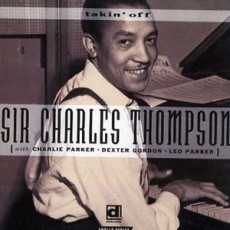
Charles Phillip Thompson was born in Springfield, Ohio on March 21, 1918 and became a professional pianist from the age of 10. By age twelve Thompson was playing private parties with Bennie Moten and his band in Colorado Springs. During this time Count Basie played off and on with Moten’s band and at one of these shows Basie called the young Charles up to play.
Throughout his career has chiefly worked with small groups, although he belonged to the Coleman Hawkins/Howard McGhee band in 1944-1945. Throughout the 40s he recorded with Charlie Parker, Dexter Gordon and J.C. Heard among others.
Thompson composed the jazz standard “Robbins’ Nest” and was dubbed Sir Charles Thompson by Lester Young. The swing and bop pianist, organist and arranger at age 98, passed away of colon cancer on June 16, 2016 in Tokyo, Japan.
More Posts: piano
Daily Dose Of Jazz…
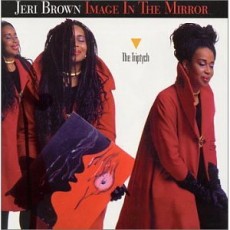
Jeri Brown was born in Halifax, Missouri on March 20, 1952 and began singing publicly from the age of six. While matriculating through college in Iowa on a four-year scholarship she studied classical voice. As a result of student performances in mid-western U.S. and Europe her voice caught the attention of musical directors and composers looking for an imaginative voice with incredible range effortlessly creating aesthetic touches to their contemporary or avant-garde works.
Along with performances with the Cleveland Chamber Orchestra, St. Louis Symphony Orchestra and several combos, Jeri began incorporating more stylistic renditions of standards from theatre, film and pop culture. This led to her working with Ellis Marsalis, Billy Taylor and Dizzy Gillespie. Upon the suggestion of Joe Lovano, she began to improvise during concert performances.
The short list of jazz artists Jeri has performed and recorded with is not limited to Leon Thomas, John Hicks, Grady Tate, Kirk Lightsey, Betty Carter, David Murray, D.D. Jackson, Billy Hart, Kenny Werner, Pierre Michelot, Onaje Allan Gumbs, Fred Hersch, Tony Suggs, Michel Donato, Winard Harper, Chico Freeman, Rufus Reid and Seamus Blake.
Holding several degrees in Counseling, Education and English, Brown has taught at Cleveland State University, Oberlin Conservatory of Music, The university of Akron, University of Massachusetts at Amherst and several universities in Canada. Not to be limited, she has added documentaries, film and theatre to her arsenal of accomplishments and has written and recorded lyrics in collaboration with Avery Sharpe, Henry Butler, Cyrus Chestnut, Abdullah Ibrahim, and Jimmy Rowles. She continues her lifelong pursuit of excellence performing, composing and recording.
More Posts: vocal
Daily Dose Of Jazz…
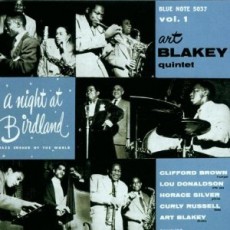
Curley Russell was born Dillon Russell on March 19, 1917 in Trinidad. Learning to play bass in his youth, the double-bassist by 1941 had joined the Don Redman big band and two years later was playing with Benny Carter. During the early bop period of jazz he became extremely busy performing and recording with Dizzy Gillespie and Charlie Parker.
From 1947 – 1949 he was a member of the Tadd Dameron Sextet and became more in demand for his ability to play at rapid tempos typical of the period. During his short career as a sideman he performed and recorded with an impressive list of musicians: Buddy De Franco, Bud Powell, Horace Silver, Thelonious Monk, the Art Blakey Quintet, Clifford Brown, Fats Navarro, Miles Davis, J. J. Johnson, Johnny Griffin, Stan Getz, George Wallington, Milt Jackson, Al Cohn and Zoot Sims.
Seemingly uninterested in the melodic mobility that was expected of bassists, he was never featured as a soloist and by the late Fifties dropped out of the jazz scene and left the music business altogether. Bassist Curley Russell passed away on July 3, 1986.
More Posts: bass