

Daily Dose Of Jazz…
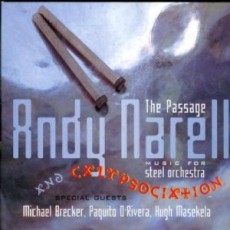
Andy Narell was born March 18, 1954 in New York City and took up the steelpan at a very young age after his father invited Ellie Mannette to bring steel pan to Queens, New York in an attempt to get kids off the street and out of gangs.
Moving with his family to California in his teens he eventually studied music at the University of California, Berkeley. He played piano with UC Jazz Ensembles and graduated in 1973. In the 1980s he worked in the project Bebop & Beyond, recording tribute albums to Dizzy Gillespie and Thelonious Monk. He has performed with the Caribbean Jazz Project, Montreux, Sakésho, and Bela Fleck and the Flecktones.
A composer and arranger Andy has created music for Trinidad’s national steelband competition Panorama, and has also performed in South Africa. He has performed and recorded with Spyro Gyra, Taj Mahal, Toto and Mike Marshall and has recorded more than two dozen albums for Windham Hill, Inner City and Heads Up record labels. Steel panist Andy Narell continues to compose, arrange, perform and tour.
More Posts: steel drums

Daily Dose Of Jazz…
Leon Joseph Roppolo was born on March 16, 1902 in Lutcher, Louisiana but by age ten was living in New Orleans. Young Leon’s first instrument was the violin, but being a fan of the New Orleans marching bands he wanted to play clarinet. Soon excelling on clarinet, he played youthful jobs for parades, parties and at Milneburg on the shores of Lake Pontchartrain. By his teens he left home with Bee Palmer’s group that evolved into the New Orleans Rhythm Kings, that become one of the hot jazz bands in 1920s Chicago along with King Oliver’s band. Leon’s style influenced many younger Chicago musicians, most famously Benny Goodman.
Following the breakup of the Rhythm Kings he went to New York City jazz scene and recorded with the Original Memphis Five and the California Ramblers. Returning to New Orleans he briefly reformed the Rhythm Kings, made a few recordings but primarily worked with other bands like the Halfway House Orchestra, with whom he recorded on saxophone.
Roppolo soon began exhibiting more eccentric behavior and violent temper outbursts. Too much for his family to take, Leon was committed to the state mental hospital. Aging and feeble far beyond his years in his later life, he would come home for periods when a relative or friend could look after him, and he would sit in with local bands on saxophone or clarinet.
Leon Roppolo, nicknamed “Rap” and who played clarinet, saxophone and guitar, passed away in New Orleans at the age of 41 on October 5, 1943. He left for posterity such compositions as Farewell Blues, Gold Leaf Strut and Make Love To Me, the latter recorded by Jo Stafford in 1954 and that hit No. 1 on the Billboard charts and #2 on Cashbox.
Daily Dose Of Jazz…
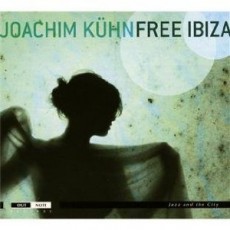
Joachim Kühn was born March 15, 1944 in Leipzig, Germany. He was a musical prodigy and made his debut as a concert pianist, having studied classical piano and composition. Influenced by his elder brother, clarinetist Rolf Kühn, he simultaneously got interested in jazz and in 1961 he became a professional jazz musician.
He put together a trio in 1964 and presented the first free jazz in East Germany. In 1966 he left the country and settled in Hamburg and together with his brother played the Newport Jazz Festival and recorded with Jimmy Garrison on the Impulse Record label.
Kühn moved to Paris in 1968 and has since worked with Don Cherry, Karl Berger, Slide Hampton, Phil Woods and Jean-Luc Ponty among others. As a member of Association P.C. he turned to electronic keyboards and during the second half of the 70’s he lived in California and joined the West Coast fusion scene. This period saw him recording with Alphonse Mouzon, Billy Cobham, Michael Brecker and Eddie Gomez.
Returning to Europe and settled near Paris again, he has played in an acoustic trio with Jean-Francois Jenny-Clark and Daniel Humair since 1985. In the summer of 1996, he joined Ornette Coleman for two concerts at the Verona and Leipzig festivals, which opened the way for his Diminished Augmented System. He continues to perform and record.
More Posts: piano
Daily Dose Of Jazz…
Vanessa Rubin was born on March 14, 1957 and raised in Cleveland, Ohio in a musical household of Trinidadian and Louisianan parentage. After achieving her Bachelor of Arts degree in Journalism from Ohio State University, she received a standing ovation for her performance of “God Bless The Child” while competing in the Miss Black Central Ohio Contest, which convinced her that her true calling was to sing in the jazz tradition.
Returning to Cleveland after graduation, Rubin started singing locally, forming and managing her first group, consisting of organ, guitar, vibes and drums. By 1982 she was in New York City performing at such landmarks as Sweet Basil and the Village Vanguard with the Pharoah Sanders Quartet. She studied with pianist Barry Harris, went on to work with Kenny Barron, Lionel Hampton, the Mercer Ellington Orchestra, Cecil Bridgewater, Toots Thielemans, Steve Turre, Cedar Walton and Grover Washington, Jr.
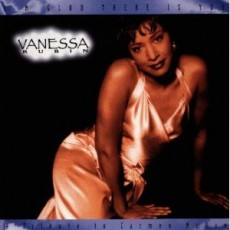
In 1992 Vanessa signed with the Novus label, releasing four albums including a 1994 session I’m Glad There Is You: A Tribute to Carmen McRae. She left Novus to sign with RCA for one album and then Telarc releasing Language of Love and Girl Talk. She has recorded with Antonio Hart, Kenny Burrell, Monty Alexander, Houston Person, Frank Foster, E.J. Allen and Clark Terry.
Vocalist and composer Vanessa Rubin expertly interprets the lyrics with both honest emotion and swing, occasionally scatting in unison or in counterpoint with the horns. Billie Holiday’s classic God Bless The Child has since become her official theme song. Her latest release is The Dream Is You: Vanesa Rubin Sings Tadd Dameron. She continues to entertain audiences around the world.
More Posts: vocal

Daily Dose Of Jazz…
Terence Oliver Blanchard was born March 13, 1962 in New Orleans, Louisiana and began playing piano at the age of five and then the trumpet at age eight. He played trumpet recreationally alongside childhood friend Wynton Marsalis in summer music camps but showed no real proficiency on the instrument. While in high school, he began studying at the New Orleans Center for Creative Arts and then studied at Rutgers, toured with Lionel Hampton, joined Art Blakey and became the Messenger’s music director.
While playing with Blakey, Blanchard rose to prominence as a key figure in the 1980s Jazz Resurgence as a co-leader of a quintet with saxophonist Donald Harrison and pianist Mulgrew Miller, The Harrison/Blanchard group recorded five albums from 1984-1988 until Blanchard left to pursue a solo career in 1990 and recorded his self-titled debut for Columbia Records.
He scored and performed on every Spike Lee movie soundtracks, including his 4-hour HBO Hurricane Katrina documentary “When The Levees Broke: A Requiem In Four Acts” and the soundtrack for “Red Tails”. Composing for other directors, with over forty scores to his credit Blanchard is the most prolific jazz musician to ever compose for movies.
Terence has recorded eighteen albums, been nominated for twelve times and won five Grammy Awards, has won Soul Train Music Award, an Emmy and Golden Globe among others. On the short list his collaborations include Herbie Hancock, Diana Krall, Gary Bartz, Jane Monheit, Dianne Reeves, Christian McBride, Lewis Nash and McCoy Tyner.
Composer, educator and trumpeter Terence Blanchard is the artistic director of the Thelonious Monk Institute of Jazz at the University of Southern California. All the while, he has remained true to his jazz roots as a trumpeter and bandleader on the performance circuit.
More Posts: trumpet