

Daily Dose Of Jazz…
Edward Emerson Cuffee was born on June 7, 1902 in Norfolk, Virginia. He moved to New York in the 1920s, where he recorded with Clarence Williams from 1927 to 1929 and played with Bingie Madison.
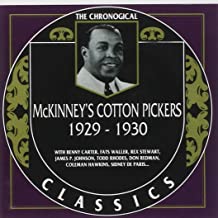
Playing in McKinney’s Cotton Pickers from 1929 to 1934, he moved to Fletcher Henderson’s band for three years beginning in 1935. Ed went on to play with Leon Abbey in 1940 and subsequently through the decade with Count Basie, Chris Columbus and Bunk Johnson.
He quit playing professionally after the late 1940s. Trombonist Ed Cuffee passed away on January 3, 1959 in New York City.

More Posts: history,instrumental,jazz,music,trombone

Daily Dose Of Jazz…
John W. Russell was born on June 4, 1909 in Charlotte, North Carolina but was raised in New York City. He began on violin at age nine, later picking up saxophone and clarinet. He played in both capacities with Jimmy Campbell in 1926, then worked at the Strand Danceland under Earle Howard.
While continuing to play violin in live settings, there are no known recordings of him as a violinist. In the early 1930s after working with Harry White, he replaced Chu Berry in Benny Carter’s ensemble in 1933-34, then joined up with Willie Bryant in 1935-36. Johnny toured with Bobby Martin’s orchestra in Europe in 1938, and played with this group on the soundtrack to the 1938 Erich von Stroheim film, L’alibi; it is for his solos in this recording that he is best known.
Following this Russell remained in Europe to play with Willie Lewis from 1939 to 1941. Upon his return to the U.S. he played with Garvin Bushell briefly before being drafted. He played in military bands, including Russell Wooding’s, during World War II, then played following the war with Cecil Scott in 1945 and Eddie Cornelius.
Tenor saxophonist, clarinetist, and violinist Johnny Russell, who stopped playing full-time later in the 1940s, but occasionally did club dates later in his life, passed away on July 26, 1991 in New York City.
More Posts: clarinet,history,instrumental,jazz,music,saxophone,violin
Daily Dose Of Jazz…
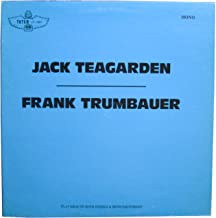
Orie Frank Trumbauer was born on May 30, 1901 in Carbondale, Illinois, Trumbauer grew up in St Louis, Missouri, the son of a musical mother who directed saxophone and theater orchestras. His first important professional engagements were with the Edgar Benson and Ray Miller bands, shortly followed by the Mound City Blue Blowers, a local group that became nationally famous through their recordings on Brunswick.
Trumbauer recruited Bix Beiderbecke for Jean Goldkette’s Victor Recording Orchestra, of which he became musical director. After leaving Goldkette, he and Beiderbecke worked briefly in Adrian Rollini’s short lived New Yorkers band, then joined Paul Whiteman in 1927. In 1927, he signed a contract with OKeh and released a 78 recording of Singin’ the Blues. Originally recorded and released by the Original Dixieland Jass Band in 1920, the Okeh recording became a smash hit. Fletcher Henderson and His Orchestra would record it in 1931 in the Trumbauer-Beiderbecke version.
He played with Whiteman for eight of the following nine years. Frank had a separate contract with OKeh from 1927 through 1930, where he recorded some of the most legendary small group jazz recordings of the era with Brunswick, Columbia, and Victor.
Leading The Three T’s, featuring the Teagarden brothers in 1936, two years later he and Mannie Klein co-led a band. In 1940 he left music to use his pilot skills to join the Civil Aeronautics Authority. Frank became a test pilot during World War II he was a test pilot with North American Aviation, and trained military crews in the operation of the B-25 Mitchell bomber. He continued to work for the CAA after the war, and also played in the NBC Orchestra. After 1947, although he continued to play and record, he earned most of his income in aviation.
Saxophonist, bassoonist, clarinetist and composer Frank Trumbauer, who was the influence for Lester Young, passed away of a sudden heart attack on June 11, 1956 in Kansas City, Missouri, age 55.

More Posts: alto saxophone,bassoon,C-melody saxophone,clarinet,history,instrumental,jazz,music
Daily Dose Of Jazz…
Arthur “Traps” Trappier was born on May 28, 1910 in Georgetown, South Carolina and played with Charlie Skeets and Blanche Calloway in the late 1920s. After working steadily through the 1930s, he joined Fats Waller in 1941-42 before serving in the military during World War II.
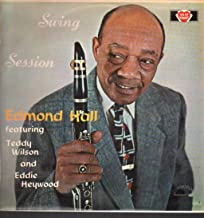
He led his own trio in various hotels in New York City in the 1950s, and played as a sideman into the 1970s. Among those he played with are Josh White, Wilbur De Paris, Edmond Hall, Sy Oliver, Hot Lips Page, Buddy Johnson, Wingy Manone, Sidney Bechet, Benny Goodman, and Red Allen.
He recorded with Waller, Hall, Conrad Janis, Punch Miller, Mutt Carey, Tony Prenti, Willie “The Lion” Smith, and Rex Stewart. Drummer Arthur Trappier passed away on May 17, 1975 in New York City.
More Posts: drums,history,instrumental,jazz,music
Daily Dose Of Jazz…
Herbert “Kat” Cowans, also spelled Cowens, was born May 24, 1904 in Texas. Working as a shoeshine boy as a child, his first professional engagement as a drummer was with the Satisfied Five, a local Texas ensemble. After moving to Wichita Falls, Texas he played in Frenchy’s New Orleans Jazz Band, then worked with Charlie Dixon. Quitting Dixon’s ensemble to finish high school while still in his teens, he went on to play in theater orchestras early in the 1920s.
Moving to New York City, Cowans played with Cleo Mitchell in the Shake Your Feet revue. Following this, he did work with the Kansas City Blackbirds, Jimmy Cooper’s Black and White Revue, and Eubie Blake in addition to leading his own band.
In the 1930s Herbert played with Fats Waller and Stuff Smith, before joining Eddie Heywood’s band for recordings behind Billie Holiday in 1941. He worked with Garvin Bushell in 1942, then played in the pit orchestra for the Broadway show The Pirate.
Cowans led a USO band in 1943, touring military bases worldwide, then led small ensembles for several decades thereafter. He also worked with Louis Metcalfe in 1963. He worked with USO again in East Asia in the 1970s, then retired to Dallas, Texas. Drummer Herbert Cowans passed away on January 23, 1993.
More Posts: bandleader,drums,history,instrumental,jazz,music