

Daily Dose Of Jazz…
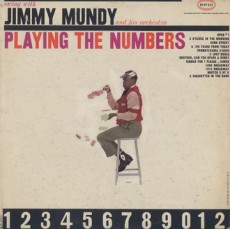
Jimmy Mundy was born James Mundy in Cincinnati, Ohio on June 28, 1907. He learned to play the saxophone as a child but gained his arranging skills in his early twenties playing in the local bands of Erskine Tate, Tommy Miles and Carroll Dickerson.
In 1932 he sat in the saxophone chair of the Earl Hines band for four years, but swiftly developing a reputation as an arranger. Arranging a couple of tunes for Claude Hopkins in 1932, it was after selling one of his arrangements to Benny Goodman in 1935 that Mundy was hired him away from Hines, becoming Goodman’s staff arranger.
Mundy was also a significant supplier of arrangements to Count Basie from about 1940 to 1947, as well as writing for Gene Krupa, Paul Whiteman, Dizzy Gillespie, Charlie Spivak, Harry James and many others. He briefly led his own band in 1939, but after WWII he returned to arranging for Basie, James, and others.
Jimmy wrote the score to the 1955 musical “The Vamp” that starred Carol Channing. The 1957 musical “Livin’ The Life” and the 2010 dance revue “Come Fly Away” also had some of his music.
In 1959, a move to Paris had Mundy as the musical director for Barclay Records but he returned to the U.S. in the Sixties. He continued an active career as a writer well into the 1970s. He recorded three albums as a leader with his last “Fiesta In Brass” the year before his death. On April 24, 2003, tenor saxophonist, arranger and composer Jimmy Mundy passed away.
More Posts: saxophone
Daily Dose Of Jazz…
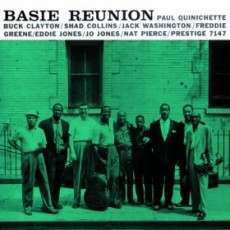
Shad Collins was born Lester Rallingston Collins on June 27, 1910 in Elizabeth, New Jersey. He learned to play the trumpet and acquired the nickname Shad in his teens. The late 1920s saw him joining Charlie Dixon’s band and performing with pianist Eddie White before joining Chick Webb’s band in 1931. In the mid 1930s he played and toured Britain and Europe with Teddy Hill and then joined the Count Basie Orchestra.
Collins performed in Basie’s band at the From Spirituals to Swing concerts in New York City in 1938 and 1939. By the late 1930s he was working in the bands led by Benny Carter, Lester Young and Don Redman among others.
In 1941, he replaced Dizzy Gillespie in Cab Calloway’s band for two years, then sporadically through 1946. He worked and recorded in the 1940s with Oran “Hot Lips” Page, in the 50s with Jimmy Rushing, Lester Young and Sam “The Man” Taylor, when the later ventured into a more rhythm and blues sound.
Though he worked more on a part-time basis during the Sixties, he never recorded as a leader but was known for composing and arranging the frequently recorded tune “Rock-A-Bye Basie”. On June 6, 1978 trumpeter, composer and arranger Shad Collins passed away.
More Posts: trumpet
Daily Dose Of Jazz…
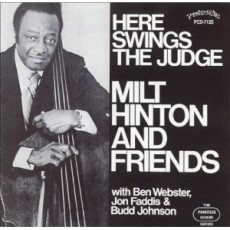
Milt Hinton was born Milton John Hinton on June 23, 1910 in Vicksburg, Mississippi but grew up in Chicago, Illinois from age eleven. He attended Wendell Phillips High School and Crane Junior College and learned to first play violin followed by bass horn, tuba, cello and the double bass.
In the late 1920s and early 1930s, he worked as a freelance musician in Chicago playing with Jabbo Smith, Eddie South, and Art Tatum. In 1936, he joined Cab Calloway’s band playing alongside Chu Berry, Cozy Cole, Dizzy Gillespie, Illinois Jacquet, Jonah Jones, Ike Quebec, Ben Webster, and Danny Barker, where he was equally adept at bowing, pizzicato, and “slapping” a technique for which he became famous while playing in the big band from 1936 to 1951.
Milt later became a television staff musician, working regularly on shows by Jackie Gleason and Dick Cavett, recorded eleven albums as a leader and worked as a sideman on numerous albums with Lionel Hampton, Milt Jackson, Elvin Jones, Charles Mingus, Ike Quebec, Ralph Sutton, Ruby Braff, Clark Terry and Branford Marsalis.
He has twice received awards from the National Endowment For The Arts for his work as a jazz educator and a fellow and is a 1993 NEA Jazz Master. Bassist Milt Hinton, who photographically documented many of the jazz greats, was nicknamed “The Judge”, was heralded as the “the dean of jazz bass players”, passed away on December 19, 2000 in New York City at age 90.
More Posts: bass
Daily Dose Of Jazz…
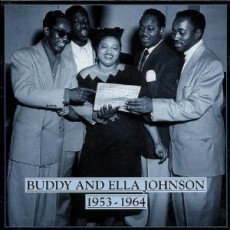
Ella Johnson was born Ella Mae Jackson on June 22, 1919 in Darlington, South Carolina. She joined her brother Buddy Johnson in New York as a teenager, where he was leading a popular band at the Savoy Ballroom in Harlem.
Ella scored her first hit in 1940 with “Please, Mr. Johnson” with subsequent hits included “Did You See Jackie Robinson Hit That Ball?”, “When My Man Comes Home” and “Hittin’ On Me”. Her popular 1945 recording of “Since I Fell For You” composed by her brother, led to its eventual establishment as a jazz standard.
She continued to perform with Buddy Johnson into the 1960s and her singing drew comparisons to Ella Fitzgerald and Billie Holiday. In February 2004, she died in New York City of Alzheimer’s disease, at the age of 84.
More Posts: vocal
Daily Dose Of Jazz…
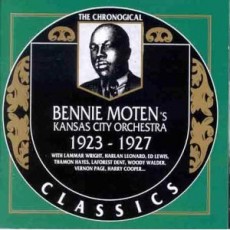
Lammar Wright Sr. was born on June 20, 1907 in Texarkana, Texas but grew up in Kansas City, Missouri. He began his musical career playing and recording with Bennie Moten’s band in 1923. Relocating to New York City in 1927 Lammar played with The Missourians, staying with the group after Cab Calloway became its leader. Wright remained Calloway’s lead trumpeter until 1942.
Playing sporadically with Calloway through the rest of the decade, Wright would also played with Don Redman, Claude Hopkins, Cootie Williams, Lucky Millinder, Sy Oliver and Louis Armstrong.
In the 1950s and 1960s he taught music and worked as a studio musician, in addition to recording with Arnett Cobb, Count Basie, the Sauter-Finegan Orchestra and George Shearing.
Wright led his own groups from time to time, had a role in the 1968 film The Night They Raided Minksy’s. Trumpeter Lammar Wright passed away on April 13, 1973 in New York City.
More Posts: trumpet