

Daily Dose Of Jazz…
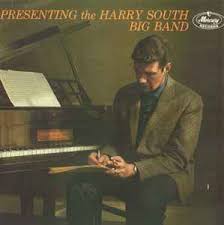
Harry Percy South was born on September 7, 1929 in Fulham, London, England. Coming into prominence in the 1950s, he subsequently performed with Joe Harriott, Dizzy Reece, Tony Crombie, and Tubby Hayes. In 1954, he was in the Tony Crombie Orchestra, together with Dizzy Reece, Les Condon, Joe Temperley, Sammy Walker, Lennie Dawes, and Ashley Kozak.
After returning from a nine-month stint in Calcutta, India, with the Ashley Kozak Quartet, he spent four years with the Dick Morrissey Quartet, where he both wrote and arranged material for their subsequent four albums.
Forming his own jazz big band in 1966, featuring UK musicians Hayes, Dick Morrissey, Phil Seamen, Keith Christie, Ronnie Scott, and Ian Carr, and recorded an album for Mercury Records. In the mid-1960s, he began working with British rhythm & blues singer and organist Georgie Fame, with whom he recorded the album Sound Venture. At that time he was also composing and arranging for Humphrey Lyttelton, Buddy Rich, Sarah Vaughan, and Jimmy Witherspoon.
Working for a time as the musical director to Annie Ross, Harry later branched out into session work, writing themes for television and music libraries, and having written the scores for the Pete Walker films, he is also credited with the arrangements for Emerson, Lake & Palmer, again arranged for Annie Ross and Georgie Fame in collaboration on what was to be Hoagy Carmichael’s last recording, In Hoagland.
Pianist, composer, and arranger Harry South, who was honored with the CD Portraits ~ The Music of Harry South released by the National Youth Jazz Orchestra, passed away on March 12, 1990 in Lambeth, London at age 60.

More Posts: arranger,bandleader,composer,history,instrumental,jazz,music,piano
Daily Dose Of Jazz…
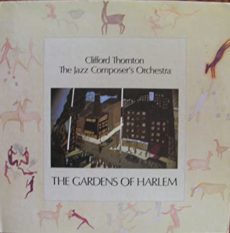
Clifford Edward Thornton III was born on September 6, 1936 in Philadelphia, Pennsylvania into a musical family, his uncle pianist Jimmy Golden and his cousin, drummer J. C. Moses. He began piano lessons when he was seven-years-old, and studied with trumpeter Donald Byrd during 1957 after Byrd had left Art Blakey’s Jazz Messengers, and also that he worked with 17-year-old tuba player Ray Draper and Webster Young. Following a late 1950s stint in the U.S. Army bands, he moved to New York City.
In the early 1960s, Clifford lived in the Williamsburg area of Brooklyn, New York in an apartment building with other young musicians, including Rashied Ali, Marion Brown, and Don Cherry. He performed with numerous avant-garde jazz bands, recording as a sideman with Sun Ra, Archie Shepp, Pharoah Sanders, and Sam Rivers.
During the Seventies, Thornton and others were affected by the compositional ideas of Cecil Taylor, was active in the Black Arts Movement, and associated with Amiri Baraka and Jayne Cortez. This musical and artistic network provided him with a variety of perspectives on ideas such as black self-determination, performance forms, outside playing, and textural rhythm; and giving him access to performers who would provide the abilities some of his later compositions required.
He was included in the dialogue around the developing thought of political artists, including Shepp, Askia M. Touré, and Nathan Hare, as well as the journals Freedomways and Umbra. As an educator, he taught world music at Wesleyan University and created an Artists-in-Residence on campus, giving the academic world-music community exposure to Sam Rivers, Jimmy Garrison, Ed Blackwell, and Marion Brown. He arranged performances by Rashied Ali, Horace Silver, McCoy Tyner, and numerous others
Trumpeter, trombonist, activist, and educator Clifford Thornton, who played free and avant~garde jazz in the 1960 and ‘70s, passed away on November 25, 1989.
More Posts: bandleader,educator,history,instrumental,jazz,music,trombone,trumpet
Three Wishes
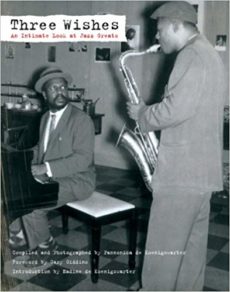
Upon request by Pannonica as to his three wishes Danny Quebec~West responded by telling her:
-
-
“That the United States government… I wish that the capitalistic system be like the socialistic system in subsidizing the starving musicians, for art’s sake.”
-
“My second wish ~ speaking of a field not concerning music ~ I wish that the stigma on jazz musicians concerning drugs… that the world have socialization of medicine, and therefore that we canget all we want.”
- “I hope when they do decide to let me be heardagain after such a long layoff, I hope that I can reach from their toes to their heads, and explode every minute cell in their brain ~ meaning the public, being that I feel that I have been treated very unjustly music~wise..”
-
*Excerpt from Three Wishes: An Intimate Look at Jazz Greats ~ Compiled and Photographed by Pannonica de Koenigswarter

More Posts: baroness,history,instrumental,jazz,music,pannonica,saxophone,three,wishes
Daily Dose Of Jazz…
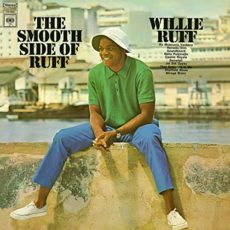
Willie Ruff was born on September 1, 1931 in Sheffield, Alabama and learned to play both the French horn and the double bass. He attended the Yale School of Music graduating with a Bachelor and Master of Music degrees by 1954.
He met pianist Dwike Mitchell in 1947 when they were teenage servicemen stationed at the former Lockbourne Air Force Base in Ohio. They began a professional relationship when Mitchell recruited him to play bass with his unit band for an Air Force radio program. They later played in Lionel Hampton’s band but left in 1955 to form their own group, then together as the Mitchell-Ruff Duo that lasted over fifty years. They also played as the second act to artists such as Louis Armstrong, Count Basie, Duke Ellington, and Dizzy Gillespie.
From 1955 to 2011, the duo regularly performed and lectured in the United States, Asia, Africa, and Europe. In 1950 the Mitchell-Ruff Duo was the first jazz band to play in the Soviet Union and in China in 1981. Ruff was chosen by John Hammond to be the bass player for the recording sessions of Songs of Leonard Cohen, was one of the founders of the W. C. Handy Music Festival in Florence, Alabama in 1982.
As an educator, Willie was a faculty member at the Yale School of Music, teaching music history, ethnomusicology, and arranging. He is founding Director of the Duke Ellington Fellowship Program at Yale, held a visiting appointment at Duke University, where he oversaw the jazz program and directed the Duke Jazz Ensemble, and also has been on faculty at UCLA and Dartmouth.
French hornist, double bassist, music scholar, and educator Willie Ruff, was awarded the Sanford Medal, the Connecticut Governor’s Arts Award, and was an inductee of the Alabama Jazz Hall of Fame, primarily a Yale professor from 1971 to 2017, and continues to reside in Alabama.
More Posts: bass,educator,french horn,history,instrumental,jazz,music
Daily Dose Of Jazz…
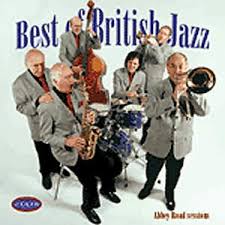
Roy Willox was born August 31, 1929 in Welwyn, Hertfordshire, England into a musical family in 1929. At 16 he initially played with Johnny Claes for a short time in 1945 and then worked in other well-known bands before joining the Ted Heath Orchestra for a five-year stint from 1950 to 1955. During this time he also worked in a band with Keith Christie.
A collaboration with Jack Parnell and other bands led to extensive freelance in television, radio and theater. In the field of jazz, he was part of Harry South’s band in the 1960s and 1970s. This period of performing saw him occasionally returning to the Heath band throughout the 1990s and 2000s, playing the Ted Heath Bands farewell concert at London’s Royal Festival Hall in 2000.
In his later years Roy worked with Kenny Baker, the Robert Farnon Orchestra, and Laurie Johnson’s London Big Band. 2009 with the all-star formation The Allan Ganley Jazz Legacy. He was involved in 156 jazz recording sessions between 1951 and 2016 with Cleo Laine, Larry Page, George Chisholm, Beryl Bryden, Johnny Keating, Tubby Hayes, Kenny Clare, Dudley Moore, Louie Bellson, The London Jazz Chamber Group, Michel Legrand, Phil Woods, and the Len Phillips Big Band.
As a session musician, he is also in pictures of Bert Kaempfert, Tiny Tim ~ Live! At the Royal Albert Hall, and Harry Nilsson ~ A Little Touch of Schmilsson in the Night. Alto saxophonist Roy Willox, who also plays clarinet and flute, passed away on November 25, 2019.
More Posts: clarinet,flute,history,instrumental,jazz,music,saxophone