

Daily Dose Of Jazz…
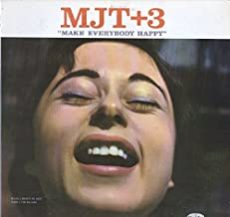
Red Kelly, born Thomas Raymond Kelly on August 29, 1927 in Shelby, Montana initially took lessons on drums, but he was unable to work the hi-hat because polio had inhibited the use of his feet. Switching to double-bass during his teen years, in 1949 he began playing bass in a big band led by Charlie Jackson.
In the early 1950s he toured with Charlie Barnet, Herbie Fields, Claude Thornhill, and Red Norvo. It was while working with Norvo that led to the moniker Red. Kelly and bassist Red Mitchell were living in the same apartment, and when Norvo called Mitchell to invite him to tour, he got Kelly on the phone instead.
He played with Woody Herman for several years, including on a 1954 tour of Europe, and around this time Red also recorded with Dick Collins and Nat Pierce. Relocated to the West Coast, he started playing briefly in Seattle, Washington and then in Los Angeles, California with Maynard Ferguson, Med Flory, Stan Kenton, and Lennie Niehaus.
He was a member of the Modest Jazz Trio with Red Mitchell and Jim Hall, who recorded an album in 1960, and worked with Harry James for most of the 1960s. Later in his life he moved to Tacoma, Washington where he left the music business and ran his own restaurant, Kelly’s. Double-bassist Red Kelly passed away on June 9, 2004 in Tacoma, Washington.

More Posts: bass,history,instrumental,jazz,music
Daily Dose Of Jazz…
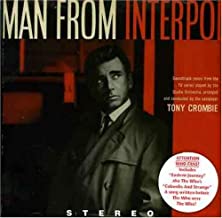
Tony Crombie was born Anthony John Kronenberg on August 27, 1925 in Bishopsgate, London, England. He was a self-taught musician who began playing the drums at the age of fourteen. He was one of a group of young men from the East End of London who ultimately formed the co-operative Club Eleven, bringing modern jazz to Britain.
In 1947 traveling to New York City with his friend Ronnie Scott, he witnessed the playing of Charlie Parker and Dizzy Gillespie, then took it back to the UK along with Scott, Johnny Dankworth, and Dennis Rose. 1948 saw Crombie touring Britain and Europe with Duke Ellington, who only brought Ray Nance and Kay Davis with him. Picking up a rhythm section in London, Ellington chose him on the recommendation of Lena Horne, with whom he had worked when she appeared at the Palladium.
Tony would go on to depart from jazz and set up a rock and roll band in 1956 he called The Rockets. Modelled after Bill Haley’s Comets and Freddie Bell & the Bellboys, he released several singles for Decca and Columbia record labels. By 1958 the Rockets had become a jazz group with Scott and Tubby Hayes. During the following year Crombie started Jazz Inc. with pianist Stan Tracey.
In 1960, he composed the score for the film The Tell-Tale Heart and established residency at a hotel in Monte Carlo. In May 1960 he toured the UK with Conway Twitty, Freddy Cannon, Johnny Preston, and Wee Willie Harris.
During the next thirty years he performed with Ben Webster, Coleman Hawkins, Illinois Jacquet, Joe Pass, Mark Murphy and Eddie “Lockjaw” Davis. In the mid-1990s, after breaking his arm in a fall, he stopped playing the drums but continued composing until his death in 1999. Drummer, pianist, vibraphonist bandleader, and composer Tony Crombie, who was an energizing influence on the British jazz scene for over six decades, passed away on October 18, 1999 in Hampsead, London at the age of 74.
More Posts: bandleader,composer,drums,history,instrumental,jazz,music
Three Wishes
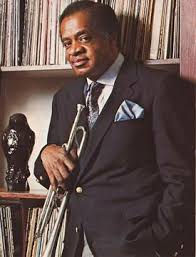
The Baroness asked Donald Byrd what his three wishes would be and he replied:
-
-
“Health.”
-
“Education.”
- “Long life.”
-
*Excerpt from Three Wishes: An Intimate Look at Jazz Greats ~ Compiled and Photographed by Pannonica de Koenigswarter
More Posts: baroness,history,instrumental,jazz,music,pannonica,three,trumpet,wishes

Daily Dose Of Jazz…
Gil Coggins was born Alvin Gilbert Coggins on August 23, 1928 in New York City to parents of West Indian heritage. His mother was a pianist and had her son start on the piano from an early age. Attending school in both New York City and Barbados, he went to the High School of Music & Art in Harlem.
In 1946, Gil met Miles Davis while stationed at Jefferson Barracks in Missouri. After his discharge he began playing piano professionally, working with Davis on several of his Blue Note and Prestige releases. He went on to record with John Coltrane, Sonny Rollins, Lester Young, Art Blakey’s Jazz Messengers, Ray Draper, and Jackie McLean.
Coggins retired from playing jazz professionally in 1954 and took up a career in real estate, only playing music occasionally. He did not record as a leader until 1990, when Interplay Records released Gil’s Mood. He continued performing through the 1990s and the early years of the 2000s.
On February 15, 2004 pianist Gil Coggins, whose second album as a leader Better Late Than Never was released posthumously, passed away from complications sustained in a car crash eight months earlier in Forest Hills, New York.
More Posts: bandleader,history,instrumental,jazz,music,piano
Daily Dose Of Jazz…
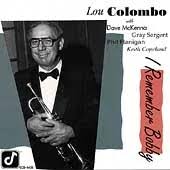
Lou Colombo was born in Brockton, Massachusetts on August 22, 1927 and started playing the trumpet when he was twelve. At seventeen he turned his attention to professional baseball and was signed with the Brooklyn Dodgers for seven years until a knee injury ended his career at 24.
Turning his attention to music Lou dove in full-time, mostly as an ensemble player and studio musician, playing and recording in the big bands of Dizzy Gillespie, Artie Shaw, Benny Goodman, Buddy Morrow, and Pérez Prado. He also worked sessions with Meredith D’Ambrosio on the 1989 recording South to a Warmer Place, George Masso on That Old Gang of Mine, 1996) and Jerry Jerome’s Something Borrowed, Something Blue.
Under his own name, Colombo recorded some albums one, including 1,990 at Concord Records, a tribute album for Bobby Hackett, one with Dave McKenna and Keith Copeland. Active on the Cape Cod jazz scene for five decades, trumpeter Lou Colombo passed away due to a traffic accident on March 3, 2012 at the age of 84.
More Posts: bandleader,cornet,flugelhorn,history,instrumental,jazz,music,trumpet