


Daily Dose Of Jazz…
Art Themen was born Arthur Edward George Themen on November 26, 1939 in Manchester, England. He originally played the clarinet but after hearing the Dankworth Seven when he was sixteen and saxophonist Danny Moss winked at his cousin, he knew his path was with the saxophone. Dexter Gordon and Sonny Rollins initially influenced his style of playing, and later by Coleman Hawkins, Evan Parker and John Coltrane.
In 1958 he began his medical studies at the University of Cambridge, completed studies at St. Mary’s Hospital Medical School in London and in 1964 became a consultant specializing in orthopaedic medicine.
Themen started playing jazz with the Cambridge University Jazz Group alongside Lionel Grigson, Dave Gelly and Dick Heckstall-Smith. Around London he played with blues musicians Jack Bruce and Alex Korner, then with Peter Stuyvesant Jazz Orchestra in 1965 in Zurich, leading to his playing with Michael Garrick and Graham Collier’s Music.
1974 saw Themen entering on what was to be one of his central musical relationships when he started playing with Stan Tracey, touring with him worldwide and the United Kingdom. He also played and toured with musicians Nat Adderley, Ian Carr, George Coleman and Al Haig.
In 1995 he formed a quartet with pianist John Critchinson. Following his retirement as a consultant orthopaedic surgeon, saxophonist Art Themen has been concentrating on his jazz career and has recorded three albums with Al Haig, Peter King, Howard Riley, Mornington Lockett and Don Weller.

Dose A Day – Blues Away
More Posts: saxophone
Daily Dose Of Jazz…
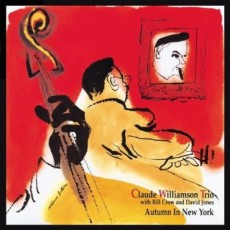
Claude Berkeley Williamson was born November 18, 1926 Brattleboro, Vermont. He studied piano at the New England Conservatory of Music before moving to jazz, influenced mainly by Teddy Wilson, then by Al Haig and Bud Powell.
Moving to California in 1947 he first worked with Teddy Edwards, then with Red Norvo in San Francisco followed by Charlie Barnet in 1949 and June Christy two years later. He would go on to work with Max Roach, Art Pepper, Chet Baker, Maynard Ferguson, Barney Kessel, Dizzy Reece, Ted Curson and others.
Williamson was a longtime member of the Lighthouse All-Stars, often substituting for Russ Freeman, and performing with Bud Shank, Stan Levey, Bob Cooper, Conte Candoli and Howard Rumsey. By 1956 he was the piano player in the Bud Shank Quartet and a little over a decade later he was the pianist for NBC on The Andy Williams Show and then for Sonny and Cher.
In 1978 he went back to the jazz world and released many albums, mainly for Japanese labels, often accompanied by Sam Jones and Roy Haynes. In 1995 he made a trio recording for Fresh Sound Records at the Jazz Bakery and at the age of 88, pianist Claude Williamson currently plays clubs in Los Angeles.
Take A Dose On The Road
More Posts: piano
Daily Dose Of Jazz…
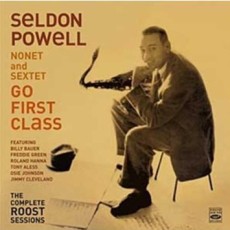
Seldon Powell was born on November 15, 1928 in Lawrenceville, Virginia. A classically trained saxophonist and flautist who studied at Juilliard in New York City, he went on to work briefly with Tab Smith in 1949 before joining and recording with Lucky Millinder the following year. For the next two years he would spend in the military and upon discharge became a studio musician.
A solid musician with the ability to move between genres from big band to hard bop to soul jazz and R&B, over a forty year career he would record four albums as a leader between 1956 and 1973 and another 60 album sessions as a sideman with Clark Terry, Johnny Hammond Smith, Buddy Rich, Louis Bellson, Neal Hefti, Billy Ver Planck, Sy Oliver,, Erskine Hawkins, Ahmed Abdul-Malik, Richard “Groove” Holmes, Gato Barbieri, Dizzy Gillespie, Gerry Mulligan,Benny Goodman, Woody Herman, roland Hana, Osie Johnson, Freddie Green, Gus Johnson, Sonny Stitt, Friedrich Gulda, Art Farmer, Cal Tjader, Billy Taylor, Ernie Wilkins, Panama Francis, Teri Thornton, Jimmy Forrest, Charlie Byrd, Oliver Nelson and the list goes on.
He recorded for Epic, Roost, Savoy, RCA, United Artists, Lion, Riverside, EmArcy, Golden Crest, Candid, ABC, New Jazz, Impulse, Solid State, Verve, 20th Century, Atlantic, and Sesac record labels. Tenor saxophonist and flautist who concentrated in the swing, progressive and soul jazz, big band and rhythm & blues genres passed away on January 25, 1997 in Hempstead, New York.
Jazz Is Global – Share
Daily Dose Of Jazz…
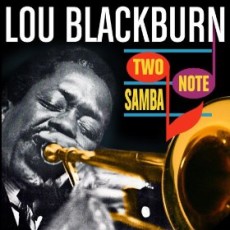
Lou Blackburn was born on November 12, 1922 in Rankin, Pennsylvania. Performing mainly in the swing genre, his adaptability lent his trombone to pursue several other genres including the West Coast jazz, soul jazz and mainstream mediums.
During the 1950s Lou played swing with Lionel Hampton and also with Charlie Ventura. In the early 1960s he began performing with Duke Ellington’s big band and with musicians like trumpeter Cat Anderson, Horace Tapscott, Melvin Moore, Red Callender and Bobby Bryant. He performed sideman duties on the album Mingus at Monterey with Charles Mingus. During this period he did some crossover work with The Beach Boys and The Turtles. He was also a part of the recording session for the film The Manchurian Candidate
Blackburn recorded as a leader in 1963, Jazz Frontier and Two Note Samba for Imperial Records and both have been reissued by Blue Note as a compilation The Complete Imperial Sessions. He also recorded Perception, Brass Bag, Jean-Bleu and Ode To Taras. As a sideman he worked with June Christy, Gil Fuller and The Three Sounds recording for Capitol, Pacific Jazz and Blue Note record labels. Trombonist Lou
His decision to live abroad moved him to Germany where he toured very successfully out of Germany and Switzerland with his ethno jazz band Mombasa that had strong African content and players. He also put together an ensemble called the Lou Blackburn International Quartet that had a more progressive feel. Trombonist Lou Blackburn passed away on June 7, 1990 in Berlin, Germany.
Dose A Day – Blues Away
More Posts: trombone
Daily Dose Of Jazz…
Marlene Ver Planck was born Marlene Paula Pampinella on November 11, 1933 in Newark, New Jersey. She grew up listening to Frank Sinatra and Ella Fitzgerald on the radio and started singing at age 19., working with Tex Beneke and Charlie Spivak in the Fifties, the latter band is where she met her husband, composer, arranger and conductor Billy Ver Planck.
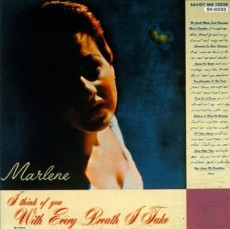
Her first big break came in 1955 at the age of 21 when she teamed up with pianist Hank Jones, flutist Herbie Mann, trumpeter Joe Wilder, bassist Wendell Marshall and drummer Kenny Clarke and recorded I Think Of You With Every Breath I Take for Savoy Records. Singing went on to sing with the Dorsey Brothers Orchestra in New York City and after Tommy’s death pursued studio work with Sinatra, Perry Como, Tony Bennett, Antonio Carlos Jobim, Blood Sweat & Tears and Kiss.
Marlene’s voice was recognizable by millions of people outside the jazz world doing jingles in the ’60s: “Weekends were made for Michelob… Yeah!”, “Winston tastes good like a cigarette should!” and “Mmm good, mm-mm good, that’s what Campbell’s Soups are/mm mm good.” After thousands of commercial jingles and hours and hours of studio session work in New York, she decided to settle down with her husband in their house in Clifton, New Jersey and began performing and recording together.
They would go on to work with composer Loonis McGlohon, Alec Wilder, Mel Torme, Eileen Farrell, Glenn Miller Orchestra, George Shearing and Marian McPartland among others. Over the course of her career she recorded two-dozen albums and appeared on several television shows.
Take A Dose On The Road
More Posts: vocal