

Daily Dose Of Jazz…
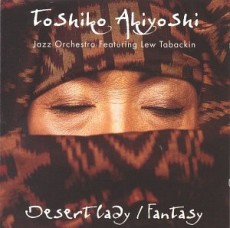
Toshiko Akiyoshi was born 12 December 1929 in Liaoyang, Manchuria in the Republic of China to Japanese emigrants. Losing their home after WWII her family returned to Japan where a local record collector introduced her to jazz through Teddy Wilson playing Sweet Lorraine. Immediately loving the sound she began to study jazz
In 1952, during a tour of Japan, pianist Oscar Peterson discovered Akiyoshi playing in a club on the Ginza. So impressed he convinced record producer Norman Granz to record her and in 1953 she dropped her debut album with the Peterson rhythm section, bassist Ray Brown and drummer J.C. Heard. The album was released as Toshiko’s Piano in the U.S. and as Amazing Toshiko Akiyoshi in Japan.
Toshiko went on to study at Berklee School of Music under a full scholarship and in 1956 she became the first Japanese student to attend. She married saxophonist Charlie Mariano in ’59, had a daughter, divorced in ’67, married Lew Tabackin in ’69 and moved to Los Angeles, California in ‘72. Tgether they formed the a 16-piece big band comprised of studio musicians. She composed and arranged the music and he was featured soloist on sax and flute, recording their first album Kogun in 1974. With commercial success in Japan the band began receiving critical acclaim.
Moving to New York City in 1982, a new big band was assembled called the Toshiko Akiyoshi Jazz Orchestra featuring Lew Tabackin. Though BMG released her big band projects in Japan, to her dismay she could never get distribution in the States and after several decades she disbanded the band after the final concert of a seven year run at Birdland in New York City.
Over the course of a fifty year career since her debut recording for Granz in 1954, pianist, composer and arranger Toshiko Akiyoshi has recorded continuously – almost exclusively as a leader of small jazz combos and of her big bands – averaging one studio album release per year for well over 50 years. She has been honored as an NEA Jazz Master, been named a winner in Down Beat Magazine Critic and Reader Polls for album, big band, arranger and composer, and has been nominated for several Grammy awards among other accolades. She continues to compose, arrange, record and perform.

Give The Gift Of Knowledge
More Posts: piano
Daily Dose Of Jazz…
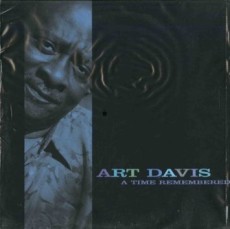
Art Davis was born in Harrisburg, Pennsylvania on December 5, 1934 where he began studying the piano at the age of five, switched to tuba, and finally settled on the bass while attending high school. He studied at Juilliard and the Manhattan School of Music, but graduated from Hunter College.
Davis earned a Ph.D in clinical psychology from New York University in 1982 and four years later he moved to Southern California, where he balanced his teaching as a professor at Orange Coast College and practicing of psychology with jazz performances.
Art recorded three albums as a leader with Herbie Hancock, Hilton Ruiz, Greg Bandy, John Hicks, Idris Muhammad, Pharoah Sanders, Ravi Coltrane, and Marvin Smith.
As a sideman he performed and recorded with Joe Albany, Gene Ammons, Count Basie, Art Blakey, John Coltrane, Curtis Fuller, Dizzy Gillespie, Eddie Harris, Freddie Hubbard, Elvin Jones, Etta Jones, Clifford Jordan, Roland Kirk, Abbey Lincoln, Booker Little, Lee Morgan, Tisziji Munoz, Dizzy Reece, Max Roach, Lalo Schifrin, Shirley Scott, Clark Terry, McCoy Tyner and Leo Wright.
He also launched a legal case that led to the current system of blind auditions for orchestras. Double bassist Art Davis passed away from a heart attack on July 29, 2007.
Inspire A Young Mind
More Posts: bass
Daily Dose Of Jazz…
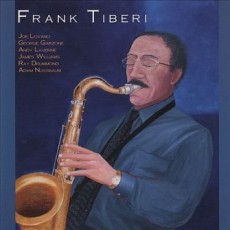
Frank Tiberi ws born December 4, 1928 in Camden, New Jersey. He plays the alto and tenor saxophone, clarinet, flute and bassoon. He has been performing and recording since the age of thirteen and has toured with Benny Goodman and Urbie Green, and has played with Dizzy Gillespie.
He is a part time professor at Berklee College of Music where he teaches improvisational techniques and pedagogy. He has served as the director for the Camden Jazz Festival. Tiberi specializes in modern and contemporary jazz techniques and has released EPs with fellow Berklee instructor George Garzone.
Saxophonist Frank Tiberi is currently the leader of the Woody Herman Orchestra. Herman handpicked him shortly before his death to lead the band. He has been doing so since 1987.
Dose A Day – Blues Away
More Posts: saxophone
Daily Dose Of Jazz…
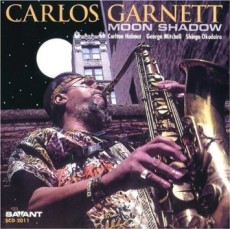
Carlos Garnett was born on December 1, 1938 in Red Tank, Panama Canal Zone. He became interested in jazz music after hearing the music of Louis Jordan and James Moody in film shorts He taught himself to play the saxophone as a teenager and played with soldiers from the nearby United States Army base. In 1957 he started playing in calypso and Latin groups.
After moving to New York in 1962 Garnett played in a rock ‘n’ roll group led by Leo Price. Around this time he also started learning music theory, being self-taught and having always played by ear. Jazz trumpeter Freddie Hubbard hired him in 1968 and introduced him to many New York musicians. His first recording was Hubbard’s 1969 album A Soul Experiment that contained two of his original compositions.
By the late 1960s and early 1970 Carlos played with Art Blakey’s Jazz Messengers, Charles Mingus and Miles Davis. He led his own group called the Universal Black Force, recording five albums between 1974 and 1977. In 1982 suffering from depression and drug abuse, he experienced a spiritual awakening and stopped playing music for years. He began performing again in 1991 and released the albums Fuego En Mi Alma, Under Nubian Skies and Moon Shadow.
In 2000 Garnett moved back to Panama, where he continues to perform actively and has assumed the role of Maestro, “Teacher”, to pass on to the next generation of young musicians in Panama, the music of jazz.
He has recorded with Russell Gunn, Dee Dee Bridgewater, Onaje Allan Gumbs, Mtume, Guilherme Franco, Norman Connors, Billy Hart, Kenny Kirkland, Anthony Jackson, Brad Jones, Andrew Hill and Pharoah Sanders.
As he continues to perform, he has performed in Japan, Austria and at three editions of the annual Panama Jazz Festival. The 9th Annual Panama Jazz Festival in 2012, organized by Panamanian pianist Danilo Perez, was dedicated to tenor saxophonist Carlos Garnett in recognition of his contribution to music.
Put A Dose In Your Pocket
More Posts: saxophone
Daily Dose Of Jazz…
Roy McCurdy was born November 28, 1936 in Rochester, New York. He attended the Eastman School of Music from sixteen to eighteen, during which time he also played professionally with Roy Eldridge, Eddie Vinson at seventeen. Among the influences he cites Louie Bellson, Shelly Manne, Sam Woodyard, Buddy Rich, Pap Joe Jones, and the bands of Duke Ellington, Jimmie Lunceford and Lionel Hampton.
He started out playing with the Jazz Brothers – Chuck and Gap Mangione, In 1960 he joined the Art Farmer-Benny Golson Jazztet, remaining for two years, as well as Bobby Timmons, Betty Carter and Sonny Simmons from 1963-64. He played on the classic album Sonny Meets Hawk!.
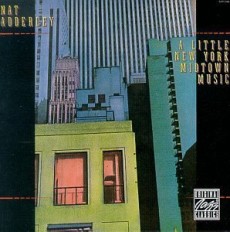
In 1965 he joined Cannonball Adderley Quintet in 1965 and stayed with the band, recording 18 albums until Adderley’s death. He recorded a half-dozen with Nat Adderley, and has also played and/or recorded with Count Basie, Nancy Wilson, Gene Ammons, Wes Montgomery, Ella Fitzgerald, Sarah Vaughan, Carmen McRae, Joe Williams, Herbie Hancock, Oscar Peterson,, Bud Powell, Art Pepper, Joe Zawinul, Betty Bennett and the jazz rock group Blood, Sweat and Tears.
He appears on the classic 1983 recording Jackson, Johnson, Brown & Company featuring Milt Jackson on vibes, trombonist J.J. Johnson, bassist Ray Brown, Tom Ranier on piano and John Collins on guitar.
As of 2010, in between performing and recording drummer Roy McCurdy is an Adjunct Professor in the Jazz Studies Department of the Thornton School of Music at the University of Southern California in Los Angeles, California.
Inspire A Young Mind
More Posts: drums