

Daily Dose Of Jazz…
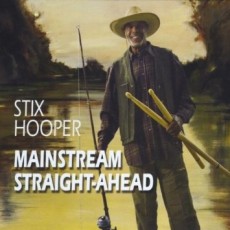
Stix Hooper was born Nesbert Hooper on August 15, 1938 in Houston, Texas. He developed an interest in music, drums and percussion at a very early age and starting in junior high, under the direction of George Magruder, the school’s band director, he began devoting much of his time to the study of all aspects of music including composition and song writing.
Studying at Phyllis Wheatley High School, spearheaded by band director, Sammy Harris, Stix eventually formed a band called the Swingsters, later on the Modern Jazz Sextet. While matriculating at Texas Southern University he received continual coaching from members of the Houston Symphony Orchestra and other local professional musicians.
A move to the West Coast, he studied music at California State University, Los Angeles and also received coaching from well-known private instructors and his personal mentors. During this time the Jazz Crusaders were formed eventually becoming the Crusaders, a world-renowned entity.
Hooper has performed, collaborated, composed with and produced for a wide range of music greats, including Arthur Fielder, George Shearing, the Royal Philharmonic Orchestra of London, B.B. King, Grant Green, Grover Washington, Jr., Quincy Jones, Marvin Gaye, Nancy Wilson, The Rolling Stones and numerous others.
He is credited with creating an original style of drumming called “Jazz Funk” that has been incorporated in jazz as well as other musical genres. In addition, Stix Hooper has contributed through his work with the National Academy of Recording Arts and Sciences serving as the National Vice Chairman and the first African American to do so, having previously served three terms as President of the Los Angeles Chapter of NARAS, the first ever three term President, and only the second African American President of that chapter.
Among the numerous acknowledgements and accolades he has garnered are 12 Grammy nominations, No. 1 awards from various music media, named one of the top drummers/musicians by Down Beat, Playboy and other publications, and has received an invitation to the White House, keys to major US cities and several international honors. Soul jazz, jazz funk and mainstream drummer Stix Hooper continues to compose, perform, record and tour.

Put A Dose In Your Pocket
More Posts: drums

Daily Dose Of Jazz…
Thurman Green was born on August 12, 1940 in Texas where he learned to play the trombone. He spent time playing in Los Angeles, California with swinging big bands including the Clayton-Hamilton Jazz Orchestra and was an occasional member of the Horace Tapscott Quintet, unfortunately one of the groups no one bothered to record. He was open-eared enough to play quite credibly in free settings now and then.
In 1962, Green and baritone saxophonist Hamiet Bluiett were jamming buddies at the Navy School of Music in Washington D.C. but they soon went their separate ways hoping to team up again some day. He wpould perform and record with Willie Bobo, Donald Byrd, Ella Fitzgerald, Bobby Hutcherson and Jean-Luc Ponty.
Some thirty-two years later, in 1994, Bluiett who had been recording for the Mapleshade label was able to give his old friend his first opportunity to lead his own record date, Dance of the Night Creatures. It is a shame that it took over four years for the music to finally come out because on June 19, 1997, bebop trombonist Thurman Green suddenly died at age 57.
Inspire A Young Mind
More Posts: trombone

Daily Dose Of jazz…
Urban Clifford “Urbie” Green was born August 8, 1926 in Mobile, Alabama and was taught the piano as a child by his mother, jazz and popular tunes from the beginning. He picked up the trombone when he was about 12 and although he listened to such trombone greats as Tommy Dorsey, J.C. Higginbotham, Jack Jenney, Jack Teagarden and Trummy Young, he was more influenced by the styles of Dizzy Gillespie, Charles Parker and Lester Young. Vocalists Perry Como and Louis Armstrong also influenced his style.
After his father died when he was 15, Green went straight into professional music, first joining the Tommy Reynolds Band and then stints with Bob Strong, Jan Savitt and Frankie Carle. While at Auburn High School he played with The Auburn Knights Orchestra, a college big band. In 1947, he joined Gene Krupa’s outfit and quickly moved up to Woody Herman’s 3rd Thundering Herd Big Band in 1950 to play with his brother, Jack.
By 1953 Urbie was in New York City quickly establishing himself as the premier trombonist in the booming recording industry and in 1954 he was voted the “New Star” trombonist in the International Critics Poll from Down Beat magazine. He was voted “Most Valuable Player” several times by the National Academy of Recording Arts and Sciences. He recorded with virtually all of the major jazz musicians of the 1950s and 1960s and led his own groups while also joining tours as a featured performer.
He collaborated with innovative producer Enoch Light for the Command and Project 3 labels, producing The Persuasive Trombone of Urbie Green and 21 Trombones, and was sideman and soloist on the album ‘s Continental by Ray Conniff in 1961. In the Seventies he began making innovations with his instrument designing a signature mouthpiece for Jet Tone and collaborated with Martin Brass on practical improvements to trombone design.
He would go on to record with Enoch Light and the Light Brigade, Dick Hyman, Maynard Ferguson and Doc Severinsen before moving over to CTI where he played more of his music and less solos with his band. He would record with Blue Mitchell, Herbie Mann, Manny Albam,, Steve Allen, Ray Bryant, Count Basie, Paul Desmond, Gil Evans, Art Farmer, Aretha Franklin, Dizzy Gillespie, Johnny Griffin, Billie Holiday, Coleman Hawkins, Milt Jackson, Bobby Hutcherson, Wes Montgomery, Mark Murphy and the list goes on and on.
By the 1980s and beyond Urbie’s recording career began a slowing down with only two live, straight jazz works; Just Friends, and Sea Jam Blues. In 1995 he was elected into the Alabama Jazz Hall of Fame and he still plays live at the Delaware Water Gap Celebration of the Arts Festival every September, just miles down the road from his home.
Put A Dose In Your Pocket
More Posts: trombone
Daily Dose Of Jazz…
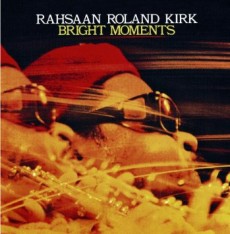
Rahsaan Roland Kirk was born Ronald Theodore Kirk on August 7, 1935 in Coumbus, Ohio and grew up in the neighborhood called Flytown. He felt compelled by a dream to transpose two letters in his first name to make Roland. He became blind at an early age as a result of poor medical treatment. In 1970 he added “Rahsaan” to his name after hearing it in a dream.
Rahsaan preferred to lead his own bands and rarely did he perform as a sideman, although he did record lead flute and solo on Soul Bossa Nova with arranger Quincy Jones in 1964, as well as drummer Roy Haynes and had notable stints with bassist Charles Mingus. His playing was generally rooted in soul jazz or hard bop but his knowledge of jazz gave him the ability to draw from ragtime to swing to free jazz. In additional to classical influences he borrowed elements from composers like Smokey Robinson and Burt Bacharach, Duke Ellington and John Coltrane.
His main instrument was the tenor saxophone and two obscure saxophones: the stritch, a straight alto sax lacking the instrument’s characteristic upturned bell and a manzello, a modified saxello soprano sax, with a larger, upturned bell. Kirk modified these instruments himself to accommodate his simultaneous playing technique. He also played flute, clarinet, harmonica, English horn, recorder and trumpet, as well as incorporating an interesting array of common items such as garden hose, alarm clocks and sirens.
At times Rahsaan would play a number of these horns at once, harmonizing with himself, or sustain a note for lengthy durations by using circular breathing or play the rare, seldom heard nose flute. Many of Kirk’s instruments were exotic or homemade, but even while playing two or three saxophones at once the music was intricate, powerful jazz with a strong feel for the blues. Politically outspoken, he would often talk about issues of the day in between songs at his concerts, such as Black history and the civil rights movement and lacing them with satire and humor. According to comedian Jay Leno, when he toured with him as his opening act, Kirk would introduce him by saying, “I want to introduce a young brother who knows the black experience and knows all about the white devils… Please welcome Jay Leno!”
In 1975, Kirk suffered a major stroke that led to partial paralysis of one side of his body. However, he continued to perform and record, modifying his instruments to enable him to play with one arm. He died from a second stroke on December 5, 1977 after performing in the Frangipani Room of the Indiana University Student Union in Bloomington, Indiana.
His influence went well beyond jazz to include such rock musicians as Jimi Hendrix, Ian Anderson of Jethro Tull, Eric Burdon and War, T.K. Kirk, Hope Clayburn, Jonny Greenwood and Ramon Lopez, all who idolized or paid tribute to, and David Jackson, George Braith and Dick Heckstall-Smith who took to playing multiple saxophones, and Steve Turre, Courtney Pine who utilizing his circular breathing during play. He left to us nearly four-dozen albums as a leader and another eleven with aforementioned Jones, Mingus and Haynes, and Tubby Hayes, Tommy Peltier, Jaki Byard and Les McCann.
Jazz Is Global – Share
Hollywood On 52nd Street
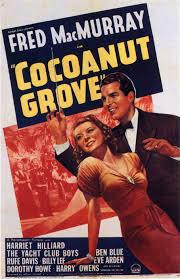
You Leave Me Breathless is the Frederick Hollander and Ralph Freed vehicle that Fred MacMurray introduced in the 1938 film Cocoanut Grove. Harriet Hilliard, Eve Arden, Billy Lee, Harriet Nelson and Rufe Davis are part of the supporting cast.
The Story: MacMurray plays a bandleader who is trying to get from Chicago to Hollywood so he can audition for the Cocoanut Grove nightclub. The band is a disparate group of musicians as well as the Yacht Club Boys and Eve Arden and Ben Blue are a dance “speciality” act. MacMurray also has a kid who isn’t his and a tutor. With no money, they go on a road trip in a jalopy pulling a trailer. They also pick up a bizarre singer because he has a tow truck.
Sponsored By

www.whatissuitetabu.com