

Daily Dose Of Jazz…
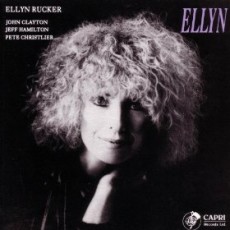
Ellyn Rucker was born in Des Moines, Iowa of July 29, 1937 and she started playing piano when she was eight, discovered jazz at 13, and studied classical piano at Drake University. However, it wasn’t until 1979 that she decided to become a full-time musician.
Rucker toured Europe several times both with and without Spike Robinson, recorded a small catalogue of several albums for Capri Records, has a full-length video Live In New Orleans on Leisure Jazz label, and has performed at festivals and clubs around the U.S. and Europe.
Though she is not a household name to jazz fans around the globe Ellyn Rucker is a fixture on the Denver, Colorado jazz scene. The Bill Evans influenced hard bop and bop-based pianist and vocalist continues to perform, record and tour.

Take A Dose On The Road
Daily Dose Of Jazz…
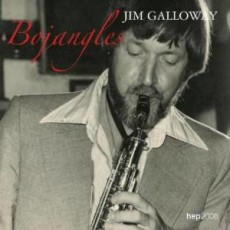
Jim Galloway was born James Braidie Galloway in Kilwinning, Ayrshire, Scotland on July 28, 1936. Since emigrating from Scotland in the mid-1960s he had based his career in Canada.
Galloway recorded several albums as a leader and in the late 1970s formed an ensemble, the Wee Big Band. One of his many albums, Walking On Air, was nominated for Best Jazz Album at the 1980 Juno Awards.
He was the artistic director of the Toronto Jazz Festival from 1987 to 2009. In 2002 Jim was honored when made a Chevalier of the French Ordre des Arts et des Lettres. His musical performances continue to be listed on the Toronto Jazz Festival website.
Bandleader, songwriter, clarinet and saxophone player Jim Galloway died in palliative care in Toronto, Ontario, Canada on December 30, 2014.
Give The Gift Of Knowledge
Hollywood On 52nd Street
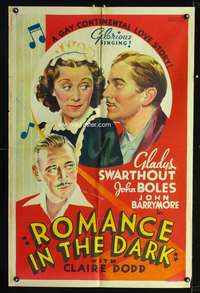
The Nearness Of You is a Hoagy Carmichael & Ned Washington tunethat was featured in the 1938 film Romance In The Dark. The movie starred John Barrymore and John Boles. Lead actress Gladys Swarthout of the Metropolitan Opera performed the song.
The Story: John Boles, plays an egotistical, preening, successful Hungarian singer named Kovach. Gladys Swarthout, charmingly plays a young singer who wishes to advance herself. Kovach has handed her a first prize medal at her graduation from conservatory, and casually said he would like to hear her sing again and to look him up. He didn’t mean it, but she takes him literally, so she goes and stands by the stage door and he doesn’t notice her, she tries his house and can’t get in, and eventually gets a job as his maid. Having infiltrated his abode, she keeps trying to draw attention to her voice by singing, and he remains obtuse and does not notice. Events transpire in her favor, however, and he ends up appreciating her, then later falling for her. Barrymore gives her a contract, under the false impression that she is a Persian princess, and creates a huge publicity campaign about his new discovery, a Middle Eastern singing sensation. Well, events ensue, and the ending must remain wrapped in satin, although the discerning might well imagine it.
Sponsored By

www.whatissuitetabu.com
Daily Dose Of Jazz…
Don Ellis was born on July 25, 1934 in Los Angeles, California and started playing th trumpet in his youth. After a move to Minneapolis, Minnesota attended West High School. Upon hearing the Tommy Dorsey Big Band he became interested in jazz as well as being inspired by Louis Armstrong and Dizzy Gillespie. He went on to receive a music composition degree from Boston University.
Ellis’ first job was with the Glenn Miller Band until his enlistment in the U.S. Army Symphony Orchestra and the Soldier’s Show Company. Transferred to Germany he met Cedar Walton, Eddie Harris and Don Menza and got his first opportunity to compose and arrange for a big band. Two years later he was in New York City playing in dance hall bands, toured with Charlie Barnet and by ’59 was in Maynard Ferguson’s band.
Becoming involved in the avant-garde jazz scene he appeared on albums by Charles Mingus, Eric Dolphy and George Russell, staying with the latter for two years. Ellis led several sessions with small groups between 1960 and 1962 that featured Jaki Byard, Paul Bley, Gary Peacock, Ron Carter, Charlie Persip and Steve Swallow among others. He would go on to tour Poland, Germany and Sweden, return to New York, form the Improvisational Workshop Orchestra, studied ethnomusicology, Indian music, be involved with several Third Stream Projects and teach at SUNY Buffalo for a year. He delved into electronic music in the late Sixties on Columbia Records with Electric Bath and garnered a Grammy nomination and a Down Beat Album of the Year Award.
Don’s popularity among educators was also climbing and copies of his band’s charts were being published and played by many high school and college big bands. Accordingly, he taught many clinics and played with many school bands. He composed the music for the film The French Connection, winning Grammy for Best Instrumental Arrangement and later composed music for the film The Seven-Ups.
He became interested in Brazilian music and created the Organic Band utilizing a vocal quartet and indigenous musicians. He would continue performing and touring well into the Seventies and his last known public performance took place on April 21, 1978, at the Westside Room in Century City. After this date, his doctor ordered him to refrain from touring and playing trumpet because it was too stressful on his heart. On December 17, 1978, after seeing a Jon Hendricks concert, trumpeter, composer, arranger, bandleader and educator Don Ellis suffered a fatal heart attack at his North Hollywood home where his parents were staying with him. He was 44.
Give A Gift Of Jazz – Share
More Posts: trumpet
Daily Dose Of Jazz…
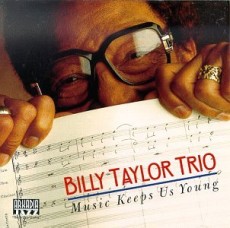
William “Billy” Taylor was born July 24, 1921 in Greenville, North Carolina but his family moved to Washington, DC when he was five years old. Growing up in a musical family, learning to play guitar, drums and saxophone as a child but most successfully on the piano. He took classical piano lessons with Henry Grant, who had educated Duke Ellington a generation earlier.
His first professional appearance was playing keyboard at the age of 13 and was paid one dollar. He attended Dunbar High School, the U.S.’s first high school for African-American students. He went to Virginia State College, majored in sociology but pianist Dr. Undine Smith Moore noticed young Taylor’s talent on piano, changed his major to music, graduating with a degree in music in 1942.
After graduation a move to New York City saw Billy playing piano professionally from 1944, first with the Ben Webster Quartet on 52nd Street. He met Art Tatum the same night, who became his mentor. He went on to perform with Machito developing his love for Latin music, a tour of Europe with the Don Redman Orchestra, and remained to work Paris and the Netherlands. Retuning to New York he worked with Bob Wyatt, Sylvia Sims and Billie Holiday in a successful show called Holiday on Broadway. A year later, he became the house pianist at Birdland performing with Charlie Parker, J. J. Johnson, Stan Getz, Dizzy Gillespie and Miles Davis. He would become the longest playing pianist ever in the history of the club.
In 1949, Taylor published his first book, a textbook about bebop piano styles. In 1952 Taylor composed one of his most famous tunes, I Wish I Knew How It Would Feel To Be Free, which subsequently achieved more popularity with the civil rights movement of the 1950s and 1960s. Nina Simone covered the song in her 1967 album Silk & Soul and the instrumental is used by the BBC for it’s long running television Film program.
Billy made dozens of recordings in the 1950s and 1960s, had a thriving broadcast career and in 1958, he became the Musical Director of NBC’s The Subject Is Jazz, the first ever television series focusing on jazz. The then new National Educational Television Network (NET) produced the 13-part series that hosted Duke Ellington, Aaron Copland, Bill Evans, Cannonball Adderley, Jimmy Rushing and Langston Hughes and others.
He founded the Jazzmobile in 1961 providing an arts education program via workshops, master classes, lecture demonstrations, arts enrichment programs, outdoor summer mobile concerts, special indoor concerts and special projects. Taylor worked as a DJ and program director on New York radio station WLIB, his trio was a regular feature of the Hickory House on West 55th Street, and from 1969 to 1972 became the first Black American to be musical director and lead a talk show band on The David Frost Show.
By the Eighties the Jazzmobile was producing shows for National Public Radio, receiving a Peabody Award for Excellence in Broadcasting Programs. In 1981, after being profiled by CBS News Sunday Morning he was hired as an on-air correspondent and conducted more than 250 interviews with musicians. He received an Emmy Award for his segment on Quincy Jones. These are just two of the many awards he has received over the course of his career.
By the end of the decade he formed his own “Taylor Made” record label to document his own music. In 1997, he received the New York state governor’s art award. Suffering from a stroke in 2002 that affected his right hand did not stop him from performing almost until his death. He died after a heart attack on December 28, 2010, in Manhattan, at the age of 89. His legacy was honored in a Harlem memorial service on January 11, 2011, featuring performances by Taylor’s final working trio – bassist Chip Jackson, drummer Winard Harper and long-time Taylor associates Jimmy Owens, Frank Wess, Geri Allen, Christian Sands and vocalist Cassandra Wilson.
Inspire A Young Mind
More Posts: piano