


Daily Dose Of Jazz…
Jeanne Lee was born on January 29, 1939 in New York City. Attending Bard College for dance, she began singing while still a student, formed a duo with classmate Ran Blake and recorded her first album, The Newest Sound Around. Jeanne was to become one of the foremost exponents of free vocal jazz extending her style to include moods that were sensual, somber, and sensitive while expressing standard lyrics as well as scatting.
During the 60’s and 70’s she recorded her distinctively independent and creative style either as a lead artist or a sidewoman for major performers of the jazz avant-garde, Archie Shepp, Anthony Brown, Rahsaan Roland Kirk, Enrico Rava, Carla Bley, Cecil Taylor and Mal Waldron to name a few, on independent labels in America and Europe. In 1967, she toured and recorded with her husband and vibraphonist Gunter Hampel.
In 1976 she sang in the spiritual tradition in John Cage’s “Apartment House 1776”, composed for the U.S. Bicentennial. By the 80’s Jeanne was concentrating on composing and performing/recording her original works that often included poetic and dance components.
Jeanne Lee combines acrobatic vocal maneuvers with a deeply moving sound and quality that allows her to alternate between soaring, upper register flights and piercing, emotive interpretations. The extremely precise and flexible Jeanne Lee who easily moved from a song or solo’s top end to its middle and bottom accompanying an instrument, passed away due to complications from cancer on October 25, 2000 in Tijuana, Mexico.
More Posts: vocal
Daily Dose Of Jazz…
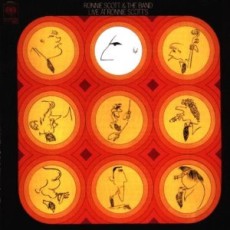
Tenor saxophonist Ronnie Scott was born Ronnie Schatt on the east side of London on January 28, 1927. He grew up in a single parent household after his father, dance band saxophonist Jock Scott separated from his mother shortly after his birth. His introduction to music was on a cornet he purchased from a local junk shop, then moved on to the soprano saxophone and finally settling into the tenor by his teens. Ronnie first starting playing in public performing with aspiring drummer Tony Crombie and was soon playing an occasional professional gig. After a stint with bandleader Carlo Krahmer and touring with trumpeter Johnny Claes, Ronnie joined the popular big band of Ted Heath in 1946.
However, changing economics made big bands increasingly unfeasible, and as bebop crossed the pond to the U.K., he and Crombie traveled to New York City to explore the source firsthand. Scott regularly returned to New York after signing on to play the Queen Mary’s transatlantic voyages alongside alto saxophonist Johnny Dankworth. Despite his travels Scott remained a cornerstone of the growing London bop scene, and in late 1948 he co-founded Club Eleven, the first U.K. club devoted to modern jazz. During this time he developed the lyrical but harmonically complex style that would remain the hallmark of his career.
In 1953 Scott formed a nine-piece group that made its public debut in conjunction with a London appearance by Norman Granz’s Jazz at the Philharmonic touring revue and working from arrangements by trumpeter Jimmy Deuchar, the Scott band’s debut proved to be a landmark moment in the history of British jazz heralding the true starting point of the postwar era. Yet in 1955, assembling a full-size big band proved creatively and commercially disastrous but left him a household name throughout Britain. In ‘57 he co-founded the Jazz Couriers with fellow tenor saxophonist Tubby Hayes, scaling to even greater heights of fame.
1959 saw Scott looking to create a jazz club emulating those of New York’s famed 52nd Street and on October 31st, with borrowed money, he opened Ronnie Scott’s Club at 39 Gerrald Street. Over the next two years as popularity grew, Scott hosted the likes of Dexter Gordon, Roland Kirk, Stan Getz, Sonny Stitt, Ben Webster and Sonny Rollins. By 1965 he moved the club to it’s present location on Frith Street, becoming the epicenter of London’s jazz community and bringing to the stage everyone from Ella Fitzgerald to Albert Ayler over the next decade.
At the time of his death on December 23, 1996, Ronnie Scott’s Club was perhaps the most famous jazz venue in all of Europe.

More Posts: saxophone
From Broadway To 52nd Street
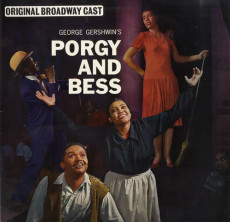
Porgy & Bess took the stage at the Alvin Theatre on October 10, 1935, running for only 124 performances. Written by Dubose Hayward with music composed by the Gershwins, and starred Todd Duncan, Anne Wiggins Brown, Warren Coleman and John W. Bubbles. The initial production was treated as such a major event that the larger dailies sent both their drama and music critics to cover the opening. Though not a commercial success from the ashes rose a score that has been performed by countless musicians but a few songs separated themselves to become individual classics and jazz standards such as Summertime, I Loves You Porgy, My Man’s Gone Now, It Ain’t Necessarily So, and There’s A Boat That Leaving Soon.
The Story: Set in Charleston, South Carolina in the tenements of Catfish Row, this opera follows the lives of Porgy, a crippled beggar, his love interest – the seductive Bess, her abusive man Crown and the slinky cocaine dealer Sportin’ Life who woos her away to New York City. The star-crossed lovers, Porgy and Bess, are doomed to struggle but triumph with dreams of life outside their community.
Broadway History: But while New Yorkers were enjoying the distraction of Broadway, the country remained engulfed in The Great Depression and in year five of the Dust Bowl’s “Dirty Thirties” in which the year hosted on April 14th the worst “black blizzard” causing such extensive soil erosion that would come to be known as Black Sunday. Some 5.3 million acres of the Southern Plains were damaged and the dust would blow all the way to east coast.
However, while part of the country was experiencing disaster Ella Fitzgerald was winning a one week performance at the Harlem Opera House, the “Swing Era” was in its infancy, Benny Goodman has secured a recording contract with Victor Records and snagged a spot on the Let’s Dance radio program and a live broadcast of his Palomar Ballroom performance in Los Angeles garnered him national following and a first-ever jazz concert at Carnegie Hall in New York. Tommy Dorsey would follow with a million-seller record with Irving Berlin’s Marie along with Artie Shaw’s version of Cole Porter’s Begin The Beguine.
Sponsored By

www.whatissuitetabu.com
More Posts: broadway
Daily Dose Of Jazz…
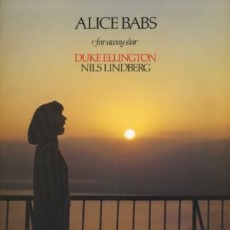
Alice Babs was born Hildur Alice Nilsson on January 26, 1924 in Kalmar, Sweden. The singer and actress has worked in a wide number of genres including Swedish folklore, Elizabethan songs and opera however, she is best known internationally as a jazz singer.
Alice made her recording debut in 1939 at the age of 15, her yodeling making her initially popular but it was her acting breakthrough in “Swing It, Teacher!” in 1940 and subsequent hit song that brought her more acclaim for her appealing voice and lightly swinging style. She appeared in more than a dozen Swedish language films and despite playing the well- behaved, good-hearted and cheerful girl; the youth culture made Alice its icon causing outrage among members of the older generation. A vicar called the Alice Babs cult the “foot and mouth disease to cultural life”.
In 1958, she was the first artist to represent Sweden in the Eurovision Song Contest finishing in 4th place. The same year, she formed “Swe-Danes”, touring the U.S. before dissolving in 1961. Fortune smiled and Alice began a long and productive collaboration with Duke Ellington in 1963, performing among other works his 2nd and 3rd Sacred Concerts. Because her voice had a range of more than three octaves, Duke Ellington said that when she did not sing the parts that he wrote for her, he had to use three different singers.
Ellington once remarked to the visitors of an Alice Babs recording session: “This voice, ladies and gentlemen, embodies all the warmth, joy of life, rhythm and tragedy that, for me, is the innermost secret of jazz”. She passed away from complications of Alzheimer’s disease on February 11, 2014 at age 90 in Stockholm, Sweden.

More Posts: vocal
Daily Dose Of Jazz…
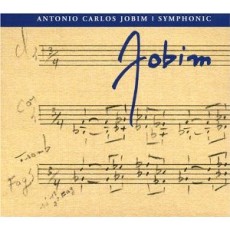
It has been said that Antonio Carlos Jobim was the George Gershwin of Brazil, and there is a solid ring of truth in that, for both contributed large bodies of songs to the jazz repertoire, both expanded their reach into the concert hall, and both tend to symbolize their countries in the eyes of the rest of the world.
Born Antônio Carlos Brasileiro de Almeida Jobim on January 25, 1927 in Tijuca neighborhood of Rio de Janiero studied to become an architect but the lure of music was too strong being firmly rooted in the music of Pixinguinha, who began modern Brazilian music in the 1930’s. By twenty he started playing piano in nightclubs and working recording sessions. He cut his first record in 1954 leader his group Tom and His Band, backing singer Bill Farr.
Tom, a nickname he affectionately carried throughout his life, was firmly planted in jazz having been impacted by Gerry Mulligan, Chet Baker, Barney Kessel and other West Coast musicians. He also gleaned influence upon his harmonies from Claude Debussy and Samba gave his music an exotic rhythmic underpinning. His piano is simple and melodic, his guitar gentle and his singing hauntingly emotional. Among his many themes his lyrics talked of love, political repression, betrayal, the natural beauties of Brazil and his home city of Rio.
Jobim first found fame in 1956 when he teamed with poet and diplomat Vinicius de Moraes to score part of the play Orfeo do Carnival, which would later gain them worldwide acclaim at Cannes when Black Orpheus debut in 1959.
In 1958, an unknown Brazilian singer João Gilberto recorded some of Jobim’s songs, which effectively launched bossa nova. Yet, Jobim’s breakthrough outside Brazil occurred in 1962 when Stan Getz and Charlie Byrd scored a surprise hit with his tune “Desafinado” – and later Getz teamed with Joao Gilberto and his wife Astrud resulting in Getz/Gilberto in 1963 and Getz/Gilberto 2 in 1964. The ’63 album became one of the best selling jazz albums of all time and grabbed 4 Grammy Awards. With their gracefully urbane, sensuously aching melodies and harmonies, Jobim’s songs gave jazz musicians in the 1960s a quiet, strikingly original alternative to their traditional Tin Pan Alley source.
Grammy award winning songwriter, composer, arranger, singer, pianist and guitarist while driving home after finishing recording for his next album Tom Jobim, collapsed and passed away of heart failure in New York City on December 8, 1994.
