

Three Wishes
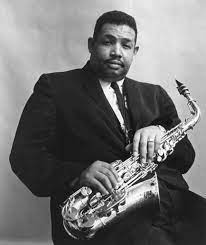
Julian “Cannonball” Adderley told the Baroness that his three wishes were:
- “I wish that racial discrimination would be eliminated from the face of the earth, in all directions.”
- “I wish for some sort of subsidy for the jazz art, so that those truly dedicated artists may create music, let’s say unscathed or distorted because of social and economic necessity. Only under these circumstances may there exist jazz expression free from bitterness, jealousy, grief, and the put-down syndrome.”
- “I must honestly confess that I would wish for certain various and sundry circumstances indigenous to healthy and happy home life for my wife and myself.”

More Posts: baroness,history,instrumental,jazz,music,pannonica,saxophone,three,wishes
Daily Dose Of Jazz…
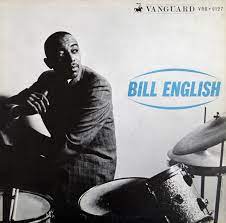
William English was born on August 27, 1925 in New York City and studied at the Greenwich House of Music in the Village. His early career hit just as rock & roll was on the rise and he played with rhythm and blues musicians in the 1950s, such as Sonny Thompson and Amos Milburn.
He went on to venture into jazz working with Julian Dash, Bennie Green, and Erskine Hawkins in the mid-1950s before becoming the house drummer at New York’s Apollo Theatre. Later in the decade he worked at Connie’s with his own ensemble, and during the 1960s he freelanced playing with Coleman Hawkins, Earl Hines, Prestige Blues Swingers, Gene Ammons, Quincy Jones Orchestra & Big Band, Sonny Stitt, Philly Joe Jones, Frank Foster Quintet, Etta jones, Joe Newman, Stanley Turrentine, Kenny Burrell, The Ray Bryant Combo and Eddie Jefferson, among others.
He remained active into the 1970s, working with the Eric Dixon Sextet among others. Drummer Bill English passed away on March 4, 2007 in his home city.
More Posts: bandleader,drums,history,instrumental,jazz,music
Daily Dose Of Jazz…
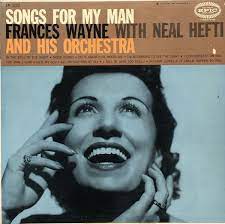
Frances Wayne was born Chiarina Francesca Bartocci or Clara Bertocci, on August 26, 1924 in Somerville, Massachusetts. After graduating from Somerville High School she moved to New York City in her teens, where she sang in an ensemble led by her brother, saxophonist Nick Jerret.
Early in the 1940s, she recorded with Charlie Barnet’s big band, and in 1943 sang with Woody Herman’s band. After marrying Neal Hefti, who formed his own big band in 1947, Frances soloed in this ensemble well into the 1950s. She later sang with smaller ensembles, featuring Hank Jones, Milt Hinton, Jerome Richardson, Richie Kamuca, John LaPorta, Billy Bauer, and Al Cohn.
Wayne was the female vocalist on The Woody Herman Show for his radio broadcasts. After a long bout with cancer, vocalist Frances Wayne, best known for her recording of ”Happiness Is Just a Thing Called Joe, passed away in her hometown at age 58 on February 6, 1978.
More Posts: bandleader,history,music,vocals

Three Wishes
Kenny Dorham was asked what his three wishes were and he told Nica that he would wish for the following:
- “Money.”
- “Happiness’d take care of all that sh*t!”
- “To have the ecstasy granted to me of music.”
More Posts: baroness,history,instrumental,jazz,music,pannonica,three,trumpet,wishes
Daily Dose Of Jazz…
Dill Jones was born Dillwyn Owen Paton Jones on August 19, 1923 in Newcastle Emlyn, Carmarthenshire, Wales. He was brought up in New Quay on the Cardiganshire coast. Music was in the family, his mother a pianist and his aunt played organ at the Methodist Tabernacle. He was exposed to jazz as a 10-year-old by hearing records by Fats Waller and Bix Beiderbecke on the radio.
After leaving college, Jones followed his father into banking but was called up by the Royal Navy for wartime service in the Far East. When the war ended he enrolled at Trinity College of Music in London, England but did not complete the course, preferring the informality of late night jazz sessions.
Joining the Harry Parry Sextet and Vic Lewis’ Orchestra before plying his trade as ship’s pianist on the luxury liner, the Queen Mary, he sailed between New York City and Southampton. This gave Dill the chance to hang out in New York’s jazz clubs and hear Coleman Hawkins and Lennie Tristano, among others. After forming the Dill Jones Quartet in 1959, he emigrated to the United States in 1961, settling in New York City. He became an expert in the Harlem stride style. was soon in demand, earning his reputation playing with the likes of Gene Krupa, Jimmy McPartland and Yank Lawson.
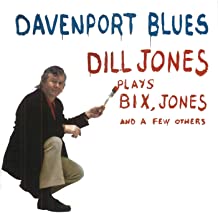
Between 1969–1973, Jones was a member of the JPJ Quartet with Budd Johnson, Oliver Jackson and Bill Pemberton. A double CD anthology of Dill Jones` work was released in 2004, entitled Davenport Blues – Dill Jones plays Bix, Jones and a Few Others.
Pianist Dill Jones, who was instrumental in bringing jazz to British television when he hosted the BBC Jazz Club, passed away from throat cancer in a New York hospital on June 22, 1984. He was 60