

Daily Dose Of Jazz…
Jimmie Smith: The Drummer Who Played with Everyone Who Mattered
James Howard Smith was born on January 27, 1938, in Newark, New Jersey, and from the beginning, he was serious about the drums. From 1951 to 1954, while still a teenager, he studied at the Al Germansky School for Drummers—a specialized institution that emphasized both technique and musicality. His dedication paid off with acceptance to the legendary Juilliard School in 1959, where he refined his classical training and expanded his musical vocabulary.
But Smith wasn’t destined for the orchestral world, jazz was calling, and New York City was waiting.
The New York Years: A Who’s Who Education
Smith began his professional career in New York around 1959, and what followed was an apprenticeship that reads like a masterclass in post-bop jazz. Throughout the 1960s, he worked with saxophonist Jimmy Forrest, organist Larry Young, the groundbreaking vocal trio Lambert, Hendricks & Ross, saxophonist Pony Poindexter, blues shouter Jimmy Witherspoon, pianist Gildo Mahones, organists Jimmy McGriff and Groove Holmes—each gig teaching him something new about swing, time, and the art of musical conversation.
His longest and perhaps most formative association came with the incomparable pianist Erroll Garner, with whom he played until 1975. Working with Garner—whose rhythmically complex, orchestral approach to the piano demanded both flexibility and rock-solid time—was like earning a PhD in musical sensitivity.
Heading West
In 1975, Smith relocated to California, where his career took on new dimensions. The West Coast jazz scene of the 1970s through the 1990s was vibrant and diverse, and Smith found himself performing and recording with an almost absurd roster of talent: saxophonist Sonny Criss, vocalist Bill Henderson, singer Ernestine Anderson, pianist Phineas Newborn, guitarists Barney Kessel and Herb Ellis, and saxophonist Al Cohn—just to name a few.
Each collaboration revealed Smith’s remarkable adaptability. He could swing hard with horn players, provide delicate brush work behind vocalists, and drive a guitar trio with just the right combination of propulsion and restraint.
In 1993, he toured Japan with organist Jimmy Smith, no relation, and guitarist Kenny Burrell, a dream trio that brought classic soul-jazz to enthusiastic audiences abroad.
One Legendary Night in Montreux
One of drummer Jimmie Smith’s most celebrated performances took place at the 1977 Montreux International Jazz Festival, where he shared the stage with an all-star lineup that still seems impossible: saxophonist Benny Carter, trumpeter Miles Davis, vibraphonist Milt Jackson, trumpeter Dizzy Gillespie, and pianist Count Basie.
Imagine being the drummer holding down the rhythm section for that constellation of legends—multiple generations of jazz royalty, each with their own distinct style and expectations. Smith rose to the occasion, proving he belonged in that rarefied company.
As a Leader
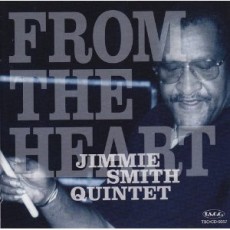
While Smith spent most of his career as the ultimate supporting player, he did step forward as a leader on select occasions. He recorded From the Heart for the Tokyo Sound City label and the superb Rockin’ in Rhythm with bassist Ray Brown and pianist Hank Jones for Concord Records—a trio session that showcased his musical intelligence and his ability to create space for his equally accomplished bandmates.
The Drummer’s Drummer
Jimmie Smith represents a particular kind of jazz musician that’s increasingly rare: the complete professional who could walk into any musical situation, read the room or the chart, and deliver exactly what was needed. No ego trips, no showboating—just deep listening, impeccable time, and the kind of musical generosity that makes everyone else sound better.
From Newark to Juilliard, from Greenwich Village clubs to Montreux’s grand stages, from New York to California and across the Pacific to Japan, Jimmie Smith spent his career doing what he loved most: sitting behind the drums and making great music with great musicians.
And really, what better legacy could a jazz musician ask for than to be known as someone every bandleader wanted on the gig, someone who made the music swing, and someone who understood that sometimes the greatest artistry lies not in the spotlight, but in making the spotlight shine brighter on everyone else?
That’s Jimmie Smith—a drummer’s drummer, a musician’s musician, and one of the unsung heroes who helped keep the jazz tradition alive and swinging for over four decades.
More Posts: drums
Daily Dose Of Jazz…
Phil Wilson: The Trombonist Who Turned a Challenge Into a Triumph
Here’s a story that proves sometimes the detours life throws at you lead exactly where you’re meant to be.
An Unexpected Path to Music
Born Phillips Elder Wilson, Jr. on January 19, 1937, in Belmont, Massachusetts, young Phil started out on piano like so many kids do. But when teachers noticed he had a mild form of dyslexia, they suggested switching to trombone—an instrument where reading music might come easier for him, where the physical act of playing could help compensate for the visual challenges. That simple suggestion changed everything.
Not only did the condition fail to slow him down, but by age fifteen Wilson had already turned professional. Talk about finding your calling early. What could have been an obstacle became a launching pad.
Making His Mark on the Big Band Scene
The late 1950s saw him playing with Herb Pomeroy’s respected Boston-based band (1955-57), then hitting the road with the legendary Dorsey Brothers. The 1960s brought him into Woody Herman’s celebrated Thundering Herd, and soon he was writing sophisticated arrangements for the explosive Buddy Rich. Wilson wasn’t just playing trombone in these organizations—he was actively shaping their sound, contributing ideas, pushing boundaries.
Leader and Educator
By the mid-1960s, he’d begun recording as a leader, eventually releasing fourteen albums over his career that showcased his warm tone, technical command, and compositional vision. But perhaps his most lasting impact has been as an educator—and this is where Wilson’s story becomes truly inspiring.
When Wilson joined the Berklee College of Music faculty in 1965, he didn’t just teach private lessons and cash his checks. He built something special. The ensemble he formed became one of the most respected college jazz bands in the country, a proving ground for countless future professionals who’ve gone on to shape contemporary jazz. For students, playing in Wilson’s ensemble wasn’t just an educational experience—it was a rite of passage.
His influence extended beyond Berklee, too, as he served as chairman of the jazz division at the New England Conservatory of Music, helping shape curriculum and philosophy at two of America’s most important jazz institutions.
Still Going Strong
Decades later, Phil Wilson continues doing what he’s always done: composing new works, performing when the spirit moves him, and teaching the next generation with the same passion and patience that defined his early years in the classroom.
The Power of Adaptation
From a kid who struggled with reading to a master trombonist, composer, arranger, and educator who’s fundamentally shaped American jazz education—that’s not just overcoming obstacles. That’s redefining what’s possible. That’s proving that sometimes what looks like a limitation is actually an invitation to find your true voice.
Sometimes the instrument chooses you. And sometimes, when you let it, it changes not just your life but the lives of thousands of students who pass through your classroom over half a century.
That’s Phil Wilson’s legacy: a career built not despite a challenge, but because he and his teachers found the perfect creative response to it.
More Posts: trombone
Daily Dose Of Jazz…
Don Thompson: The Triple-Threat Canadian Who Could Do It All
What if you could sit down at the piano, pick up a bass, or grab the vibes and master all three at the highest professional level? That’s not a hypothetical. That’s Don Thompson’s reality.
A Vancouver Beginning
Born Donald Winston Thompson on January 18, 1940, in Powell River, British Columbia, he was already gigging around Vancouver by age 20, freelancing primarily on bass but always ready to switch instruments as the music demanded. He led his own groups, played with the city’s top jazz ensembles, and became a familiar face and sound on Canadian radio and television. The kid from Powell River was going places.
The Call to San Francisco
Then came 1965 and the opportunity that changed everything: saxophonist John Handy’s acclaimed quintet needed a bassist, which meant relocating to San Francisco. Thompson toured extensively across the United States, recorded two Columbia Records albums with Handy, and suddenly found himself crossing paths with heavyweight players like trombonist Frank Rosolino, trumpeter Maynard Ferguson, pianist Denny Zeitlin, and keyboardist George Duke. The West Coast jazz scene was thriving, and Thompson was right in the middle of it.
Toronto and the Boss Brass
By 1967, Thompson had relocated to Toronto, and in 1969 he joined Rob McConnell’s legendary Boss Brass, first as percussionist, then bassist, then pianist over the course of six years. Talk about job security through sheer versatility! The 1970s also brought him into saxophonist Moe Koffman’s orbit, where he contributed not just bass and piano but also sophisticated arrangements and original compositions. Thompson wasn’t just a hired gun; he was a complete musician.
A Passport Full of Jazz History
Thompson’s travel documents tell their own story: European and Japanese tours with the elegant guitarist Jim Hall, countless nights as part of Toronto’s famed Bourbon Street Jazz Club “house rhythm section” (backing whoever came through town), and collaborations with an almost absurd roster of legends Paul Desmond, Art Farmer, James Moody, Zoot Sims, Clark Terry, Harry “Sweets” Edison, Slide Hampton, Abbey Lincoln, Sarah Vaughan, Sheila Jordan, Joe Henderson, Dewey Redman… and the list keeps going.
Each collaboration revealed a different side of Thompson’s musical personality. Need a supportive, swinging bassist? He’s got you. Want intricate harmonic accompaniment at the piano? No problem. Looking for shimmering vibraphone colors? Done. The man could do it all, and do it with taste, intelligence, and deep listening.
Recognition and Continuation
Awards have piled up over the decades, albums as both leader and sideman fill the discography, and Thompson has earned recognition as one of Canada’s most important jazz musicians. But accolades haven’t slowed him down, today he continues doing what he’s always done: freelancing, teaching the next generation, playing with the band JMOG, and leading his own quartet when the mood strikes.
The Ultimate Team Player
Three instruments. Countless collaborations across six decades. One remarkable career that proves sometimes the best musicians are the ones who refuse to be limited by a single chair on the bandstand.
Don Thompson never became a household name, and he probably wouldn’t want to be one. But ask any serious jazz musician who’s played in Canada or toured through Toronto, and they’ll tell you: when Don Thompson walks into the room, whether he’s heading for the piano, the bass, or the vibes, you know you’re about to make some beautiful music.
That’s a legacy worth celebrating.
More Posts: bass
Daily Dose Of Jazz…
Isao Suzuki: From Tearful Awakening to Jazz Mastery
On January 3, 1933, in the bustling heart of Tokyo, a future jazz legend was born—though Isao Suzuki wouldn’t discover his destiny until years later.
A Moment That Changed Everything
As a college student, Suzuki attended a concert that would alter the course of his life. When he heard the masterful bass lines of Milt Hinton flowing through the venue, something profound stirred within him. Moved to tears by the instrument’s soulful voice, he knew what he had to do. He asked his mother for what seemed like an unusual gift: a double bass.
Fortune smiled on the young musician—his ability to read music became his passport to rapid progress. Within months, he was skilled enough to land his first professional gig at a Tokyo strip club. In 1950s Japan, these venues were unexpected incubators of jazz talent, regularly employing skilled musicians to create the soundtrack for their shows.
Learning from the Americans
Suzuki’s big break came when he joined a group led by Tony Tekiseira, an American G.I. guitarist stationed in Tokyo. Over four transformative years, he absorbed everything he could from the American musicians who passed through, building both his chops and his confidence night after night.
By 1960, Suzuki had become a sought-after player in Tokyo’s jazz scene. He performed with drummer George Kawaguchi’s Big Four (featuring special guest Sadao Watanabe) and joined clarinetist Tony Scott’s band, which eventually evolved into the Hidehiko Matsumoto Quartet. When the group played at the first World Jazz Festival in 1964, Suzuki found himself meeting his heroes: Miles Davis, Wynton Kelly, and most significantly, the legendary bassist Paul Chambers—a connection that deepened his understanding of his instrument.
Crossing the Pacific
The mid-1960s saw Suzuki working with the Sadao Watanabe Quartet before he became bandleader of the house ensemble at Tokyo’s Five Spot. There, he backed or performed alongside visiting luminaries like Oscar Peterson, Horace Silver, Wynton Kelly, and Art Blakey. When Blakey invited him to join the Jazz Messengers in 1970, Suzuki didn’t hesitate—he packed his bass and headed to New York.
That pivotal year in America reads like a jazz musician’s dream: Suzuki worked and recorded with Thelonious Monk, Charles Mingus, Ella Fitzgerald, Bobby Timmons, Jim Hall, Ron Carter, Sun Ra, and countless others. He was living inside the music he’d once cried over as a college student.
Full Circle: A Master Returns Home
When Suzuki returned to Japan, he brought with him a wealth of experience and a mission. He performed and recorded with Brazilian guitar master Baden Powell and continued pushing the boundaries of his art. Over the decades, he evolved into something far greater than “just” a bassist—he became a multi-instrumentalist, composer, arranger, producer, bandleader, and eventually, a revered grand master of jazz.
Perhaps most remarkably, Suzuki never stopped nurturing the next generation. Through his band Oma Sound, he has consistently enlisted young musicians, mentoring them while keeping his own sound vibrantly progressive and contemporary. The college student who once wept at the beauty of a bass solo has spent a lifetime ensuring that jazz in Japan remains alive, innovative, and deeply felt—just as it was on that transformative day when he first heard Milt Hinton play.
Today, Isao Suzuki’s legacy continues to resonate, proving that one moment of musical revelation can echo across decades and continents.
More Posts: bandleader,bass,history,instrumental,jazz,music
Daily Dose Of Jazz…
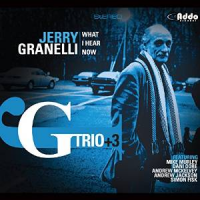
Jerry Granelli was born Gerald John Granelli on December 30, 1940 in the Mission District of San Francisco, California. Both his father and uncle played the drums and were passionate about jazz. He initially learned the violin for a year, before switching to drums. He spent a day with drummer Gene Krupa in 1948 and hanging out at the Blackhawk and Jimbo’s Bop City soaking in Ellington, Miles, Monk and Max Roach eventually led to him studying with Dave Brubeck drummer Joe Morello.
After two years with Morello he became a highly sought-after session player, Jerry eventually started playing, recording and touring with the Vince Guaraldi Band. He provides the unmistakable steady swing beats for the classic Charlie Brown “Peanuts” theme song.
In the Sixties he moved on to the Denny Zeitlin Trio with bassist Charlie Haden. A hugely successful recording and touring band, they tied with Miles Davis for Group of the Year in Downbeat magazine’s Critics and Readers Poll in 1965. Throughout the decade he performed with Jimmy Witherspoon, Mose Allison, Lou Rawls, John Handy, Sonny Stitt, Sly Stone, Ornette Coleman and Dewey Redman. His free-form improvisational trio held down the opening slot for comedian Lenny Bruce for three months in 1963, and shared bills with Jefferson Airplane, Big Brother and the Holding Company and the Grateful Dead.
From the mid-70s through the 90s he focused on teaching, first at the Naropa Institute in Boulder, Colorado and then Seattle Washington’s Cornish Institute, the Conservatory in Halifax, Nova Scotia and the Hochschule der Kunst in Berlin, Germany.
During the 80s he toured and recorded in a trio with Ralph Towner and Gary Peacock, and began recording his own projects. From the Nineties until his death, Granelli lived in Halifax and became a Canadian citizen in 1999. In 2010, he released his first solo album, 1313, toured jazz festivals and theaters with his show Tales of a Charlie Brown Christmas, which retold how the Charlie Brown Christmas TV special almost never came to be.
Suffering from a fall in December 2020 that resulted in internal bleeding, he spent three months recuperating in an intensive care unit before being discharged. He died seven months later at the age of 89 on the morning of July 20, 2021, at his home in Halifax.

More Posts: drums,history,instrumental,jazz,music