

Daily Dose Of Jazz…
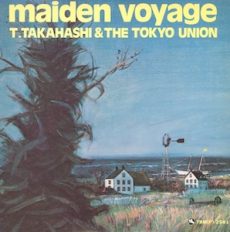
Tatsuya Takahashi was born December 24, 1931 in Tsuruoka, Yamagata, Japan. He played on U.S. military bases in the early 1950s, and later in the decade moved to Tokyo, Japan.
He worked with Keiichiro Ebihara from 1961, but by 1966 was leading his own ensemble, Tokyo Union, which remained active until 1989. In the 1970s he played at the Monterey and Montreux Jazz Festivals.
After leaving Tokyo Union, Takahashi worked in jazz education, and in 1996 founded a new ensemble, Jazz Groovys.
Saxophonist Tatsuya Takahashi died on February 29, 2008 in Tokyo, Japan.

More Posts: bandleader,educator,history,instrumental,jazz,music,saxophone
Daily Dose Of Jazz…
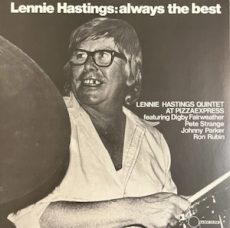
Peter Charles Strange was born on December 19, 1938 in Plaistow, Newham, London, England. He played violin as a child before switching to trombone as a teenager.
His first major gig was with Eric Silk and his Southern Jazz Band when he was just 18 years old. In 1957, Silk’s clarinetist Teddy Layton split off and formed his own band, and Strange went with him. Called up for National Service in 1958 he became a bandsman in the Lancashire Fusiliers, whilst serving in Cyprus.
Following his discharge from service Peter played with Sonny Morris, Charlie Gall, and Ken Sims, then joined Bruce Turner from 1961 to 1964. After 1964, Turner went into partial retirement for about 10 years, so he played off and on with Freddy Randall, Joe Daniels, and Ron Russell, but not carrying any full-time associations. He returned to play with Turner again permanently in 1974.
In 1978 co-founded the Midnite Follies Orchestra with Alan Elsdon. 1980 saw Strange founding the five-trombone ensemble, Five-A-Slide, which featured Roy Williams and Campbell Burnap. He joined Humphrey Lyttelton’s band in 1983, and remained with the ensemble until he died.
Trombonist, arranger and composer Peter Strange, who played with his own side group, the Great British Jazz Band, died of cancer at the age of 65 on August 14, 2004 in Banstead, Surrey, England.
More Posts: arranger,bandleader,composer,history,instrumental,jazz,music,trombone
Daily Dose Of Jazz…
Dannie Richmond was born Charles Daniel Richmond on December 15, 1931 in New York City and grew up in Greensboro, North Carolina. He started playing tenor saxophone at the age of thirteen, and went on to play R&B with the Paul Williams band in 1955.
His career took off when he transferred his talents to the drums, which he had taught himself to play in his early twenties, through the formation of what was to be a 21-year friendship and an indispensable ingredient of the Mingus sound. Upon Mingus’ death Richmond became the first musical director of the group Mingus Dynasty in 1980.
Drummer Dannie Richmond, best known for his work with Charles Mingus, died of a heart attack in Harlem, New York on March 16, 1988, at the age of 56.
More Posts: drums,history,instrumental,jazz,music

Daily Dose Of Jazz…
Beegie Adair was born Bobbe Gorin Long on December 11, 1937 in Cave City, Kentucky. She began playing the piano at the age of five and graduated from Caverna High School in 1954. She went on to earn a Bachelor of Science degree in music education at Western Kentucky University in 1958.
Relocating to Nashville, Tennessee, in 1961 she worked as a children’s music teacher for three years. There she played in Printer’s Alley and became a member of a jazz band led by Hank Garland. Beegie would go on to accompany Dinah Shore, Peggy Lee, Ray Stevens, Steve Allen, Chet Atkins, Cass Elliot, Vince Gill and Dolly Parton. At various times she played for the Noon Show on WSM-TV, The Johnny Cash Show and other programs.
Partnering with Denis Solee in 1982 they established the Adair–Solee Quartet, which evolved into the sextet Be-Bop Co-Op. She released her debut solo album as a leader in 1988 with Escape to New York, then formed the Beegie Adair Trio, which sold more than 1.5 million albums.
Throughout her 60-year career Beegie appeared on more than 100 recordings. Of these, 35 were recorded by her trio which included bassist Roger Spencer and percussionist Chris Brown. She released a six-CD centennial collection, The Great American Songbook Collection.
Adair was an adjunct professor of jazz studies at Vanderbilt University’s Blair School of Music. She was a faculty and board member of the Nashville Jazz Workshop, where she often performed. She was named a Steinway Artist and was inducted into Western Kentucky University’s Hall of Fame, Cave City’s Hall of Fame and was the inaugural recipient of Nashville Jazz Workshop’s Heritage Award.
Pianist and bandleader Beegie Adair, whose career spanned more than 60 years, died at her home in Franklin, Tennessee on January 23, 2022, at the age of 84.
More Posts: bandleader,history,instrumental,jazz,music,piano
Daily Dose Of Jazz…
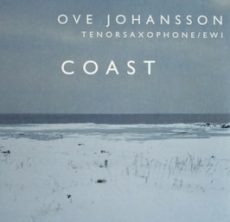
Ove Johansson was born on December 3, 1936 and didn’t start playing the tenor saxophone until the age of 13. However, he gave the clarinet a chance for a couple of years. Very early in his career he got into a professional jazz group playing before starting his own groups where he spent most of the time as a band leader.
For a short period Ove was a sideman with Swedish saxophonist Lars Gullin. From 1972 to 1994 he was a teacher of saxophone, improvisation, ensemble and harmony at the School of Music, Gothenburg University. He went on to start his own small record label LJ Records in 1989 and recorded his own and new Scandinavian jazz music internationally.
The end of the Fifties saw Johansson leading his own groups and a driving force of the Swedish jazz scene. He was musical director of Mwendo Dawa. His musical work stretched from straight ahead, free form and electronic jazz to the acoustic and electro acoustical mix of today.
He toured Europe, North and South America, and China, with Mwendo Dawa. He toured with the trio Natural Artefacts with performances both in the world of improvisation music as well as the world of electro acoustic music.
Tenor saxophonist and composer Ove Johansson, who produced 35 albums with his own material and with the group, died on December 25, 2015.
More Posts: bandleader,composer,history,instrumental,jazz,music,saxophone