


Daily Dose Of Jazz…
Luther Thomas was born on June 23, 1950 in St. Louis, Missouri. Known for his free jazz playing and drawing from funk. Coming out of the Black Artists Group (BAG) of St. Louis in the late Sixties, he was one of the original voices from a scene that also bred such names as Oliver Lake, Julius Hemphill, Baikida Carroll, John Zorn and Joseph Bowie.
Luther played in the Human Arts Ensemble with Charles Bobo Shaw in the 1970s, and led a group called Dizzazz in the early 1980s. He played saxophone for James Chance and the Contortions.
As a leader he had recording sessions from the early 1970s he has recorded eleven albums. They have been reissued on CD as part of Atavistic Records’ Unheard Music Series. In 1998 he settled in Denmark and became a cult musician in Christiania Freetown, performing there weekly.
Alto saxophonist and multi-instrumentalist Luther Thomas was a completely intuitive improvisor and a free spirit who reached a level of intensity on the saxophone reached by very few others, transitioned at the age of 59 on September 8, 2009 in Denmark.

More Posts: bandleader,history,instrumental,jazz,music,saxophone
Daily Dose Of Jazz…
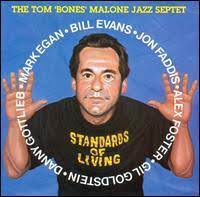
Thomas “Bones” Malone was born June 16, 1947 in Honolulu, Hawaii. He began playing professionally as lead trumpeter for Brenda Lee at a club in Jackson, Mississippi while enrolled at the University of Southern Mississippi. In response to a call from Warren Covington, leader of the Tommy Dorsey Orchestra, he began contracting musicians. After transferring to North Texas State University, Malone continued working as both a player and a contractor for groups. He graduated from North Texas State University with Lou Marini, and both were members of the One O’Clock Lab Band at North Texas.
After graduation, he worked in bands of Woody Herman in 1969, and during the early Seventies he worked with Duke Pearson, Louie Bellson, Doc Severinsen, Frank Zappa, and Blood, Sweat & Tears. In 1973, Malone began a close, fifteen-year association with Gil Evans, whom he has called a mentor. He recorded albums with Evans and toured Europe, Japan, and the Far East. In 1975 Malone toured with Billy Cobham and in 1976 with The Band.
From 1975 to 1985 he worked as arranger for Saturday Night Live and from 1981 to 1985 as musical director. He wrote the chart for the skit that introduced John Belushi and Dan Aykroyd as the Blues Brothers and worked on the film score for Blues Brothers 2000. He joined the CBS Orchestra in 1993, and contributed more than 1,600 arrangements to the Late Show with David Letterman.
As a studio musician, he has been heard on more than 1,000 records, more than 3000 radio and television commercials, and over 4,000 live television shows. In 2007 Bones was invited by music director Geoffrey Moull to arrange and perform a concert with the Thunder Bay Symphony Orchestra. In 2011 Malone was a guest artist with the University of Southern Mississippi Symphony Orchestra.
Trombonist, arranger, and producer Tom Malone, who also plays saxophone, trumpet, tuba, flute, and bass guitar, continues to expand his creative reach.
More Posts: bass guitar,flute,history,instrumental,jazz,music,saxophone,trombone,trumpet,tuba
Daily Dose Of Jazz…
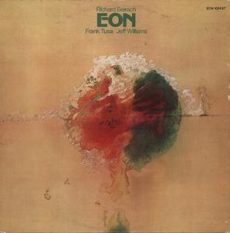
Richard Alan Beirach was born on May 23, 1947 in New York City, New York and initially studied both classical music and jazz. While still attending high school, he took lessons from pianist Lennie Tristano. He later studied at the Berklee College of Music, however, after one year he left and began attending the Manhattan School of Music. While there, he studied with Ludmilla Ulehla.
In 1972, graduating from the Manhattan School of Music he took with him a Master’s Degree in Music Theory and Composition. Beirach’s style is influenced by Art Tatum, Bill Evans, McCoy Tyner, and Chick Corea along with his earlier classical training and many touches of his individualism all its own.
He recorded 57 albums as a leader and as a sideman with George Adams, John Abercrombie, John Scofield, Chet Baker, Dave Liebman, Jeremy Steig, Steve Davis, Laurie Antonioli, and the Ron McClure Trio he recorded 17. Pianist and composer Richie Beirach continues to perform, compose and record.

More Posts: bandleader,composer,history,instrumental,jazz,music,piano
Daily Dose Of Jazz…
Pete Paul George Jacobsen was born on May 16, 1950 in Newcastle upon Tyne, England. Having lost his sight as a baby, due to a growth behind the optic nerve, he studied at the Worcester School for the Blind before forming his own trio, which was good enough to attract local television coverage. In 1969, he moved to London, England to study at the Royal Academy of Music. With a keen memory and perfect pitch, hi’s lack of sight was no obstacle.
In London, Jacobsen played with saxophonists Barbara Thompson, Isotope’s Gary Boyle, and Don Weller. He became a member of the jazz-fusion band Morrissey–Mullen, but it was not until 1985 that he recorded with them on This Must Be The Place and Happy Hour in 1988. Recommended by trumpeter Kenny Wheeler, he landed the piano chair in the Bobby Wellins Quartet and recorded four albums with the group from 1978 to 1989, Live… Jubilation, Dreams Are Free, ERCO Makes Light Work, and Birds of Brazil.
Pete regularly collaborated with Chris Biscoe and recorded tw albums with him and often performed as a duo, recording several BBC Jazz Club performances. He played and recorded with trombonist Jimmy Knepper, and contributed Song For Keith for the recording of the 1980 album Primrose Path. He would also write the song “Black Book” for the album Highly Committed Media Players.
During this time, Jacobsen was part of the resident rhythm section at the Cambridge Modern Jazz Club. He would go on to play with Robin Kenyatta, Alan Skidmore, Peter King, Eberhard Weber, Paul Carmichael, and Chris Fletcher. He gave memorable solo recitals, toured and played on three of their albums with the Celtic-jazz band Cármina.
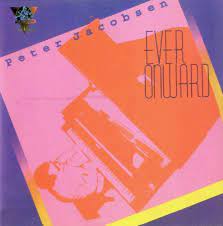
In 1994, Jacobsen released his only solo album Ever Onward. Through the rest of the decade he performed with his own trio and with the Tim Whitehead quartet or trio. He spent much of his time in the East End of London playing obscure clubs with unknown or struggling musicians. Pianist Pete Jacobsen fell ill after a series of rural art center gigs and transitioned on April 29, 2002 at age 51.
More Posts: bandleader,composer,history,instrumental,jazz,music,piano
Daily Dose Of Jazz…
Rüdiger Carl was born on April 26, 1944 in Goldap, Poland ( formerly East Prussia) and has been involved in improvised music since 1968. He recorded his first record in 1972 and then began playing with a wide range of musicians including Arjen Gorter, Makaya Ntshoko, Louis Moholo, Maarten van Regteren Altena, Tristan Honsinger, Johnny Dyani and Han Bennink.
He maintains a long-standing partnership with Irene Schweizer that began in 1973 and continues to the present day. For a three year period, from 1973 to 1976 Carl was a member of Globe Unity Orchestra. He started giving solo performances in 1977 and the following year started two other long-term professional partnerships, with Sven-Åke Johansson and Hans Reichel.
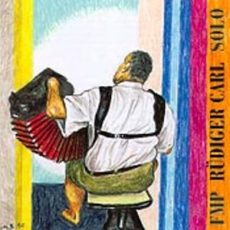
Rüdiger’s most striking change in improvised music came when he gave up the saxophone and began performing with the accordion in duets with Hans Reichel. Though he continued to play the two instruments virtually side-by-side, adding clarinet to his arsenal, recorded Vorn which featured a version of the McCartney tune Those Were The Days. The COWWS Quintet was formed, continuing his musical relationship with Schweizer along with Philipp Wachsmann, Jay Oliver and Stephen Wittwer.
In addition to the COWWS, he performs with the Canvas Trio, in duos with Mayo Thompson of the Red Crayolas and Joëlle Léandre. During the Eighties he organized concerts of Musik im Portikus and beginning in 1994 has led the F.I.M. Orchester in Frankfurt/M.
Accordionist Rüdiger Carl is also an arranger and composer and continues to record and perform.
More Posts: accordion,arranger,bandleader,clarinet,composer,history,instrumental,jazz,music