

Daily Dose Of Jazz…
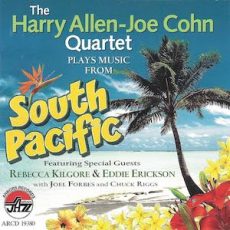
Charles “Chuck” Riggs was born on August 5, 1951 in Westerly, Rhode Island. Beginning in 1976 he played with Scott Hamilton and their association lasted well into the 1990s.
In the late 1970s and 1980s, he played with Bob Wilber, the World’s Greatest Jazz Band, Chris Flory, Benny Goodman, Kenny Davern, Dick Wellstood, Flip Phillips, Ruby Braff, and Jay McShann.
He was a member of the Concord Jazz All-Stars alongside Hamilton, Dave McKenna, and Gray Sargent in the early 1990s. Later in the decade he worked with Keith Ingham, Jon-Erik Kellso, and Ken Peplowski.
Riggs was featured on The Cotton Club, the soundtrack for the 1984 film of the same name.
Drummer Chuck Riggs continues to perform and record.

More Posts: drums,history,instrumental,jazz,music
Daily Dose Of Jazz…
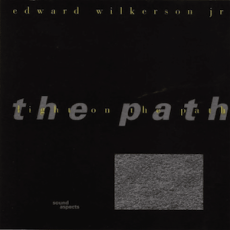
Edward L. Wilkerson Jr. was born in Terre Haute, Indiana on July 27, 1953. Over the course of his career he has associated himself with medium-to large-scale projects and has been a major presence in Chicago, Illinois’s Association for the Advancement of Creative Musicians (AACM), teaching and serving a term as president.
The AACM collective has been a nurturing force for Wilkerson and has informed much of his work. He was an original member of the Ethnic Heritage Ensemble formed by percussionist Kahil El’Zabar and remained with the group from 1976 until 1997. Though he recorded on three albums with the group he was becoming more involved in leading his own projects. His most ambitious project, Shadow Vignettes, was initiated in 1979 with 25 musicians and incorporated dance, poetry, and visual arts. The ensemble’s influences include the big band work of Muhal Richard Abrams, Duke Ellington, Count Basie and Sun Ra.
Wilkerson’s best-documented octet as a leader is 8 Bold Souls, a series of concerts that led Wilkerson to establish the group as a working band. They have released four albums, 8 Bold Souls, Sideshow, Ant Farm, and Last Option. Their music is influenced by the small groups of Duke Ellington and Jimmie Lunceford, but leaves room for adventurous experimentation.
In addition to his work with the preceding groups he has played with the AACM Big Band, Roscoe Mitchell, Douglas Ewart, the Temptations, Chico Freeman, the late Geri Allen, the Lyric Opera of Chicago, Muhal Richard Abrams, Aretha Franklin, and George Lewis.
Wilkerson has received grants from the Illinois Arts Council, the National Endowment for the Arts, Meet the Composer, and the Community Arts Assistance Program, and has been cited in numerous music polls.
Saxophonist, clarinetist, pianist, composer, arranger and educator Ed Wilkerson Jr., who has recorded 14 albums and two soundtracks, continues to teach composition at the AACM School of Music and explore the realms of jazz from his base in Chicago.

More Posts: arranger,bandleader,clarinet,composer,educator,history,instrumental,jazz,music,saxophone
Daily Dose Of Jazz…
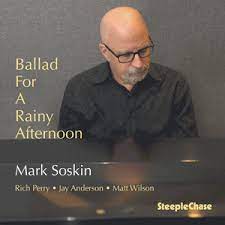
Mark Soskin was born on July 12, 1953 in Brooklyn, New York. Attending Colorado State University he pursued classical piano studies but his interests in jazz music grew and by 1973 he enrolled in Berklee College of Music in Boston, Massachiusetts. He studied composition and arranging. While there he began working professionally until moving to San Francisco, Califonia and eventually going on to work with some of the west coast’s finest players.
Shortly after arriving in San Francisco, he was introduced to Pete Escovedo and along with his daughter Sheila. E they toured and recorded as Azteca, a group in which Soskin’s keyboard, writing, and arranging talents were showcased. Eventually, the group, including trumpeter Tom Harrell, went on to record twice for Fantasy Records. Enlisted in Cobham’s band for two years produced two recordings for Columbia. Between tours for Cobham, Soskin did a tour and live recording for the CBS All Stars with Tom Scott, Alphonso Johnson and Steve Khan. At this time Soskin was an active session player at Fantasy.
Mark signed his first recording contract with Prestige titled Rhythm Vision with Benny Maupin and Harvey Mason among others. Introduced by Orrin Keepnews to Sonny Rollins, the two started a fruitful collaboration that lasted 14 years. By 1981 he was living in New York City as an active sideman and leader.
He has been written up in numerous music publications, including Ira Gitler and Leonard Feather’s Biographical Encyclopedia of Jazz and The Jazz Book by Joachim E. Berendt. Mark Soskin is featured in the film documenting latin jazz artists entitled Calle 54. Pianist Mark Soskin has recorded 10 albums as a leader, three as co-leader and continues to maintain a busy tour schedule as well as giving master classes, workshops, teaches privately and is on the faculty of The Manhattan School Of Music.
Daily Dose Of Jazz…
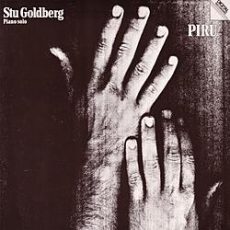
Stuart Wayne Goldberg was born on July 10, 1954 in Malden, Massachusetts but was raised in Seattle, Washington. He attended the University of Utah, taking his bachelor’s in music in 1974, then relocated to Los Angeles, California.
The following year Goldberg played with the Mahavishnu Orchestra and subsequently worked through the 1970s with Al Di Meola, Freddie Hubbard, Alphonse Mouzon, Michal Urbaniak, and Miroslav Vitous.
Booking a European tour in 1978 as a solo keyboardist, Stu released several albums under his own name and with Toto Blanke’s Electric Circus. Returning to Los Angeles in 1985 he worked extensively in film soundtracks with Lalo Schifrin and Ira Newborn. He also worked as a studio musician.
Keyboardist Stu Goldberg, who played with Ray Brown at the Monterey Jazz Festival in 1971, continues to perform and record.
More Posts: bandleader,history,instrumental,jazz,keyboard,music
Daily Dose Of Jazz…
Sue Evans was born on July 7, 1951 in New York, New York and played piano, violin and clarinet as a young child before switching to drums. She studied under Warren Smith and Sonny Igoe, and graduated in 1969 from The High School of Music & Art. She went on to earn a BA in Music from Columbia University, as well as a Master of Music and Doctorate from the Juilliard School.
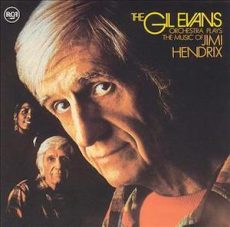
Becoming one of the top recording percussionists in New York she has recorded jingles, movie scores, and numerous albums with many jazz, folk and pop artists. She was Judy Collins’s touring drummer from 1969 to 1973 and worked with Gil Evans from 1969 to 1982. During the Seventies she worked with Steve Kuhn, Art Farmer, Bobby Jones, George Benson, Urbie Green, Yusef Lateef, Idris Muhammad, Lalo Schifrin, Jeremy Steig and Roswell Rudd’s Jazz Composers Orchestra. In addition Sue played with The New York Pops, the New York Philharmonic, the Brooklyn Philharmonic and the New Jersey Symphony Orchestra.
The 1980s saw her working with Michael Franks, Mark Murphy, Suzanne Vega, Tony Bennett, and Morgana King. Other associations include touring or recording with Aretha Franklin, Sting, Spike Lee, James Brown, Billy Cobham, Blood, Sweat & Tears, Philip Glass, Peter, Paul, and Mary, Don Sebesky, Sadao Watanabe, Hubert Laws, Randy Brecker, David Sanborn and Terence Blanchard.
For several years she played at the Tony Awards and the Grammy Awards. She won National Academy of Recording Arts and Sciences Most Valuable Awards in 1984, 1987 and 1989. Drummer and percussionist Sue Evans continues to perform and record.
More Posts: drums,history,instrumental,jazz,music,percussion