

Daily Dose Of Jazz…
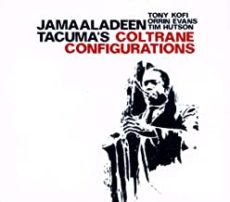
Jamaaladeen Tacuma was born Rudy McDaniel on June 11, 1956 in Hempstead, New York. Raised in Philadelphia, Pennsylvania he showed interest in music at a young age, taking up the electric bass and performing with the organist Charles Earland in his teens.
Through Earland, he came to know the record producer Reggie Lucas, who introduced Jamaaladeen to Ornette Coleman in 1975 at age 19. As the electric bassist for Coleman’s funky harmolodic Prime Time group, he rose to prominence quickly. During the 1980s he was playing a Steinberger bass that helped him create his readily identifiable sound.
His work with Prime Time got him an appearance with the band on Saturday Night Live in 1979. He went on to work with James “Blood” Ulmer, Walt Dickerson, Chuck Hammer, David Murray, and collaborated with The Golden Palominos in 1983. Tacuma recorded his first solo album as a leader, Show Stopper, that same year.
During the 1980s Jamaaladeen started to perform in a relatively straightforward funk/R&B setting with his group Cosmetic. He received the highest number of votes ever for an electric bassist in the “talent deserving wider recognition” category of the Down Beat magazine critics poll.
Though maintaining a low profile since the early 1990s, he has remained active but has maintained a lower profile. He has made numerous solo and collaborative recordings, returning to the jazz spotlight with an appearance on the World Saxophone Quartet’s Political Blues.
In 2007, he joined with Grant Calvin Weston and guitarist Vernon Reidto form the power trio Free Form Funky Freqs. He recorded two albums with Basso Nouveau. He has received numerous awards and fellowships and since 2015 he has presented the annual Outsiders Improvised & Creative Music Festival in Philadelphia. Bassist Jamaaladeen Tacuma continues to tour, produce and record worldwide.
More Posts: bandleader,bass,history,instrumental,jazz,music
Daily Dose Of Jazz…
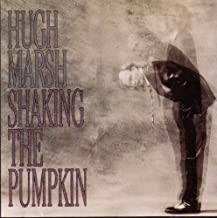
Hugh Marsh was born June 5, 1955 in Montreal, Quebec, Canada and brought up in Ottawa, Ontario, where he learned to play the violin from the age of five. While in high school, when trying to play the saxophone he was led to exploring jazz, funk and rhythm and blues. With his father’s encouragement, he transferred these improvisation skills to the electric violin.
By 1978, Marsh was invited by jazz musician Moe Koffman to perform with him in a concert series at the Art Gallery of Ontario in Toronto. This led to gigs at top Toronto clubs and to perform with Canadian jazz musicians Doug Riley, Claude Ranger, Sonny Greenwich and Don Thompson. In 1979 he joined Bruce Cockburn, recording and touring with him.
In 1984, he recorded his independent album The Bear Walks and was distributed by Duke Street Records. He was joined by Doug Riley on keyboards, Peter Cardinali on bass, and Michael Brecker on tenor saxophone. His next recording ventured into other genres mixed with jazz. Since 1990 HUgh has recorded and toured with Celtic songstress Loreena McKennitt, contributing to six multi-platinum albums and a number of world tours. He has worked with Turkish Sufi deejay Mercan Dede, and has worked with Turkish artists Ihsan Ozgen, Kani Karaca, Goksel Baktagir and Ozcan Deniz.
Marsh would go on to collaborate on film scoring projects with composers Harry Gregson Williams and Don Rooke, and with Hans Zimmer on scores for Tears of the Sun and The Da Vinci Code.
In 2004 he joined clarinetist Don Byron’s new quartet “Swiftboat”, along with bassist Kermit Driscoll, and drummer Pheeroan Aklaff. He toured as a member of trumpeter Jon Hassell’s new quartet with bassist Peter Freeman and percussionist Steve Shehan. A four-time winner of the Jazz Report Award for violinist of the year and a three-time recipient of the National Jazz Award for violinist of the year, he has been nominated for a 2007 Juno Award in the best contemporary jazz album category.
Violinist Hugh Marsh continues to perform and record across genres, regularly performing with Rheostatics.
More Posts: bandleader,history,instrumental,jazz,music,violin
Requisites
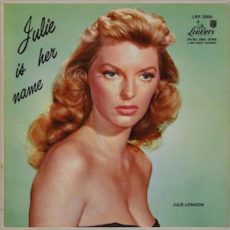
Julie Is Her Name ~ Julie London | By Eddie Carter
This morning’s choice from the library is the debut album by Julie London. She was a talented actress who starred in several forties and fifties Hollywood films, a sexy pinup model and nightclub singer with a stunning figure to match her luxurious voice. Julie Is Her Name (Liberty LRP 3006/LST 7027), is a half-hour journey of intimate music that’s perfect to enjoy while unwinding after a long day or to help spark a romantic evening ahead. Accompanying Julie on vocals are Barney Kessel on guitar and Ray Leatherwood on bass. My copy used in this report is the 1955 US Mono reissue made at Capitol Records Pressing Plant in Scranton, Pennsylvania. The second pressing turquoise labels are distinguished from the Deep Groove original by a small circle around the center hole on each side.
Side One starts with her biggest hit, Cry Me A River by Arthur Hamilton, a high school classmate. Julie sings the lyrics with elegance and warmth as she turns the tables on a lover who hurt her and now finds himself the recipient of a broken heart. Barney and Ray complement her with their subtle supplement into a gentle fadeout. I Should Care by Sammy Cahn, Alex Stordahl, and Paul Weston was written in 1944, appearing in Thrill of a Romance, a year later. The trio approaches the romantic theme efficiently. Julie caresses the lyrics softly and tenderly, and Kessel has a lush interlude in between that’s seductively silky. Barney and Ray lead the way into I’m In The Mood For Love by Dorothy Fields and Jimmy Hugh. Julie reflects the song’s tenderness with deep sensitivity ahead of a gorgeous ending.
I’m Glad There Is You by Jimmy Dorsey and Paul Madiera is tailor-made for Julie’s provocative delivery of the lyrics. Kessel and Leatherwood are splendidly entertaining in support before the trio’s lush climax. Can’t Help Lovin’ That Man was first heard in the 1927 musical, Show Boat as Can’t Help Lovin’ Dat Man. It’s one of Oscar Hammerstein II and Jerome Kern’s most famous songs. The ensemble presents an exquisite example and Julie shows respect to the lyrics with a bluesy vocal interpretation that flows smoothly. Cole Porter’s I Love You was introduced in the 1944 musical, Mexican Hayride. The trio begins deceptively at a slow tempo before the pace moves upward and Julie turns loose a little gaiety on a swinging statement.
The second side gets underway with Say It Isn’t So by Irving Berlin from 1932. Julie’s indelible opening chorus characterizes a sincere plea to the man she loves to reassure her that the rumor he no longer loves her and is planning to leave isn’t true. Her haunting words are delicately expressed with Barney and Ray providing the gentle groundwork preceding a calm climax. Up next is It Never Entered My Mind, a show tune that premiered in the 1940 musical, Higher and Higher. This well-recorded standard from the pen of Richard Rodgers and Lorenz Hart speaks of loneliness, regret, and remorse. Julie and Kessel make it an intimately personal duet that’s deeply poignant with an emotional emphasis on love and sorrow anyone can identify with.
Julie and her bandmates take a slow tempo trip to Easy Street next. This jazz standard was written by Alan Rankin Jones in 1940 and transports us to a place where life is good, and people are comfortable, content, and happy. Her lyrics are equally carefree and dreamy. Barney and Ray augment the vocalist with a soft supplement and Barney gets a brief solo ahead of the close. George & Ira Gershwin introduced S’ Wonderful in the 1927 musical, Funny Face. It later became a popular jazz standard with many notable recordings. Kessel starts the song vigorously with an enthusiastic introduction segueing into a dazzlingly agile melody by Julie who then slows down to wrap up the song reinforced by Kessel and Leatherwood’s backing.
No Moon At All by David Mann and Redd Evans is a jazz standard that was composed in 1947. It’s a romantic tune, and Julie beckons her lover like a siren with seductively sultry lyrics on the melody. Barney and Ray accompany her as she plans a night of romance beginning with one kiss. Laura by David Raskin and Johnny Mercer needs no introduction. It’s a timeless 1944 standard that became a hit after the Film-Noir drama of the same name. Julie sings the first chorus of the haunting melody without any accompaniment. Kessel and Leatherwood add their serene support as her voluptuous vocals are profoundly moving into a gentle coda. The finale, Gone With The Wind by Allie Wrubel and Herb Magidson is a passionately tender showcase by Julie and the duo who back her delicately into a graceful fadeout.
The Mono copy of Julie Is Her Name was produced by Bobby Troup (who would become her second husband) and engineered by John Neal. John Kraus who also engineered albums on Atlantic, Capitol, Contemporary, Dot, Jazz West, and London worked on the Stereo reissue. I was pleasantly surprised with the sound quality for a record nearly sixty-six years old, it’s quite good. Julie’s vocals are seductive, and Barney Kessel and Ray Leatherwood respond with sheer beauty behind her. The Capitol Records reissues have a misprint, the tracks are reversed on both sides. The Side Two songs are on the Side One label and the Side One songs, on Side Two. How this error was overlooked, I’ll never know, especially since Capitol uses the original Liberty pressing back cover, but that seems to be the only issue with my copy.
Torch singing became Julie’s specialty over her fourteen-year recording career, and she made thirty-one albums at Liberty, earning her the nickname, The Liberty Girl. She also found success on television, becoming most famous for her portrayal of Dixie McCall on the series, Emergency for six years. A chain smoker since she was sixteen, Julie suffered a stroke in 1995 and developed lung cancer a few years later. She passed away from cardiac arrest at age seventy-four on October 18, 2000. If you’re seeking some easy-listening, jazz vocals for your library, make a note to pick up Julie Is Her Name by Julie London on your next vinyl hunt. It marks the beginning of a terrific jazz vocalist and is a lovely way to spend the evening with that special someone!
~Can’t Help Lovin’ That Man, Gone With The Wind, I Love You, I Should Care, I’m Glad There Is You, I’m In The Mood For Love, It Never Entered My Mind, Laura, ‘S Wonderful, Say It Isn’t So – Source: JazzStandards.com ~Cry Me A River, Easy Street, No Moon at All – Source: Wikipedia.org © 2021 by Edward Thomas CarterMore Posts: choice,classic,collectible,collector,history,instrumental,jazz,music,vocal
Daily Dose Of Jazz…
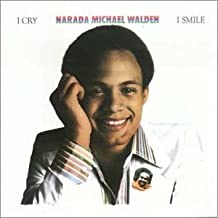
Narada Michael Walden was born on April 23, 1952 in Kalamazoo, Michigan and after graduating from college he was a member of rock bands in Miami, Florida.
Atlantic Records released his first album, Garden of Love Light, in 1977, followed by I Cry I Smile and The Awakening. The latter album charted during the 1980s including a duet with Patti Austin and appeared on the Bright Lights, Big City movie soundtrack.
Fusing jazz with R&B he built his studio in 1985 and produced music for The Temptations, Stacy Lattisaw, Aretha Franklin, Angela Bofill, Lisa Fischer, Sister Sledge, Herbie Hancock, Patti Austin, Whitney Houston, Clarence Clemons, George Benson, Kenny G, Lionel Richie, Al Jarreau, and Mariah Carey.
Walden has been nominated for eight Grammy Awards and won three including Best R&B Song for Freeway of Love; Producer of the Year, Non-Classical; and Album of the Year for The Bodyguard: Original Soundtrack Album.
Drummer, keyboardist and bassist Narada Michael Walden, who got his nickname Narada from Sri Chinmoy, is currently the drummer for Journey.
More Posts: bass,drums,history,instrumental,jazz,keyboards,music
Requisites
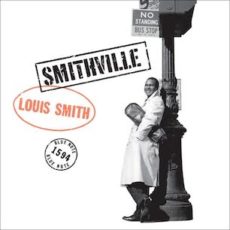
Louis Smith steps into the spotlight for this morning’s discussion with his second 1958 record for Blue Note following Here Comes Louis Smith. Born in Memphis, Tennessee, he began playing the trumpet as a teenager and his first recording was Swingin’ by Kenny Burrell, a 1980 Japanese album combining three sessions in 1956, 1958, and 1959. Smith took a job as a music director of Booker T. Washington High School in Atlanta, Georgia rather than becoming a full-time musician. After leaving school, he became the Director of the Jazz Ensemble at the University of Michigan and a teacher in Ann Arbor. Louis was also an excellent composer. On Smithville (Blue Note BLP 1594), he’s working with an elite quartet, Charlie Rouse on tenor sax, Sonny Clark on piano, Paul Chambers on bass, and Art Taylor on drums. The LP used in this report is a friend’s copy of the 2010 Music Matters Jazz 45-rpm Mono reissue (MMBLP-1594).
Record One starts with us arriving at Smithville, a slow-tempo blues by Louis inhabiting the first side. Everyone takes it easy from the introduction by Paul and Louis into a laid-back ensemble opening chorus. Charlie opens with a casualness and relaxed attitude on the lead solo. Louis takes over for a mellow, very personal presentation, then Sonny wraps up the song with a delightful showcase that’s handsomely constructed. Wetu, also by Smith occupies Side Two, commencing with the tempo way up and the quintet playing like the wind on the melody. Rouse takes off first with exhilarating speed. Smith also travels fast on the next interpretation. Taylor sets up a ferocious beat for Clark’s fingers to fly fiercely over the keys in an incandescent performance, and Chambers is especially productive on the final spot ahead of the ending theme.
Record Two begins with Embraceable You by George and Ira Gershwin. Louis is the main horn here and approaches the melody and opening statement with a softer voice, summoning affectionate warmth from his trumpet. Sonny shows his sentimental side on a hauntingly beautiful interpretation before Louis and Charlie connect on a pleasantly sweet reprise and climax. There Will Never Be Another You by Harry Warren and Mack Gordon was first heard in the 1942 film, Iceland. It opens with a brief introduction by Clark preceding an invigorating theme. Rouse opens the lead solo swinging immensely, then takes the next chorus one octave higher. Smith unwinds a lively series of scintillating choruses. Clark responds to both horns with enthusiastic virtuosity. Chambers steps into the spotlight last with strong, bass lines soaring back to the soft conclusion.
The finale is Later, a quick original by the leader flying at a speedy clip. Louis meets the challenge with a skyrocketing first solo. Charlie comes next with an adrenaline-charged reading. Sonny follows with a high-voltage power supply. Art brings the song home with some dynamic drumming into the quintet’s cooking reprise and sudden stop ending. If you’ve read any of the other MMJ reissues I’ve discussed, you already know the quality and care that goes into each title is well-known among audiophiles and jazz lovers. For those who haven’t heard them before, they’re mastered from the original analog tapes and pressed on 180-gram audiophile vinyl at RTI (Record Technology Incorporated) in Camarillo, California. Inside the gatefold are extremely beautiful photos from the session by Francis Woolf that could be proudly displayed on your listening room wall.
After listening to both records, I pulled out my 1991 Toshiba-EMI Limited Japanese 33 1/3 Mono reissue to compare the sound with the MMJ LP. The Toshiba reissue has an exceptional soundstage throughout the highs, midrange, and low end. The instruments come to life through your speakers as if you’re at Mr. Van Gelder’s home alongside the musicians during the recording. However, the sound quality of the MMJ Mono reissue is significantly elevated with superb mastering that’s very detailed making an already great-sounding album, that much better. I listened intently to both reissues becoming completely engrossed in the music and while my system isn’t high-end, it still made an enduring impression, and I could hear the difference.
It would be another thirty-seven years before Louis Smith returned to the studio to record an album as a leader. In 2006, Louis suffered a stroke ending his professional career, but he continued to enjoy live jazz in the Detroit-Ann Arbor area until his passing on August 20, 2016, at age eighty-five. To me, Smithville is a shining example of first-rate, no-frills Hard-Bop capturing the driving energy of the musicians at their best. On your next search for vinyl treasure, I invite you to take a trip to Smithville. There you will find an outstanding session of amazing music by Louis Smith that’s highly recommended for your library!
~Here Comes Louis Smith (Blue Note BLP 1584), Smithville (Blue Note BLP 1594-BN 1594), Swingin’ (Blue Note GXF 3070) – Source: Discogs.com ~Embraceable You, There Will Never Be Another You – Source: JazzStandards.com ~Booker Little, Louis Smith – Source: Wikipedia.org © 2021 by Edward Thomas Carter

More Posts: choice,classic,collectible,collector,history,instrumental,jazz,music