


Daily Dose Of Jazz…
John Bishop was born on April 5, 1959 in Seattle, Washington and raised in Germany, Washington, DC, San Antonio, Texas and Eugene, Oregon. He started playing drums at 7 in Washington, DC with the Patriots drum corps. He performed regularly throughout high school and college in Oregon, studied with Mel Brown and Charles Dowd and attended the University of Oregon, and later transferred to the jazz program at North Texas State University.
He returned to Seattle in 1981 for an extended engagement with the band Glider and never left. An unusually creative and fertile scene at the time, in the early ’80s, he was a member of the fusion group Blue Sky, which released two Top 10 albums and performed extensively throughout the decade. For 20 years, he was with the piano trio New Stories along with pianist Marc Seales and bassist Doug Miller.
He has recorded, performed and/or toured internationally with Don Lanphere, Mark Murphy, Tom Harrell, Julian Priester, Charles McPherson, Vincent Herring, Nick Brignola, Conte Condoli, Bobby Shew, Larry Coryell, Ernie Watts, Lee Konitz, Slide Hampton, Benny Golson, George Cables, Kenny Werner, Bobby Hutcherson, Dr. Lonnie Smith, Sonny Fortune, Herb Ellis, Buddy DeFranco, Bobby McFerrin, Joe Locke, Jerry Bergonzi, Carla Bley, Steve Swallow, Larry Coryell, and countless others.
As an educator he taught drums privately for forty years and was on the faculty at the University of Washington from 2005-2009. He regularly conducts drum and jazz workshops throughout the country. Appearing on more than 100 albums, John was inducted into the Seattle Jazz Hall of Fame in 2008, and was named a “Jazz Hero” by the Jazz Journalists Association in 2019. Drummer John Bishop continues to perform, record and produce.
More Posts: drums,educator,history,instrumental,jazz,music producer,producer
Daily Dose Of Jazz…
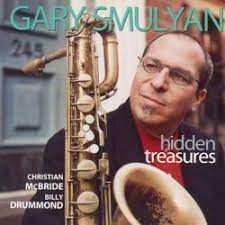
Gary Smulyan was born in Bethpage, New York on April 4, 1956. He studied at Hofstra University before working with Woody Herman. His biggest influence is Pepper Adams. When Adams died, Smulyan recorded an album titled which included eight pieces composed by Adams.
Smulyan has played with the Vanguard Jazz Orchestra, the Mel Lewis Big Band, the Dave Holland Big Band and Octet, the Dizzy Gillespie All Star Big Band. He has performed and recorded with Carla Bley’s Big Band.
He has recorded thirteen albums as a leader, as a sideman seventy-six with Harry Allen, David Byrne, Michel Camilo, Carnegie Hall Jazz Band, Freddy Cole, George Coleman, Dena DeRose, Bill Evans, Gil Evans, Jon Faddis, John Fedchock, Don Friedman, Benny Green, Tom Harrell, Gene Harris, Jimmy Heath, Joe Henderson, Conrad Herwig, Freddie Hubbard, Denise Jannah, B.B. King, Mike LeDonne, Joe Lovano, Joe Magnarelli, Kevin Mahogany, Mark Masters, Mingus Big Band, Grachan Moncur III, Eddie Palmieri, Charlie Parker, Charlie Persip, Diana Ross, Rob Schneiderman, John Scofield, Don Sickler, Mark Soskin, Dave Stryker, Roseanna Vitro, Walt Weiskopf, and Gerald Wilson.
Baritone saxophone Gary Smulyan leads a trio with bassist Ray Drummond and drummer Kenny Washington.
More Posts: bandleader,history,instrumental,jazz,music,saxophone
Daily Dose Of Jazz…
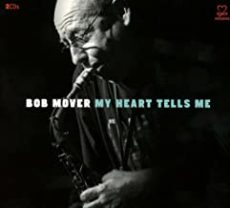
Bob Mover was born March 22, 1952 in Boston, Massachusetts into a musical family as his father played professionally with among others the Charlie Spivak Orchestra. Starting on the alto saxophone at age 13, he studied with Phil Woods at a summer music camp and took private lessons with Ira Sullivan.
In 1973, at the age of 21, Mover was a sideman for Charles Mingus for a five-month period at New York City’s 5 Spot Café. By 1975 he was working regularly in New York City jazz clubs with Chet Baker and he made his first European appearances with Baker at La Grande Parade du Jazz in Nice, France, Jazz Festival Laren in the Netherlands, and the Middelheim Jazz Festival in Antwerp, Belgium.
By late 1975, Bob started leading his own groups around the New York area and made his first two albums as a leader for Choice and Vanguard in 1976 and 1977 respectively: On the Move (Choice) and Bob Mover (Vanguard). Weekly gigs at the Sweet Basil in Greenwich Village included Tom Harrell, Jimmy Garrison, Kenny Barron, Albert Dailey, Ben Riley, Mike Nock, and Ron McLure.
Reuniting with Chet Baker in 1981 for a European tour and landing in Germany they recorded Chet Baker Live at Club Salt Peanuts Koln, Volumes 1 and 2 for the Circle label. Mover recorded two more albums as a leader in 1981 and 1982, In the True Tradition and Things Unseen, both issued by Xanadu.
Moving to Montreal, Canada in 1983 he taught at Concordia University. Three years later he recorded his fifth album as leader, The Nightbathers, with pianist Paul Bley and guitarist John Abercrombie, which was an experiment in free improvisation. From 1987 to 1997, Mover lived in Toronto and toured Europe and with Don Thompson and Archie Alleyne, he helped found the Toronto Jazz Quartet. He accepted a teaching position at York University, giving saxophone master classes and teaching a course called Musicianship for Jazz Singers. Alto saxophonist, bandleader and educator Bob Mover has recorded ten albums as a leader, eight as a sideman and continues to perform, record and teach.

More Posts: bandleader,history,instrumental,jazz,music,saxophone
Requisites
Star Bright ~ Dizzy Reece | By Eddie Carter 3.7.21
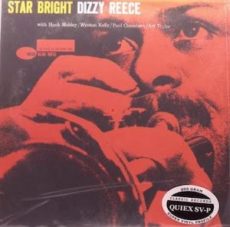
This morning’s choice from the library comes from a young man from Kingston, Jamaica. Alphonso Son Reece attended the Alpha Boys School where he began playing the baritone sax before switching to the trumpet at age fourteen. It’s also during this time where he got his nickname Dizzy, which had nothing to do with Dizzy Gillespie. He became a professional musician at sixteen and has played with some of the greatest jazz musicians in England, France, and the United States. Star Bright (Blue Note BLP 4023/BST 84023) was released in 1959 and is his third album as a leader following Progress Report (1957), and Blues In Trinity (1958). He’s backed on this date by three musicians he only knew from their records, Hank Mobley on tenor sax, Wynton Kelly on piano, and Paul Chambers on bass. Completing the quintet is Art Taylor on drums who played with Dizzy on Blues In Trinity. My copy used in this report is the 2003 Classic Records Mono audiophile reissue (BLP 4023 – BN 4023).
Side One starts at a relaxed tempo with The Rake, one of four tunes Reece composed for the 1958 British film, Nowhere To Go. The quintet opens with a laid-back stroll through the melody, and Dizzy lays down an easy-going opening solo. Hank follows with a reading so comfortable and cozy, you almost feel his warm personality coming from your speakers. Wynton glides into the closing statement gracefully with Paul and Art backing him leading to the reprise.
The pace picks up for the 1945 tune, I’ll Close My Eyes by Billy Reid and Buddy Kaye. Reid originally wrote this song as one of regret and remorse, but Kaye updated the lyrics, making the song upbeat. The trio creates the down-home atmosphere for the leader’s perfectly crafted opening chorus. Mobley begins with a stirring performance, followed by a spirited statement by Reece. Kelly achieves a wonderful groove on the next reading and Chambers walks with passionate precision on the climax.
The quintet takes a trip to Groovesville next, an impromptu blues by Dizzy beginning with the first of two statements by Wynton. The pianist opens this happy swinger with a blues-rooted energy that’s highly contagious. Dizzy takes charge next with a cheerfully buoyant interpretation, then Hank expresses his excitement on the third reading. Wynton picks up where he left off with a second clever statement preceding the front line splitting the closing chorus and the coda.
Side Two gets underway with Dizzy’s The Rebound, a medium-fast original that commences with the ensemble stating the melody collectively. Reece kicks things off with a feisty first reading, then Mobley takes the next spot, his tenor sax soaring with a soulful charm. Kelly answers enthusiastically with a high-spirited interpretation, and Chambers makes the final solo sparkle with a concise contribution before the ensemble takes the song out.
I Wished On The Moon was written in 1935 by Dorothy Parker and Ralph Rainger. It would become a big hit for Bing Crosby who recorded it that year with The Dorsey Brothers Orchestra. The group’s approach to this familiar evergreen is laid-back with Dizzy leading the trio through the carefree theme and finale with inspired interpretations by Dizzy, Hank, and Wynton who make it look so easy. Dizzy’s A Variation on Monk sets off at a brisk uptempo pace by Kelly, and the rhythm section evolves into a vigorous collective opening chorus. Mobley charges into the lead solo with an invigorating performance, then comes Reece who’s firing on all cylinders with an exhilarating statement. Kelly matches the front line’s intensity with a marvelous presentation that’s over too quickly. Taylor begins his only solo opportunity with an exchange of ideas between himself and both horns, then gives the final statement some vigorous brushwork ahead of the closing chorus.
A lot of thought and care went into the remastering of Rudy Van Gelder’s original tapes by Bernie Grundman of Bernie Grundman Mastering. The music is superbly recorded with a breathtaking soundstage and the instruments emerging from your speakers as if the musicians are playing right in front of you. The record was pressed on 200–gram Quiex SV–P Audiophile Vinyl with a flat–edge and deep groove on the label. It’s silent until the music begins. If you’re a fan of Hard-Bop from that magic year of 1959 and aren’t familiar with Dizzy Reece, I offer for your consideration, Star Bright, a stellar album that’s one of the brightest stars in his discography and one I can happily recommend for your library!
~ Blues In Trinity (BLP 4006/BST 84006), I Wished on The Moon (Decca 39857), Progress Report (Tempo Records TAP 9) – Source: Discogs.com ~ Alphonso Son Reece, I’ll Close My Eyes, I Wished on The Moon – Source: Wikipedia.org © 2021 by Edward Thomas Carter
More Posts: choice,classic,collectible,collector,history,instrumental,jazz,music,trumpet
Requisites
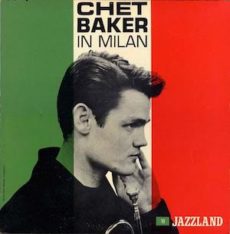
Chet Baker In Milan ~ Chet Baker | By Eddie Carter
The year 1959 was very good for jazz, several albums recorded and released that year would become contemporary classics and a significant few, acknowledged masterpieces. It was also a good year for Chet Baker, three LP’s he recorded are considered among his best, Chet, Chet Baker Plays The Best of Lerner & Lowe, and this morning’s choice from the library, Chet Baker In Milan (Jazzland JLP-18/JLP 918S). On this date, the trumpet player made during an extended tour through Germany and France, Chet’s working with five promising Italian musicians, Glauco Masetti on alto sax, Gianno Basso on tenor sax (tracks: A1 to A4, B1, B2), Renato Sellani on piano, Franco Cerri (listed as Serri) on bass, and Gene Victory on drums. My copy used in this report is the 1989 Original Jazz Classics Mono reissue (Jazzland OJC-370).
The opener, Lady Bird was written in 1939 by Tadd Dameron, and the sextet starts with a feisty theme statement. Chet opens with a vibrantly energetic reading set to an almost danceable beat, then Gianno follows with an enthusiastic improvisation. Glauco accentuates the bluesy momentum with a very enjoyable statement. Renato shows off his startling speed on the closer before the front line gives a few final verses.
Cheryl Blues by Charlie Parker was composed in 1947 and originally titled Cheryl. The sextet introduces the relaxing melody collectively. Baker is up first and makes the lead statement extremely interesting, then Basso gives the next spot a meaty interpretation. Masetti is as cool as a fresh breeze on a hot day next, and Sellani executes a fine touch and a steady hand to the finale.
The ensemble moves back into uptempo territory on Tune-Up by Miles Davis. It was written in 1953 and made its debut on the album, Miles Davis Quartet (1954). The sextet begins the melody with a swift-paced delivery, then Chet takes off first with astounding energy. Glauco follows with a feisty attack, and Gianno swings fiercely on the third solo. Renato provides a sparkling climax ahead of the front line’s final exchange into the ending.
Line For Lyons by Sonny Rollins begins with the unison theme at a medium tempo. Baker makes the first move with a cool tone, and Basso gives the second reading a pleasing rhythm. Masetti expresses himself fluently on the next interpretation. Sellani turns in a very attractive presentation next and Serri takes his first solo opportunity with a noteworthy closing statement.
Pent-Up House by Sonny Rollins starts Side Two and was first heard on the album, Sonny Rollins Plus 4 (1956). The sextet begins the opening chorus jointly. Chet sets the groove with a spirited statement, then Gianno solos confidently next. Glauco follows with a bristling interpretation. Renato provides a short, pithy presentation, then the front line shares a brief exchange leading to a soft climax.
The ensemble takes a page from The Great American Songbook for the 1919 song, Look For The Silver Lining by Jerome Kern and Buddy DeSylva. This tune was featured in two musicals, Zip, Goes A Million, that year, and Sally, a year later. The ensemble opens this oldie, but goodie with a finger-snapping mid-tempo theme. Baker, Masetti, Basso, and Sellani deliver four lively statements ahead of the reprise.
The 1919 song, Indian Summer was written by Victor Herbert who composed it originally as an instrumental piano piece. It became a jazz standard in 1939 after Al Dubin added the lyrics. For this song, Baker’s trumpet is marvelously lyrical with an amorous romantic beauty in his sound. This is particularly noticeable in the opening statement by Baker and a closing performance by Sellani that’s lavishly flavored with exceptional phrasing.
The album wraps up with the 1934 ballad, My Old Flame by Sam Coslow and Arthur Johnston. It opens with a gorgeous introduction and tender melody by Baker who almost seems to identify with the love, loss, and heartbreak of the lyrics in his opening statement and closing chorus. Sellani also gives a memorable account that’s brief, but beautifully nuanced and matched by Serri and Victory who support both soloists in perfect harmony.
Alto saxophonist Glauco Masetti was classically trained on violin and attended the Milan and Turin conservatories. He was self-taught on reed instruments and worked often as a session musician from the forties to the sixties. He also worked with Gianni Basso, Gil Cuppini, Giorgio Gaslini, Oscar Valdambrini, and Eraldo Volonté among others. Tenor man Gianni Basso was a renowned Italian saxophonist whose influence was Stan Getz. His career began after World War II as a clarinetist, before switching to the saxophone in The Belgian Raoul Falsan’s Big Band. Pianist Renato Sellani was also a composer who began his career as a professional in 1954 as a member of The Gianni Basso-Oscar Valdambrini Quintet. In 1958, he began a lengthy collaboration with his friend, guitarist, and bassist, Franco Cerri who turned ninety-five this past January. He was also a member of The RAI National Symphony Orchestra under the direction of Gorni Kramer, Kramer was also a noted musician and songwriter. He’s also worked with Bill Coleman and Dizzy Gillespie, Billie Holiday, Lee Konitz, Gerry Mulligan, Enrico Rava, and Tony Scott.
Double bassist Franco Cerri is considered one of Europe’s most important musicians and learned to play guitar when he was seventeen years old. His influences were guitarists Barney Kessel, René Thomas, and Django Reinhardt. In 1945, he became a member of the group led by Gorni Kramer and joined the orchestra of the television show, Buone Vacanze (Happy Holidays). He started playing the double bass in addition to guitar in the fifties and has played with Lou Bennett, Buddy Collette, Stéphane Grappelli, Johnny Griffin, Lars Gullin, Billie Holiday, Lee Konitz, Gerry Mulligan, Django Reinhardt, Tony Scott, Bud Shank, and The Modern Jazz Quintet. Giulio Libano who wrote the arrangements for the sextet was also an orchestra leader, jazz pianist, and trumpet player. He composed two songs that are featured in the 1961 Italian films, Girl With a Suitcase and Io Bacio…Tu Baci (Io Bacio…You Kiss)! Sadly, the only person I was unable to find any information on is drummer Gene Victory.
The description on the back cover giving the date of the entire recording as October 1959 is in error. Lady Bird was recorded on September 25, Cheryl Blues, Tune-Up, and Line For Lyons on September 26. Pent-Up House, Look For The Silver Lining, Indian Summer, and My Old Flame on October 6. I can’t provide the name of the engineer who originally recorded the album, but I can say with certainty it’s a superb recording that received excellent remastering by Phil De Lancie of Fantasy Studios. Baker is in excellent form throughout, the ensemble is watertight, and the level of soloing extremely high. If you’re a fan of Chet Baker and Cool Jazz, I highly recommend this album for a spot in your library. If you’ve read this far and are still uncertain, I’ll leave you with the first line of this report. The year 1959 was very good for jazz, Chet Baker In Milan, is one of the reasons why!
~ Chet (Riverside RLP 12-299/RLP-1135), Chet Baker Plays The Best of Lerner & Lowe (Riverside RLP 12-307/RLP 1152), Miles Davis Quartet (Prestige PRLP-161), Sonny Rollins Plus 4 (Prestige PRLP-7038/PRST-7291) – Source: Discogs.com ~ Girl With a Suitcase and Io Bacio…Tu Baci (Io Bacio…You Kiss) – Source: IMDB.com ~ Look For The Silver Lining, Indian Summer, Glauco Masetti, Gianni Basso, Renato Sellani, Franco Cerri, Giulio Libano – Source: Wikipedia.org ~ Lady Bird – https://www.youtube.com/watch?v=Vwio99V8-cw ~ Cheryl Blues – http://www.youtube.com/watch?v=AfbUraDG-mU © 2021 by Edward Thomas Carter
More Posts: choice,classic,collectible,collector,history,instrumental,jazz,music,trumpet