

Daily Dose Of Jazz…
Vince Wallace was born on June 15, 1939 in Port Townsend, Washington. At just two months shy of his second birthday his mother moved him to San Joaquin Valley, California. After spending a little time there, they ended up settling and growing up in the Bay area of Oakland, California.
His earliest recordings were on the Black Jack Wayne label in 1953 with Screamin Mel Dorsey and Chuck Wayne and the Heartbeats. These sessions were along with his original instrumental, Funky. He performed regularly at this time at the Country and Western halls and go go bars of Niles, California alongside Rose Maddox, Johnny Cash, and the Black Brothers.
As he developed, he became more sought after at all hours jazz joints where he sat in with Eric Dolphy, Paul Chambers, Charles Mingus, Pony Poindexter, Art Blakey and Smiley Winters. Jimbo’s Bop City in San Francisco was the best place around, where every night after 2 a.m. another legend of the jazz would come through the door.
In 1958 Vince moved to Southern California where he picked up work with Paul Bley and Marvin Rainwater. His Sunday jam session at The Cascades Club in Belmont Shores, helped the emergence of Kent Glenn, Mark Proctor, Gene Stone, and Warren Gale. By 1966 was back in the Bay Area working with alto saxophonist Norman Williams at the JukeBox in San Francisco. Through 1970 Wallace recorded three albums with Little John, a fusion rock band on Epic records.
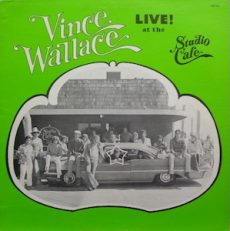
Drawn back to southern California he experienced some of his widest recognition as his featured performances were reviewed favorably by Gerald Wilson.. This led to an eventual run at the Studio Cafe, and the release of two of Vince’s solo albums on Amp Records. Returning to San Francisco he led a Sunday night jam session through the Nineties, receiving the San Francisco Bay Guardian Award for Best Jam Session in 1995.
With a surge of interest in his music in the new millenium, he started working at the Bulldog Coffee Shop in Oakland and reuniting with Bishop Norman Williams, Prince Lasha, Jim Grantham, Steve Heckman, Fred Randolph, Chuck Thomposon, Chris Amberger, Terry Rodriguez, and John Gilmore, just to name a few. He began working on his memoirs, created a website, took a Friday residency at Cafe Van Kleef, appeared on KCSM 91.1 FM, and recorded a new album with Larry Vuckovich.
Tenor saxophonist Vince Wallace has reestablished himself as one of the most sought after saxophonists around and his music will undoubtably be spread throughout the world via his website www.vincewallace.com.

More Posts: bandleader,history,instrumental,jazz,music,saxophone
Daily Dose Of Jazz…
Louisa West was born in Thomasville, Georgia on June 14, 1979 and began playing flute at the age of ten. She went on to receive a Bachelor of Music Performance from the University of Georgia and while studying there she performed in numerous ensembles including an orchestra conducted by Sammy Nestico. She studied privately with classical flutists Angela Jones-Reus, William Bennett, Mary Karen Clardy, and Mimi Stillman, as well as jazz flutists Nestor Torres and Holly Hofmann.
A winner of numerous competitions, after graduating from college in 2001, she relocated to southern California where she has been performing in the musical genres of world music, jazz, Latin jazz, and classical music. Playing extensively in the U.S, Canada and Mexico, Louisa has appeared onstage with touring acts such as Persian pop star Shakila, flutist Nestor Torres, and Brazilian singer Diogo Nogueira.
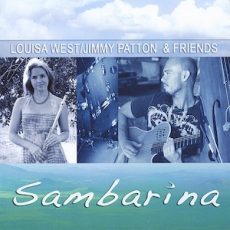
West recently attended California Brazil Camp, where she delved into the history and music of Brazil through workshops and performances by Brazilian jazz artists. This experience inspired her 2010 debut release with Jimmy Patton titled Sambarina.
Flutist Louisa West continues to perform, tour and record.
More Posts: bandleader,flute,history,instrumental,jazz
Daily Dose Of Jazz…
Philip L. Bodner was born in Waterbury, Connecticut on June 13, 1917 and worked as a studio musician in the 1940s and 1950s in New York City. He recorded with Benny Goodman and with Miles Davis and Gil Evans in 1958. The 1960s saw him playing with Oliver Nelson and J.J. Johnson.
During the Sixties he organized The Brass Ring, a group modeled after Herb Alpert and the Tijuana Brass. The group released nine albums between 1966 and 1972 and associations in the 1970s included Oscar Peterson, Yusef Lateef, Peanuts Hucko, Wild Bill Davison, and Ralph Sutton.
Bodner played the signature piccolo part on Van McCoy’s disco hit song The Hustle. During that period he also played with Ralph Sutton and Johnny Varro, worked with Mingus Epitaph, and arranged Louie Bellson’s tribute to Duke Ellington’s Black, Brown and Beige.
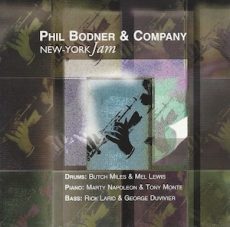
He worked in a swing style with Marty Napoleon, Mel Lewis, and George Duvivier in the 1980s and played with Maxine Sullivan and Barbara Carroll. Over the course of his career he recorded five albums as a leader, and eleven as a sideman with Coleman Hawkins, Cootie Williams, Miles Davis, Joe Wilder, Paul Desmond, Wes Montgomery, Cal Tjader, Mel Davis, George Benson, Freddie Hubbard, and Joey DeFrancesco.
Clarinetist and studio musician Phil Bodner, who also played flute, oboe, saxophone, and English horn, died in New York City on February 24, 2008, at age 90.
Daily Dose Of Jazz…
Oscar Feldman was born on June 12, 1961 in Cordoba, Argentina listening to his father’s jazz collection. He attended Conservatorio Provincial de Musica and was soon part of the prominent music scene in his hometown, becoming a founding member of acclaimed band Los Musicos del Centro.
Beginning in 1979 when he was 19 Oscar accepted an invitation to join bandoneonist Hermeto Pascoal and Dino Saluzzi to join his group. Moving to Buenos Aires, Argentina his career took off and he became a sought after studio musician. He recorded more than 40 albums as a sideman and toured with Argentina’s most prominent artists. Winning the Outstanding Performance Award as the Best Soloist in Fusion in 1986, he went on to procure the Achievement Scholarship Award from Berklee College of Music and graduated cum laude in 1995 with a Major in Professional Music.
Realizing he could bridge two worlds he joined Dizzy Gillespie’s United Nations Orchestra conducted by Paquito D’ Rivera. Moving to New York City his reputation grew as a versatile musician, and worked with Al Di Meola, Eumir Deodato, Jeff Tain Watts, Avantango, Alex Acuna, Bebo Valdes and His All Star Latin Jazz Band. He toured and performed across the United States, Europe and Africa.
As a leader Feldman has led numerous tours Horacio Negro Hernandez, Alex Acuna, Dave Samuels, Otmaro Ruiz and Tom Kennedy. As an educator he is currently on the faculty at the New York Jazz Academy, has taught workshops and clinics at Berklee College of Music in Boston, Massachusetts. He leads his own music jam classes weekly in New York and has written an article for Down Beat Magazine.
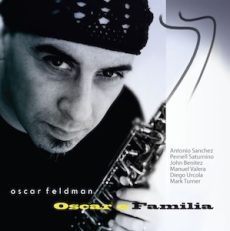
By the end of the 1990’s he recorded his debut as a leader El Angel on the Songosaurus record label. For his sophmore ten track album Oscar e Familia was released in 2009 on Sunnyside, he put together a Pan-American cast of Mexican drummer Antonio Sanchez, Cuban pianist Manuel Valera, Puerto Rican bassist John Benitez and Curacao percussion master Pernell Saturnino.
Alto saxophonist and composer Oscar Feldman. known for his splendid tonalities and melodically outstanding charts, continues to transcend his musical horizons.
More Posts: bandleader,composer,history,instrumental,jazz,music,saxophone
Daily Dose Of Jazz…
Danielle Wertz was born on June 11, 1994 in Washington, D.C. She was a semi-finalist in the 2015 Thelonious Monk International Jazz Vocal Competition.
Danielle independently released her debut album, Intertwined, in 2017 which ranked #4 on Capital Bop’s list of Best DC Jazz Albums of 2017 and was a finalist in both the Ella Fitzgerald Jazz Vocal Competition and the Mid-Atlantic Jazz Vocal Competition.
After making a cross-country move to California, Wertz quickly became an integral and sought-after musical collaborator and educator in the Bay Area. She has taught workshops and masterclasses at the Berkeley Jazzschool, joined the California Jazz Conservatory faculty, as well as the Sonoma State University faculty.
2022 saw her moving to NYC and being hired by Signature Theatre in Arlington, VA to co-create and co-star in a theatrical concert about the lives and music of Joni Mitchell and Leonard Cohen. In 2023 Danielle released her sophomore album, Other Side, as a composer and conceptualist. Reimagining arrangements of the Great American Songbook she paired them with her original compositions.
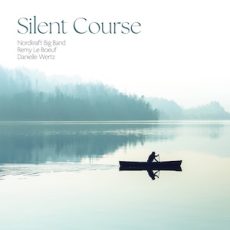
Vocalist, composer and arranger Danielle Wertz continues to collaborate as a new member of the NYC jazz scene, recording with Remy LeBoeuf, releasing a new album and looking forward to headline her first European tour.
More Posts: arranger,bandleader,composer,history,instrumental,jazz,music,vocal