

Daily Dose Of Jazz…
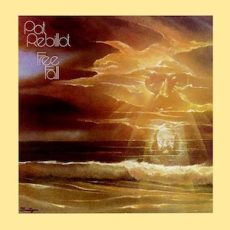
Patrick Earl Rebillot was born on April 21, 1935 in Louisville, Ohio and studied music at Mt. Union College and the Cincinnati Conservatory of Music with Jeno Takacs. He graduated with a Bachelor of Music Education in 1957.
A long-time member of Herbie Mann’s various line-ups and credited as arranger, Pat appears on recordings by David Newman, Jon Faddis, Flora Purim, Michael Franks, Freddy Cole, Patti Austin and Chris Connor as well as Steely Dan, the Average White Band, Gloria Gaynor, Irene Worth, Bette Midler, Hall & Oates, Morrissey–Mullen, Barbra Streisand, Judy Collins, Carly Simon, The Spinners, and Laura Lieberman.
Rebillot has played live with Sarah Vaughan, Joe Williams, Anita O’Day, Benny Powell, Jimmy Rushing, Zoot Sims, Al Cohn, James Moody, Thad Jones, Mel Lewis, Benny Goodman, Gary Burton, Paul Winter, Joan Baez, Liza Minnelli, Cissy Houston, O.C. Smith, and others.
Rebillot is associated with fellow session and studio musicians Hugh McCracken, Tony Levin, Steve Gadd, Ray Barretto and Ralph MacDonald.
Pianist and composer Pat Rebillot performs occasionally at the age of 90.

Requisites
Relaxin’ at Camarillo ~ Hank Jones | By Eddie Carter
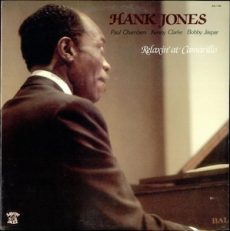
Have you ever found yourself planning to listen to a specific album in your library, only to be drawn to another title on the shelf? That’s precisely what happened to me, and it ultimately led to a delightful surprise and this morning’s discussion. Hank Jones has been one of my favorite pianists since I first heard him on Bass on Top, New Trombone, Portrait of Art Farmer, and Somethin’ Else many years ago. Relaxin’ at Camarillo (Savoy Jazz WL 70504) was initially released in 1956 as the Hank Jones Quartet, and this gem is often overlooked within his extensive discography. Accompanying Hank in this session are Bobby Jaspar on flute, Paul Chambers on bass, and Kenny Clarke on drums. My copy is the 1984 U.S. mono reissue.
The album opener is the lovely forties tune Moonlight Becomes You by Jimmy Van Heusen and Johnny Burke. A brief piano introduction sets up Bobby’s gentle melody, with the trio in tow. Hank begins the solos with notes of beautiful simplicity. Bobby takes over to deliver the second statement effortlessly, then comes Paul’s elegantly subtle closer before the melody returns and ends softly. The title track, Relaxin’ at Camarillo by Charlie Parker, elevates the pace for the foursome’s mid-tempo theme. Jaspar takes flight first in a spirited presentation of rhythmic energy. Chambers then walks skillfully through the following solo, and Jones vigorously tackles the third reading. All three soloists repeat this sequence several times until the theme’s reprise ends abruptly.
Side Two begins with Minor Contention by Hank Jones. The pianist’s introduction ushers in the foursome’s upbeat melody. Bobby leads the charge, building each chorus with irresistible momentum. Hank surges into the following interpretation with a vibrant energy. Paul takes a jaunty walk through the third performance, and finally, Bobby, Hank, and Kenny conclude with an exhilarating three-way dialogue, culminating in a splendid finale. The quartet enjoys a pretty Sunday in Savannah by Hugh McKay next. Hank’s slow-paced introduction blossoms into Jaspar’s tenderly passionate melody. Jones opens with a delicately thoughtful presentation, and then the flutist provides a sultry commentary preceding a gentle conclusion.
The beat ascends one final time for an original by Cannonball Adderley, Spontaneous Combustion. Bobby’s introduction opens the door for the quartet’s blues-infused theme. Hank dives into the leisurely opening solo with relaxing lines. Bobby follows with a refreshing statement reminiscent of a cool swim on a sweltering summer day. Jaspar and Jones share a delightful exchange of notes, leading to Paul’s pleasant moment ahead of the climax. Ozzie Cadena produced the initial session, while Bob Porter oversaw the reissue’s production. Rudy Van Gelder operated the recording dials. The album boasts a stunning soundstage for a fifties release, with instruments that jump out of the speakers in this mono reissue.
Throughout his illustrious career, which spanned sixty-six years, Hank Jones recorded over sixty albums as a leader. He was also a prominent member of the Great Jazz Trio, contributing to thirty-eight albums and an additional seven titles with the Great Jazz Quartet and Quintet. His extensive discography also includes numerous appearances as a sideman. If you’re a piano jazz enthusiast and also enjoy cool jazz and hard bop, Relaxin’ at Camarillo by Hank Jones is an exceptional choice for a spot in your library. As I mentioned earlier, it’s a delightful surprise with the addition of Bobby Jaspar to the trio, making this a title that shouldn’t be missed on your next record-shopping trip!
~ Bass on Top (Blue Note BLP 1569/BST 81569), Hank Jones Quartet (Savoy MG-12087), New Trombone (Prestige PRLP 7107), Portrait of Art Farmer (Contemporary Records C3554/S7027), Somethin’ Else (Blue Note BLP 1595/BST 81595) – Source: Discogs.com
~ Moonlight Becomes You – Source: Wikipedia.org
© 2025 by Edward Thomas Carter

More Posts: choice,classic,collectible,collector,history,instrumental,jazz,music,piano
Daily Dose Of Jazz…
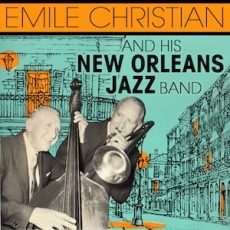
Emile Joseph Christian born April 20, 1895 in the Bywater neighborhood of New Orleans, Louisiana, was the younger brother of noted cornetist and bandleader Frank Christian. He played both cornet and trombone with the Papa Jack Laine bands. He went to Chicago, Illinois in late 1917 to play trombone with the Bert Kelly Jass Band. The following year he moved to New York City, replacing Eddie Edwards in the Original Dixieland Jass Band, touring England and making his first recordings with this band.
After a brief time in the Original Memphis Five, he returned to Europe and from 1924 into the 1930s, he played bass and trombone with various jazz bands. In Berlin, Germany he recorded, in Stockholm, Sweden he recorded with Leon Abbey’s band. In Paris, Nice and Aix-les-Bain, France he played with Tom Waltham’s Ad-Libs. In 1935 he played with Benny Peyton’s Jazz Kings in Switzerland.
Christian played in both Black and White bands in Europe and India before returning to the United States after the outbreak of World War II. The 1950s saw him moving back to New Orleans, where he played with the bands of Leon Prima, Santo Pecora, and Sharkey Bonano and his own band. In 1957 he toured with the Louis Prima Band and continued playing in New Orleans into 1969.
Trombonist and cornetist Emile Christian, who wrote a number of tunes and in his later years mostly playing string bass, died on December 3, 1973 in New Orleans at the age of 78.
More Posts: cornet,history,instrumental,jazz,music,string bass,trombone

Daily Dose Of Jazz…
Czesław Kazimierz Bartkowski was born April 19, 1943 in Łódź, Poland. He has been involved in music since he was six years old. He graduated from the Secondary Music School in Wrocław, Poland in percussion class. He made his official debut in 1960 as a drummer in Jerzy Pakulski’s Far Quartet.
In 1963 he started working with Zbigniew Namysłowski Quartet and also played with Czesław Niemen’s Niemen Enigmatic, and Michał Urbaniak’s Grupa .
He has played in a variety of trios with pianists Adam Makowicz, Wojciech Karolak, Artur Dutkiewicz, Andrzej Jagodziński, tenor saxophonist Tomasz Szukalski, guitarist Marek Bliziński, trumpeter Tomasz Stańko, and double bassists Andrzej Cudzich, Zbigniew Wegehaupt, Adam Cegielski.
Moreover, he took part in the recording of such singers as Ewa Bem, Urszula Dudziak and Stanisław Sojka, and American musicians Freddie Hubbard, Clark Terry, Joe Newman, Art Farmer, Ben Webster, and the Polish band Novi Singers.
He has collaborated with the Polish Radio Jazz Studio and with Sławomir Kulpowicz’s Mainstream and InFormation bands. He has performed in Poland, India, United States, New Zealand, Australia and numerous European countries. He has been a lecturer and participated in jazz workshops.
Drummer and teacher Czesław Bartkowski continues to perform, record and educate..
More Posts: bandleader,drums,history,instrumental,jazz,music
Daily Dose Of Jazz…
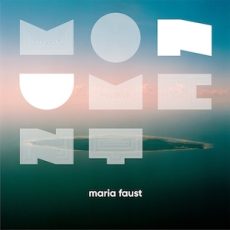
Maria Faust was born on April 18, 1979 in Kuressaare,, Estonia. Growing up under the Communist regime she was classically educated, and at the conservatory there, she didn’t feel that there was room for her, musically. Yearning for something different in Tallinn, jazz and improvisational music took hold of her, but in order to develop further, she had to leave the country. With the help of the Danish Cultural Institute, she came to the Southern Danish Music Conservatory. Even in her new surroundings, she felt she did not fit into the world of jazz.
She plays and composes in non-traditional ways, and her big breakthrough came with her album, Sacrum Facere, which is Latin for human sacrifice. It was inspired by the culture of deported orthodox Russians. With collected work songs, hymns, and lullabies she merged the material with classical music and free improvisation. The album received universally positive reviews, and received two Danish Music Awards in 2014 for Jazz Composer of the Year and Jazz Crossover Release of the Year.
She has worked with John Parish and Mark Howard. She tours western Europe, the Balkan Peninsula, South America, China, and Russia. Saxophonist Maria Faust, who has recorded nine albums as a leader, continues to push the boundaries of music.
More Posts: bandleader,bass,cornet,history,instrumental,jazz,music,trombone