

Requisites
The Summer Knows ~ Art Farmer | By Eddie Carter
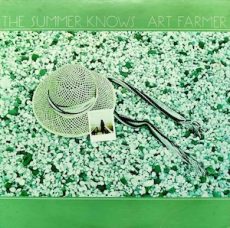
This past week was particularly rough, and I eagerly looked forward to the weekend. This morning’s album offered for your consideration is The Summer Knows (East Wind EW-8047). It was one of my mom’s favorites, and the music brought back fond memories of when I was younger. This underrated gem is an excellent quartet date by Art Farmer, one of five albums he released in 1977. Art’s exclusively heard on flugelhorn and shares the spotlight with a stellar rhythm section: Cedar Walton on piano, Sam Jones on bass, and Billy Higgins on drums. My copy is the Japanese Stereo release.
Side One starts with the title track, The Summer Knows, by Alan and Marilyn Bergman and Michel Legrand. A gentle piano introduction transitions to Art’s sweet melody and a captivating, touching opening statement with a nostalgic and soothing vibe. Cedar follows with a delicately heartfelt performance. Art’s final enchanting choruses flow smoothly before the ensemble’s theme is softly revisited. Manhã Do Carnaval by Luiz Bonfá, Antônio Maria, and François Llenas springs to life with the trio’s introduction. Art follows them with an infectiously charming melody and opening solo. Cedar carries the festivities into the second reading until Art’s closing statement leads to the theme’s reprise.
Alfie by Burt Bacharach and Hal David starts with a piano introduction that grows into Art’s delicately sensitive theme and opening statement. Cedar’s solo creates a deep emotional resonance that is genuinely moving. Art’s concluding thoughts are hauntingly tender, preceding the closing theme. When I Fall In Love by Victor Young and Edward Heyman gets Side Two underway with Art’s solo introduction ahead of the foursome’s exquisite melody. The leader’s first solo embraces the song’s essence and intimacy. Cedar delivers enchanting beauty in the following reading; then, Art takes over the spotlight again for a short expression of love that dissolves into nothingness.
Ditty by Art Farmer starts with an energetic introduction by Sam and Cedar, setting the stage for the ensemble’s lively melody. Art begins the opening statement with a brisk and confident lead, followed by Cedar’s impressively spirited solo. Billy concludes with a concise yet impactful comment, leading back to the restated theme and climax. The album concludes with a beloved classic, I Should Care, by Axel Stordahl, Paul Weston, and Sammy Cahn. The group’s easygoing groove sets the mood for the introduction and melody. Art commences with a beautifully rendered interpretation, and Sam’s brief yet engaging solo complements it perfectly, leading into the heartfelt closing chorus.
Kiyoshi Itoh and Yasohachi Itoh produced The Summer Knows, with David Baker and Yoshihiro Suzuki behind the dials as the recording engineers. The album boasts exceptional sound quality, capturing an outstanding soundstage that places the musicians perfectly in your listening space with crystal-clear fidelity. For jazz aficionados seeking an ideal album perfect for unwinding after a long day or those only familiar with Art’s work with the Jazztet, I highly recommend The Summer Knows by Art Farmer for your library. It’s a remarkable release no jazz lover should overlook on their next record-shopping adventure!
~ I Should Care, When I Fall In Love – Source: JazzStandards.com
~ Alfie, Manhã Do Carnaval, The Summer Knows – Source: Wikipedia.org
© 2025 by Edward Thomas Carter

More Posts: choice,classic,collectible,collector,history,instrumental,jazz,music,trumpet
Daily Dose Of Jazz…
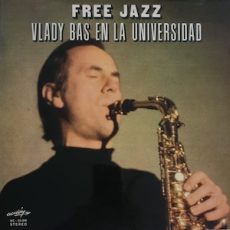
Vlady Bas was born Wladimiro Bas Zabache on February 2, 1929 in Bilbao, País Vasco, Spain. He moved to Madrid in 1952 and represented Spain at the 1958 Newport Jazz Festival. He was one of the first Spanish jazz musicians to play free jazz.
He has been associated with The International Youth Band, Jazztet de Madrid, Juan Carlos Calderon y Su Orquesta De Jazz, Louis Armstrong Newport International Jazz Band, Manolo Gas & The Tinto Band Bang, Orquesta Blue Stars, and Pepe Nieto Y Su Orquesta.
He founded the Vlady Bas Quartet, still on the road, now with his daughter Paula Bas as singer. The quartet members are Carlos Villa, guitar; Fernando Sobrino, piano; Antonio Domínguez, string bass and Antonio Calero, drums.
Saxophonist, clarinetist and flutist Vlady Bas is still on the road.

More Posts: bandleader,clarinet,flute,history,instrumental,jazz,music,saxophone

Daily Dose Of Jazz…
Mihály Tabányi was born on February 1, 1921 in Pilis, Hungary. He began his musical studies on the violin at the age of five , and then on the piano at the age of eight. From 1933, he studied accordion for seven years with Lajos Bobula, while attending the Academy of Music and graduating in organ and gordon due to no accordion department. He then became a church organist.
1940 saw Mihály winning first place in the first National Accordion Competition as a professional. Two years later he won the National Accordion King Competition and the Tango Accordion Olympics. He later made his first jazz recordings for the Radiola Electro Record label.
Before 1945, he mainly performed in trios and later with György Cziffra with whom he played in the Bristol Hall orchestra, before founding his own band called Pinocchio that included two guitarists, Elek Bacsik and Attila Zoller, with which he performed in many countries. After 1945, he expanded the trio to eight members. In 1946 he received a contract in Switzerland and two years later he founded his own accordion school. From 1949 he played with his band at the Emke Café for seven years before disbanding in 1956.
In 1950 he was awarded the title of the country’s most popular jazz musician. In 1957 he made the first Hungarian West Coast recording for the Qualiton label. From 1960 he spent years in West Germany and gave concerts in many European countries and made several large formation recordings. He worked with many singers that immortalized his playing on their records. In 2017, the National Accordionist Society established the Mihály Tabányi Award.
Accordionist Mihály Tabányi, who was an Emerton-award winner and the most popular accordionist of the Forties and Fifties, died on July 2, 2019 at the age of 98.
More Posts: accordion,bandleader,history,instrumental,jazz,music
Daily Dose Of Jazz…
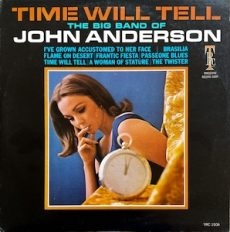
John Anderson was born January 31, 1921 in Birmingham, Alabama. He studied at the Los Angeles Conservatory of Music and the Westlake College of Music.
He was a part of the West Coast jazz scene with Stan Kenton and others. He went on to work with Tiny Bradshaw, Jerry Fielding, Perez Prado, Earl Bostic, Charles Mingus, Buddy Collette, Curtis Counce, Britt Woodman, Count Basie, Chico Hamilton, J. W. Alexander, Dee Williams & The California Playboys, and Sam Cooke and many others.
During his career he performed with his own orchestra as well as many others like Georgie Auld And His Orchestra, Jack Costanzo & His Afro Cuban Band and Orchestra, Johnny Mandel Orchestra, and Russell Jacquet And His All Stars.
Trumpeter and composer John Anderson died in Birmingham on August 18, 1974.

More Posts: bandleader,composer,history,instrumental,jazz,music,trumpet
Daily Dose Of Jazz…
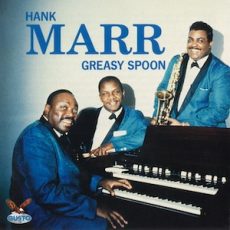
Hank Marr was born January 30, 1927 in Columbus, Ohio. He and tenor saxophonist Rusty Bryant co-led a group that toured for several years, beginning in 1958. During the early 1960s Hank worked with guitarist Freddie King and recorded and worked with Wilbert Longmire for a couple of years starting in 1963.
The late 1960s saw Marr performing in a duo with guitarist Floyd Smith in Atlantic City, New Jersey and a duo album with Frank Foster. He had two minor U.S. hit singles, The Greasy Spoon which hit No. 101 in 1964 and Silver Spoon #134 in 1965.
He recorded eight albums as a leader, and 19 singles for Wingate, King and Federal record labels. Hammond B-3 organist Hank Marr died at age 77 on March 16, 2004.
Get a dose of the musicians and vocalists who were members of a global society integral in the making and preservation of jazz for over a hundred and twenty-five years…
More Posts: history,instrumental,jazz,music,organ