

Daily Dose Of Jazz…
Bernie Glow was born on February 6, 1926 in New York, New York. During the Second World War while attending The High School of Music & Art he played in bands with Stan Getz, Tiny Khan, Shorty Rogers and George Wallington. Early on his influences were Snooky Young with the Jimmie Lunceford band, and Billy Butterfield with Benny Goodman.
At just sixteen and out of high school, Glow spent a year on the road with the Richard Himber Orchestra. Two years later he performed first with Xavier Cugat and then Raymond Scott on CBS radio. At the end of the war he played lead trumpet with the Artie Shaw band. Following that stint, he worked with Boyd Raeburn.
1949 saw the twenty-three year old retiring from the road after more than a year with Woody Herman and his famous Second Herd. Bernie worked as a trumpet player in big bands, Latin bands and dance orchestras. He performed in theaters, dance halls, night clubs and on the radio around Manhattan. This was the final preparation that launched him into the burgeoning commercial and studio scene.
During the last years of the big-band era his first-call studio work included Miles Davis, Frank Sinatra, Ella Fitzgerald and did thousands of radio and television recording sessions. Many of these studio big-band sessions were led by composer/arrangers Nelson Riddle, Quincy Jones and Oliver Nelson.
Trumpeter and sideman Bernie Glow, who played on the seminal Miles Davis and Gil Evans collaborations Miles Ahead, Porgy and Bess, Sketches of Spain, and Quiet Nights, died of a blood disorder in Manhasset, New York at the age of 56 on May 8, 1982.

More Posts: history,instrumental,jazz,music,trumpet

Daily Dose Of Jazz…
Jacqueline Caryl Dankworth was born on February 5, 1963 in Northampton, Northamptonshire, England to jazz singer Cleo Laine and saxophonist John Dankworth. She attended St. Christopher School in Hertfordshire and is an alumna and fellow of Guildhall School of Music & Drama.
She worked as an actress with the Royal Shakespeare Company, the Royal National Theatre, and in West End theatre. She played Cinderella in the musical Into the Woods and appeared in the film Shoreditch, singing the song My Man by Billie Holiday.
2003 saw Dankworth releasing her debut album As the Sun Shines Down On Me on Candid Records. This album brought her to the attention of Michael Parkinson and BBC Radio 2, and she appeared regularly on air throughout that year.
She was featured on Courtney Pine’s album Devotion, and performed with him at the Royal Festival Hall as part of the London Jazz Festival. Her sophomore album with the 2004 release, Detour Ahead. Since then she has recorded a total of seven albums.
She was appointed Member of the Order of the British Empire (MBE) in the 2019 Birthday Honours for services to music. Vocalist Jacqui Dankworth continues to perform, tour and record.
More Posts: bandleader,history,instrumental,jazz,music,vocal

Jazz Poems
PARKER’S MOOD
Come with me,
If you want to go to Kansas City.
I’m feeling lowdown and blue,
My heart’s full of sorrow.
Don’t hardly know what to do.
Where will I be tomorrow?
Going to Kansas City.
Want to go too?
No, you can’t make it with me.
Going to Kansas City,
Sorry that I can’t take you.
When you see me coming,
Raise your window high.
When you see me leaving, baby,
Hang your head and cry.
I’m afraid there’s nothing in the cream, this dreamy town
A hinky-tonky monkey-woman can do
She’d only bring herself down.
So long everybody!
The time has come
And I must leave you
So if I don’t ever see your smiling face again:
Make apromise you’ll remember
Like a Christmas Day in December
That I told you
All through thick and thin
>On up until the end
Parker’s been your friend.
Don’t hang your head
When you see, when you see those six pretty horses pulling me
Put a twenty dollar silver-piece on my watchchain,
Look at the smile on my face,
And sing a little song
To let the world know I’m really free.
Don’t cry for me
‘Cause I’m going to Kansas City.
Come with me,
If you want to go to Kansas City.
KING PLEASURE (CLARENCE BEEKS)
from Jazz Poems ~ Selected and Edited by Kevin Young

More Posts: book,classic,collectible,history,jazz,library,poet
Daily Dose Of Jazz…
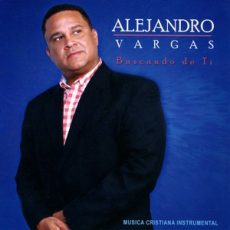
Alejandro Vargas Rodríguez was born on February 4, 1980 in Havana, Cuba and started his musical studies at six years old, receiving lessons from Joel Rodríguez Milord, Ulises Hernández and Harold Gramatges. These continued until he graduated as a concert pianist from the University ISA (Instituto Superior de Arte) in Havana. He completed his studies with different seminars led by Herbie Hancock, Chucho Valdés, Danilo Pérez or Jorge Luis Prats.
When he was 20 he recorded his first album Calor, performing the arrangements of Benny Moré compositions. He began his jazz career performing at the Festival Jazz Plaza while attending college.
Forming his first jazz trio he competed in the 2001 in the Jojazz competition winning 1st Prize. Two years later his band Alejandro Vargas and Oriental Quartet is one of the most recognized in the country. With this fame he began touring internationally and his album Trapiche recorded in was awarded the best jazz jazz album of the year in Cubadisco contest in 2008.
Experimenting with a wide range of styles he moves from abstract to traditional where jazz standards and popular Cuban music are taken to the aesthetic of free improvisation. His trio plays between the contemporary and the afrocuban. For two years in 2006 he was a professor of Harmony and Popular Piano at the University of Havana and worked as a composer of audio visual and documentary at the school of international cinema of San Antonio de los Baños.
Developing an intense work on free improvisation and free jazz, he continually explores new horizons. Pianist Alejandro Vargas Rodríguez is currently recording a new trio album across different landscapes from the sonority of the oriental organ evoking the rural Cuban fields to mambo to the blues to Monk’s minimalism.
More Posts: bandleader,history,instrumental,jazz,music,piano

Daily Dose Of Jazz…
Cindy Scott was born in Tupelo, Mississippi on February 3, 1966 into an extended family of musicians and educators. Her mother was a concert pianist, and her father played fifteen instruments and they were both band directors. She has two sisters who are musicians and educators, and her cousin, guitarist and teacher Charlie Hall founded the Black Rose Acoustic Society in Colorado Springs and Colorado Roots Music Camp.
She received a music scholarship by Louisiana State University and played flute and piccolo in the wind ensemble while earning a degree in German. She later earned a Masters in International Business from the University of South Carolina. Scott embarked on a corporate career while continuing to perform and study music. 2005 saw Cindy dedicating herself fully to her musical pursuits and enrolled in the Jazz Studies program at the University of New Orleans.
Although Scott spent many years working in the corporate world, she always had one foot in the music world as a performer, bandleader, and student of the music. She recorded her first album Major to Minor in Houston, Texas in 2001 and released it the following year. She would go on to record a total of albums as a leader, eight as a sideperson and has produced two albums to date.
Cindy has held the position of Associate Professor of Music at the Berklee College of Music in Boston, Massachusetts since 2016 and is also the Director of Berklee’s Vocal Summit.
Vocalist Cindy Scott, who also plays the guitar and flute, continues to teach at camps and workshops around the world in addition to her performing and touring.
More Posts: bandleader,history,instrumental,jazz,music,vocal