

Requisites
Down To Earth ~ Freddie Roach | By Eddie Carter
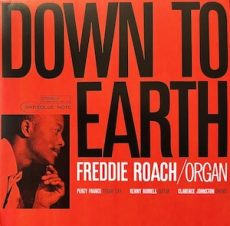
Submitted for your approval from the library this morning is an underrated, yet wonderful 1962 album by organist Freddie Roach. Down To Earth (Blue Note BLP 4113/BST 84113) was the first of five releases he recorded as a leader for the label, and brings together a hard-swinging quartet featuring Perry France on tenor sax, Kenny Burrell on guitar, and Clarence Johnston on drums. France and Burrell appeared on Jimmy Smith’s Home Cookin’ album, and this hard-bop session by Roach follows in the same vein, with a classic organ-jazz foundation. My copy is the 1994 Toshiba-EMI Japanese stereo reissue, which shares the original catalog number.
The opener, De Bug, is the first of five originals by Freddie Roach, and a catchy original that begins with the quartet’s medium melody. Kenny gets things started with a leisurely opening solo. Perry follows with a marvelously executed reading, and Freddie continues making it fun in the finale, leading to the group’s ending theme and slow dissolve. Ah Miz is Freddie’s play on the phrase “I’m Is,” and the group gets things going with a bluesy midtempo theme. Perry leads off this time with a joyously carefree presentation. Kenny unfolds the second reading as smoothly as velvet, and Freddie extends the happy mood toward the ensemble’s closing chorus and fadeout.
Lujon is a beautiful tune by Henry Mancini that comes to life with Kenny and Clarence’s subtle introduction to the ensemble’s melody. Kenny has the first say and approaches the solo with elegant simplicity. Perry follows with a touching interpretation, and Freddie comes in last, gently, before the quartet restates the ending and the song fades out softly. Freddie Roach’s Althea Soon picks up the pace to begin the second side with the group’s medium melody. Perry leads the way and takes the listener on an eventful ride, then Kenny keeps it going with an easy swing. Freddie has the last word and makes an indelible impression ahead of the theme’s restatement and close.
More Mileage is Freddie Roach’s tribute to Miles Davis and pure, greasy quartet funk, letting the foursome swing easily through the opening chorus. Kenny sets the pace with a relaxed attitude on the opening statement. Perry takes the reins next with a cheerful reading. Freddie turns in another standout turn ahead of the theme’s reprise and fadeout. Lion Down is Freddie’s nod to Blue Note founder Alfred Lion, and the ensemble operates at an effortless shuffle tempo. Perry gets right down to business on the opening statement. Kenny lays out his ideas in the following reading, and Freddie brings considerable enthusiasm before the theme returns and finishes!
Alfred Lion produced Down To Earth with Rudy Van Gelder managing the recording console. The Toshiba reissue sounds good, though not exceptional, as the organ microphone overmodulates and grows increasingly distorted as the album progresses. That said, fans of soul-jazz and jazz organ will find Freddie Roach’s Down To Earth a delight, even though it remains one of Blue Note’s most overlooked albums. It’s a swinging set that rewards repeated listening, and I hope you’ll consider seeking it out on your next record-shopping trip!
~ Home Cookin’ (Blue Note BLP 4050/BST 84050) – Source: Discogs.com
© 2026 by Edward Thomas Carter

More Posts: choice, classic, collectible, collector, history, instrumental, jazz, music, organ,
Daily Dose Of Jazz…
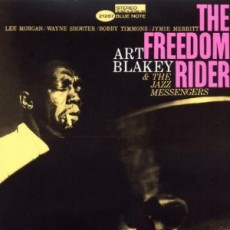
Art Blakey was born Arthur Blakey on October 11, 1919 in Pittsburgh, Pennsylvania. By the time he was a teenager, he was playing the piano full-time, leading a commercial band. Shortly afterwards, he taught himself to play the drums in the aggressive swing style of Chick Webb, Sid Catlett and Ray Bauduc. He joined Mary Lou Williams in 1942, then toured with the Fletcher Henderson Orchestra, spent three years with Billy Eckstine’s big band and became associated with the bebop movement along with his fellow band members Miles Davis, Dexter Gordon, Fats Navarro, Dizzy Gillespie, Charlie Parker, and Sarah Vaughan and others.
He recorded on Thelonious Monk’s first and last sessions as a leader, organized a rehearsal band called the Seventeen Messengers in 1947, recorded with an octet call the Jazz Messengers co-led with Horace Silver, and the group recorded with Clifford Brown, Lou Donaldson and Gene Ramey live at Birdland and formed a regular cooperative group with Hank Mobley and Kenny Dorham in 1953.
Along with Kenny Clarke and Max Roach, Art was one of the inventors of the modern bebop style of drumming. Known as a powerful musician and a vital groover, his brand of bluesy, funky hard bop was and continues to be profoundly influential on mainstream jazz. For more than 30 years his band, Art Blakey and the Jazz Messengers, included many young musicians who went on to become prominent names in jazz.
Blakey’s Messengers would go on to enlist musicians like Doug Watkins, Donald Byrd, Johnny Griffin, Benny Golson, Jymie Merritt, Lee Morgan, Bobby Timmons, Curtis Fuller, Freddie Hubbard, Cedar Walton and Wayne Shorter, all of whom made an indelible impression on Blakey’s repertoire with their original compositions such as Dat Dere, Moanin’ and Lester Left Town.
Art recorded dozens of albums both as a sideman and a leader with a constantly changing group of Jazz Messengers, toured with the Giants of Jazz in early Seventies, revitalized the band in the 80s with players like Wynton Marsalis, Johnny O’Neal , Philip Harper , Terence Blanchard, Joanne Brackeen, Donald Harrison, Kenny Garrett, Bobby Broom, Robin Eubanks, Kevin Eubanks, Ralph Peterson Jr.. and Mulgrew Miller
Over the years group members went on to find their own star including but not limited to Brian Lynch, Javon Jackson, Geoffrey Keezer, Valery Ponomarev, Wallace Roney, Charles Fambrough, Essiet Okon Essiet, Kenny Washington, Chuck Mangione, Keith Jarrett, Woody Shaw, Branford Marsalis, Terence Blanchard, Donald Harrison, and Reggie Workman.
Also known as Abdullah Ibn Buhaina after converting to Islam and nicknamed “Bu”, was inducted into the Jazz Hall of Fame in 1982, won a Grammy for Best Group Jazz Instrumental Performance for New York Scene, was inducted in the Newport Jazz Festival and Down Beat Jazz Hall of Fames, and was posthumously inducted into the Grammy Hall of Fame in 2001 and was awarded the Grammy Lifetime Achievement Award in 2005. Drummer, bandleader, educator and mentor Art Blakey died on October 16, 1990.
More Posts: drums
Daily Dose Of Jazz…
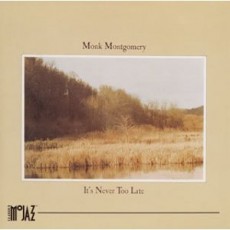
Monk Montgomery was born William Howard Montgomery on October 10, 1921 in Indianapolis, Indiana the older brother of Wes and Buddy. A student of the double bass, his professional career did not start until age 30, after Wes’ career began, and from 1951 to 1953 he worked in Lionel Hampton’s Orchestra.
Following that stint Monk worked with his brothers and Alonzo Johnson in the Montgomery Johnson Quintet. He would go on to record with his brothers as the Montgomery Brothers, releasing a number of albums together. 1955 saw him moving to Seattle, Washington to form The Mastersounds from 1957–1960. From 1966–1970, he freelanced with Cal Tjader, settled in Las Vegas, Nevada and continued to play with the Red Norvo Trio and worked with Kenny Burrell, Hampton Hawes, Jon Hendricks, Art Farmer, Hugh Masekela, The Jazz Crusaders and Eddie Harris among others.
In his final years he founded and was active in the Las Vegas Jazz Society and was planning a world jazz festival. He is perhaps the first electric bassist of significance to jazz, introducing in 1951 the Fender Precision Bass to the genre. Bassist Monk Montgomery died of cancer in Las Vegas on May 20, 1982.
More Posts: electric bass
Daily Dose Of Jazz…
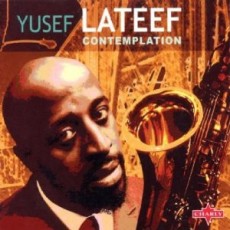
Yusef Lateef was born William Emanuel Huddleston on October 9, 1920 in Chattanooga, Tennessee and by the time he was five his family moved to Detroit. Throughout his early life Lateef came into contact with many Detroit-based jazz musicians who went on to gain prominence, including vibraphonist Milt Jackson, bassist Paul Chambers, drummer Elvin Jones and guitarist Kenny Burrell
Proficient on saxophone by graduation from high school at the age of 18, he launched his professional career and began touring with a number of swing bands. In 1949, he was touring with Dizzy Gillespie and his orchestra. In 1950, Lateef returned to Detroit and began his studies in composition and flute at Wayne State University. It was during this period that he converted to Islam.
Lateef began recording as a leader in 1957 for Savoy Records overlapping with Prestige Records subsidiary label New Jazz, collaborating with Wilbur Harden, Herman Wright, Frank Gant, and Hugh Lawson among others. By 1961, with the recording of Into Something and Eastern Sounds his dominant presence within a group context had emerged and his ‘Eastern’ influences are clearly audible in all of these recordings.
Along with trumpeter Don Cherry, Yusef can lay claim to being among the first exponents of the world music as sub-genres of jazz. He played on numerous albums, was a member of Cannonball Adderley’s Quintet during the early Sixties, was a major influence on John Coltrane, he began to incorporate contemporary soul and gospel phrasing into his music, founded his own label YAL Records and was commissioned by the WDR Radio Orchestra to compose the African American Epic Suite.
Lateef has written and published a number of books including two novellas and Yusef Lateef’s Flute Book of the Blues. He has received the Jazz Master Fellowship Award from the National Endowment for the Arts, and has had aired a special-documentary program for Lateef, titled A Portrait of Saxophonist Yusef Lateef In His Own Words and Music. He has recorded nearly six-dozen records as both a leader and sideman and continued to compose, perform, record and tour until his transition at age 93 on December 23, 2013 in Shutesbury, Massachusetts.
More Posts: bamboo flute,bassoon,koto,oboe,piano,saxophone,shehnai,shofar,vocal
Daily Dose Of Jazz…
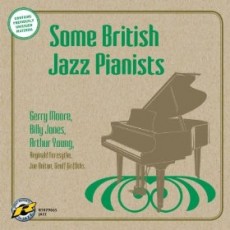
Gerry Moore was born Gerald Asher Moore on October 8, 1903 in London, England. As a pianist, he spent the years 1922-1939 working freelance jazz gigs in his hometown, playing movie palaces and nightclubs. Among the clubs in which he worked are Sherry’s and the Empress Rooms through the Twenties and in the 30s he played Chez Rex Evans, the Bag o’ Nails, the 43 Club and Mema’s.
In 1939 Gerry worked with Buddy Featherstonhaugh, Adelaide Hall, Vic Lewis, and with Max Geldray in Germany, along with Carlo Krahmer at the Paris Jazz Fair and the Palm Beach Hotel in Cannes. He played with Harry and Laurie Gold and worked as a pianist on the Queen Mary and Caronia in the Fifties. From the mid-1960s up until his passing on January 29, 1993 in Twickenham, pianist Gerry Moore played the clubs of London.
More Posts: piano