

Daily Dose Of Jazz…
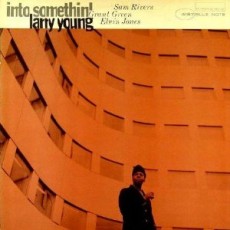
Larry Young was born on October 7, 1940 in Newark, New Jersey. He played the organ with various R&B bands in the 1950s before gaining jazz experience with Jimmy Forrest, Lou Donaldson, Kenny Dorham, Hank Mobley and Tommy Turrentine. He began recording as a leader for Prestige from 1960, making a number of soul-jazz discs, Testifying, Young Blues and Groove Street.
Larry moved to Blue Note in 1964, his music began to show the marked influence of John Coltrane and during this period, he produced his most enduring work. He recorded many times as part of a trio with guitarist Grant Green and drummer Elvin Jones Into Somethin’ with saxophonist Sam Rivers became Young’s Blue Note debut, though 1965’s Unity remains his best-known album featuring Joe Henderson and the young Woody Shaw.
Young’s subsequent Blue Note albums like Contrasts, Of Love and Peace, Heaven On Earth and Mother Ship drew on elements of the ’60s avant-garde, and utilized local Newark musicians. He then became a part of some of the earliest fusion experiments: first in “Lifetime”, then “Emergency!” with Tony Williams and John McLaughlin, and also on Miles Davis‘s Bitches Brew. Branching out, Larry was also known to rock fans for a jam he recorded with Jimi Hendrix on the album Nine to the Universe.
Organist Larry Young, also known as Khalid Yasin (Abdul Aziz), who pioneered a modal approach and whose characteristic sound involved management of the stops on the Hammond organ, producing overtone series that caused an ethereal, drifting effect; a sound that is simultaneously lead and background, passed away on March 30, 1978 in New York City.
More Posts: organ
Daily Dose Of Jazz…
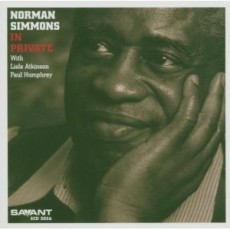
Norman Simmons was born on October 6, 1929 in Chicago, Illinois. As a child he was captivated by the sounds of the big band era, in particular, Duke Ellington’s orchestra. He started teaching himself piano and by sixteen enrolled in the Chicago School of Music, completing in four years.
In 1949 Norman formed his own group and began recording in 1952. An accomplished composer his tune “Jan” was a hit for tenorist Paul Bascomb the following year. Keeping a steady gig at the noted Chicago jazz spot “The Beehive” gave him the opportunity to back touring musicians like Wardell Gray, Lester Young and with Charlie Parker on his final Chicago performance in February 1955. But it was Ernestine Anderson who convinced him to move to New York City to continue working with her.
In New York Simmons performed with Johnny Griffin and played and wrote intricate arrangements for Eddie “Lockjaw” Davis. Upon the latter’s recommendation he teamed up with Carmen McRae for nine years before moving on with Betty Carter and Anita O’Day, where he found greater improvisational freedom. Late in the 70’s decade he began his long collaboration with Joe Williams and would work with Helen Humes and Sarah Vaughan among others.
As an educator he has taught at Paterson State College since 1982, participated in the Jazzmobile program for over twenty years, and has fostered music in public schools. His arrangement of Ramsey Lewis‘ 1966 hit of “Wade In The Water” became a large commercial success, he was a member of the Ellington Legacy Band beginning in 2002.
He arranged The Little Giant, The Big Soul-Band, and White Gardenia for Johnny Griffin, Teri Thornton‘s Devil May Care and Mark Murphy‘s Memories of You: Remembering Joe Williams.
Pianist, arranger, composer, and educator,Norman Simmons continued to perform, compose and arrange until he passed away on May 13, 2021.
More Posts: piano
Daily Dose Of Jazz…
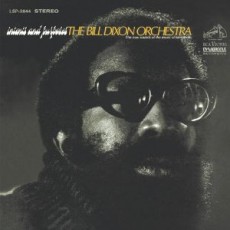
Bill Dixon was born on October 5, 1925 in Nantucket, Massachusetts and his family later moved to Harlem, New York City when he was about 7. It wasn’t until some twenty years later that he became interested in music and trumpet began his five-year studies at the Hartnette Conservatory of Music in 1946. He studied painting at Boston University, the WPA Arts School and the Art Students League. During the early 1950s while employed at the United Nations, he founded the UN Jazz Society.
By the 1960’s Dixon established himself as a major force in the jazz avant-garde movement, organizing and producing the “October Revolution in Jazz”. This first free-jazz festival comprised four days of music and discussions at the Cellar Café in Manhattan with musicians such as Cecil Taylor and Sun Ra participating.
Bill would later found the Jazz Composers Guild, become a professor of music at Bennington College, establish their Black Music Division, and was one of four featured musicians in the Canadian documentary Imagine the Sound in 1981 with Cecil Taylor, Archie Shepp and Paul Bley.
Dixon recorded relatively little over the decade and a half beginning in the late Sixties but co-led a few sessions with Archie Shepp, appeared on Cecil Taylor’s “Conquistador!” and some solo trumpet recordings has emerged. His recording career as a leader and sideman would pick up in the 80s into the new millennium with his last album being issued posthumously in 2011.
On June 16, 2010, Bill Dixon, who played trumpet, flugelhorn and piano died in his sleep at his home after suffering from an undisclosed illness.
More Posts: flugelhorn,piano,trumpet
Requisites
The Right Touch ~ Duke Pearson | By Eddie Carter
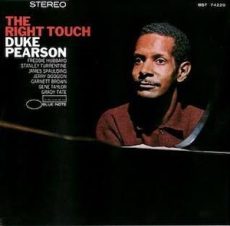
Submitted for your approval this morning is The Right Touch (Blue Note BLP 4267/BST 84267), an exceptional 1967 album by Duke Pearson. It was the arranger, composer, and pianist’s fifth release for Alfred Lion’s label and his tenth as a leader. Here he’s arranged and composed all the tunes and is leading an all-star ensemble: Freddie Hubbard on trumpet; Garnett Brown on trombone; James Spaulding on alto saxophone; Jerry Dodigon on alto saxophone (tracks: A2, A3, B1 to B3) and flute (A1); Stanley Turrentine on tenor saxophone; Gene Taylor on bass and Grady Tate on drums. I own the 1994 U.S. Stereo reissue (Blue Note B1 7243 8 28269 1 0).
Chili Peppers kicks off the first side with lively energy and a bright, confident ensemble theme. Stanley gets into a cheerful groove on the opening solo. Duke follows with a rousing interpretation, paced beautifully ahead of the octet’s closing chorus and fade-out. Jerry’s flute adds a gentle touch to the opening and closing melodies, making the tune even more inviting. Make It Good begins with a lengthy, relaxed introduction that segues into the octet’s soulful opening melody while Gene and Grady provide a firm foundation. Duke takes the first spot again and lays down a bouncy rhythm. Freddie is up next with a good-natured performance that swings smoothly into the theme’s reprise and slow dissolve.
My Love Waits (O Meu Amor Espera) slows things down as Freddie leads the ensemble’s gorgeous bossa nova theme. Freddie and Duke are the featured performers, and the trumpeter’s opening statement is graceful. Duke speaks next with delicacy and tenderness before the group returns to the sentimental ending theme and a gentle fadeout. Los Malos Hombres picks up the pace to begin the second side, with Grady introduction to the group’s brisk melody. Stanley ignites the first solo and burns brightly. Freddie breathes fire into the second solo, then James keeps things cooking next. Duke follows with a spirited reading, and Grady doesn’t pull any punches, leading to the theme’s restatement and dead stop.
Scrap Iron opens with the ensemble’s mournful, harmonically rich blues melody, reflecting the song’s hard-edged rhythmic character. Stanley begins the opening statement, delivering his signature robust, earthy, gospel-drenched sound. Duke follows, creating an easy, conversational groove that reflects the blues’ lingering, smoky atmosphere before the octet reenters and ends with an evocative climax. Rotary draws the curtain down in a Monkish vein for the group’s theme. Freddie takes the lead, followed by James, Garnett, Stanley, and Duke, who take the listener on a leisurely ride, preceding the theme’s restatement and a satisfying conclusion.
Francis Wolff produced The Right Touch, and Rudy Van Gelder was behind the recording console. Kevin Reeves cut the lacquer, and Capitol Mastering gave the final mastering touch. This reissue's sound quality is excellent, with a superb soundstage that makes you feel as if the musicians are right in your listening room, delivered with remarkable clarity. If you’re a jazz piano enthusiast like me and looking for a wonderful album to relax to after a busy day or week, I invite you to check out The Right Touch by Duke Pearson on your next record-shopping trip. It’s an underrated gem with an incredible lineup of musicians that will surely bring you hours of joy and musical delight!
© 2026 by Edward Thomas Carter

Daily Dose Of Jazz…
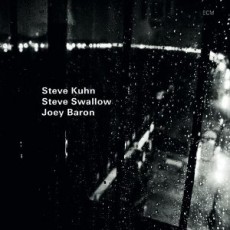
Steve Swallow was born on October 4, 1940 in Fair Lawn, New Jersey. As a child he studied piano and trumpet before turning to the double bass at age 14. While attending a prep school, he began trying his hand in jazz improvisation. In 1960 he left Yale, settled in New York City and played with Jimmy Giuffres trio with Paul Bley.
After joining Art Farmer‘s quartet in 1964, Swallow began to write. It is in the 1960s that his long-term association with Gary Burton’s various bands began. The early 1970s saw him switch exclusively to electric bass guitar, preferring the 5-string.
Steve became an educator in 1974 for two years teaching at the Berklee School of Music. In ‘78 he became an essential and constant member of Carla Bley‘s band, toured extensively with John Scofield in the early 1980s, has returned to this collaboration several times over the years.
Bassist Steve Swallow has consistently won the electric bass category in Down Beat magazine’s Critics and Readers yearly polls since the mid-80s. Having grown a catalogue of some five-dozen albums as a leader and sideman, he continues to compose, perform and record.
More Posts: bass