

Requisites
Some Other Time: The Lost Session From The Black Forest ~ Bill Evans | By Eddie Carter
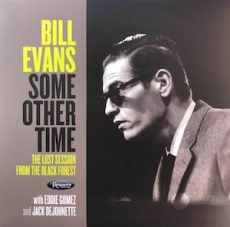
This morning’s album is a studio release by one of my favorite pianists, Bill Evans, Some Other Time – The Lost Session From The Black Forest (Resonance Records HLP-9019). It was initially released on Record Store Day, April 16, 2016. Bill always had a wonderful approach to his playing, and it’s effectively demonstrated in this wonderful two-record collection of originals and standards. The pianist and his trio of Eddie Gomez on bass and Jack DeJohnette on drums had just concluded a successful engagement at the 1968 Montreux Jazz Festival a few days earlier before recording this album. My copy is the 2020 U.S. Record Store Day, Limited Edition Stereo reissue (Resonance Records HLP-2019B).
Side One opens with a lighthearted rendition of You Go To My Head by J. Fred Coots and Haven Gillespie. Bill leads the charge through the catchy, finger-popping melody and the song’s first interpretation. Eddie is up next with an especially appealing reading preceding Bill’s theme reprise and ending. Very Early by Bill Evans begins with a subdued piano introduction before the pace picks up for the theme. Evans takes the lead and expresses his thoughts in a beautiful example of his artistry. Gomez holds his own in a tender presentation ahead of the pianist’s return for the song’s conclusion.
Leslie Bricusse and Anthony Newley created the popular song, What Kind of Fool Am I? Bill and Eddie are the featured performers in this rendition. Evans introduces the tune and then shares a tasteful, articulate melody with Gomez. The opening solo by Bill is elegantly presented, and then Eddie takes a short, luxurious walk towards the theme’s restatement and climax. Evans and Gomez return for I’ll Remember April by Don Raye, Gene DePaul, and Patricia Johnston. This charming song is sheer poetry in Bill’s and Eddie’s hands as they state the theme. Both musicians shine in two brilliant performances culminating in a soft summation.
My Funny Valentine by Richard Rodgers and Lorenz Hart begins with a touchingly tender melody. Bill opens with a beautiful solo that envelops the listener. Eddie makes a profound impression on the following interpretation with Jack’s gentle brushwork keeping perfect time into the soothing reprise and ending. Side Two starts with Baubles, Bangles and Beads by George Forrest and Robert Wright. It’s another showcase for piano and bass, and their duet puts a fresh set of clothes on this old favorite with a collective theme. Bill has the first spot and gives a wonderful reading, and then Eddie struts through the following statement into the out-chorus.
The beat moves upward slightly for Turn Out The Stars by Bill Evans, a gorgeous tune that opens with a sweet introduction ahead of the threesome’s appealing melody. Bill has the song’s only reading and turns in an impressive improvisation ahead of the exit. It Could Happen To You by Jimmy Van Heusen is an old warhorse from the forties that the partnership of Evans and Gomez begins with a beautifully mellow opening chorus. Bill has the first spot and gives an opening performance characterized by poetic sensibility. Eddie takes over and is right at home in the closer preceding the duo taking it out softly.
In a Sentimental Mood is one of Duke Ellington’s best-known and recorded tunes. The trio makes their entrance together for the tender melody, stepping aside for Bill’s gorgeous opening statement. Eddie follows him like a warm evening breeze for a brief walk before the trio reconvenes for the theme’s restatement. These Foolish Things by Jack Strachey and Holt Marvell is a haunting song perfectly suited for Bill and Eddie’s playing. The duo doesn’t disappoint from the start of the delicately gentle melody into the pianist’s exquisitely beautiful opening solo. Gomez answers Evans with soothing bass lines leading to a quiet climax.
The trio closes the first record with the title tune, Some Other Time, by Leonard Bernstein, Betty Comden, and Adolph Green. The group’s interaction applies an equal amount of warmth and tenderness to the opening chorus. The pace picks up slightly for Bill’s breathtakingly beautiful interpretation ahead of an ending of perfect tranquility. You’re Gonna Hear From Me is the creation of spouses André and Dory Previn. It opens Side Three with a marvelous midtempo melody by the trio, leading to a delightful interpretation by the leader of Eddie and Jack’s solid foundation until the song’s conclusion.
Walkin’ Up is a lively little tune by Bill Evans that gets underway with a quirky theme and affords everyone a solo opportunity. The pianist opens with a short statement, then gives way to Eddie, who does the largest amount of walking in this song. Jack shares a small bit of inspired brushwork with Bill before the theme’s reprise ends as it begins. The trio takes on a second rendition of Baubles, Bangles and Beads that opens with a friendly, harmonious theme. Bill dips into his bag of goodies to deliver a carefree first solo, and then Eddie responds with a comforting interpretation before the trio returns for the close.
It’s All Right With Me by Cole Porter made its first appearance in the 1953 musical Can-Can and has been recorded numerous times. The setting for this incomplete take is a solo showcase for Bill to provide a charming interpretation culminating in a gorgeous finale. The listener is treated to a second rendition of What Kind of Fool Am I? Evans introduces the song in a short solo introduction that blossoms into the ensemble’s lively opening chorus. The pianist gets the solo spotlight again and swings easily to the rhythm section’s groundwork before Evans brings back the theme and a tranquil climax.
Side Four starts with a song by Burton Lane and Ralph Freed from the 1941 musical film Babes on Broadway, How About You? The trio’s melody takes off at a brisk pace, and Bill leads the way in a splendid interpretation. Eddie’s bass lines are equally effective in the second reading while Jack’s brushwork holds everything together until the trio’s finale. On Green Dolphin Street by Bronislaw Kaper and Ned Washington has a bouncing beat from the start of the melody. Gomez kicks off the solos and his bass flows vibrantly, leading to a fascinating statement by the leader into the theme’s reprise.
Wonder Why by Nicholas Brodszky and Sammy Cahn is a tune that still sounds fresh because it hasn’t been over-recorded. It comes from the 1951 film Rich, Young and Pretty. The trio’s pretty melody gives way to Eddie walking his bass with Jack’s brushwork tagging along in the first solo. Bill takes over to make a short comment ahead of the closing chorus. Lover Man (Oh, Where Can You Be) by Jimmy Davis, Roger Ramirez, and James Sherman is a solo showcase by Evans beginning with a deeply affecting melody. He follows with a poignantly beautiful statement that’s sure to linger in the listener’s memory after the song’s touching ending.
The final stop on our nostalgic trip is an alternate take of You’re Gonna Hear From Me. Bill begins with a brief introduction that segues into the trio’s lighthearted melody. Bill has the song’s only interpretation and shines with an imaginative flair over Eddie and Jack’s breezy support into the melody’s reprise and close. Andreas Brunner-Schwer and Mathias Brunner-Schwer produced Some Other Time – The Lost Session From The Black Forest. Hans Georg Brunner-Schwer and Joachim Ernst Berendt were the recording engineers. Zev Feldman was the reissue producer, and Kevin Gray of Cohearent Audio mastered the album.
The two-record set was pressed on 180 grams of audiophile vinyl at Record Technology Incorporated and is dead silent until the music starts. The album’s sound quality is spectacular with an astonishing soundstage that transports the musicians to your listening room in stunning fidelity. Also included is an eight-page booklet of interviews, liner notes and photos, and the front and rear covers, though not laminated, are extremely sturdy. Some Other Time – The Lost Session From The Black Forest is the only studio recording of this trio, and that’s a pity because Eddie and Jack make a terrific rhythm section behind the leader.
It’s possible that both pressings are sold out, so it might be difficult to acquire a copy. However, if you’re a Bill Evans fan, your diligence will be rewarded with a wonderful album of upbeat and relaxing jazz that can be enjoyed anytime. Make a note not to miss this one the next time you’re record shopping because as the title suggests, Bill Evans, Eddie Gomez, and Jack DeJohnette are sure to take you to Some Other Time!
~ I’ll Remember April, In a Sentimental Mood, It’s All Right With Me, It Could Happen To You, Lover Man (Oh, Where Can You Be?), My Funny Valentine, On Green Dolphin Street, These Foolish Things, You Go To My Head – Source: JazzStandards.com
~ Baubles, Bangles, and Beads, Wonder Why, You’re Gonna Hear From Me, How About You? What Kind of Fool Am I? – Source: Wikipedia.org
© 2024 by Edward Thomas Carter
More Posts: choice,classic,collectible,collector,history,instrumental,jazz,music,piano
Daily Dose Of Jazz…
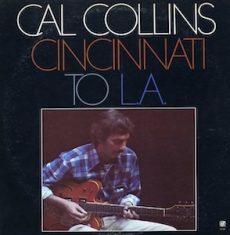
Cal Collins was born on May 5, 1933 in Medora, Indiana and first played the mandolin professionally as a bluegrass musician in the early 1950s. After his Army service he moved to Cincinnati, Ohio he switched to jazz guitar after hearing swing guitarists Charlie Christian, Irving Ashby and Oscar Moore. He played in Cincinnati for twenty years.
In 1976 Benny Goodman hired him at the age of 43 and had a three year stint with the orchestra. Cal then spent three years making albums for Concord Jazz. As a leader and sideman, he worked with Scott Hamilton, Warren Vache, Rosemary Clooney, Ross Tompkins, Woody Herman, John Bunch, and Marshal Royal.
Returning to Cincinnati in the early Eighties, Collins slowed down his career. He joined the Masters of the Steel String Guitar Tour in 1993 with Jerry Douglas and Doc Watson. Over the course of his career he recorded a dozen albums as a leader with his debut recording being Cal Collins In San Francisco in 1978 on the Concord label.
He recorded twenty-eight albums with John Bunch, Rosemary Clooney, Concord Jazz All Stars, Concord Super Band, Benny Goodman, Woody Herman, Eiji Kitamura, Marshal Royal, Warren Vache, Bob Barnard, Michael Moore, Jimmy Madison, Kenny Poole, Scott Hamilton and Buddy Tate, Hank Marr, and Ross Tompkins.
In 2001, guitarist Cal Collins, who recorded his last album in 1998, died of liver failure on August 27th in Dillsboro, Indiana.

More Posts: bandleader,guitar,history,instrumental,jazz,music
Daily Dose Of Jazz…
Michael DiPasqua was born May 4, 1953 born in Orlando, Florida into a highly musical family. He began his professional career very early, gigging as a drummer with a band co-led by Zoot Sims and Al Cohn while still in his mid-teens.
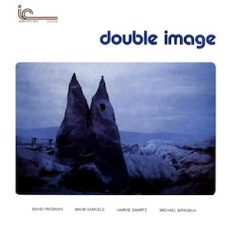
During the next few years DiPasqua played with Don Elliott and Gerry Mulligan, and also accompanied singers Jackie Cain and Roy Kral. Towards the end of the 70s, the drummer was for a number of years co-leader of Double Image, a vibraharp, marimba and bass quartet that toured internationally.
Michael then co-led Gallery and followed that with a spell in Later That Evening, a band led by Eberhard Weber, before joining Jan Garbarek. He was a consistently inventive percussionist with the ability to comfortably co-exist in a range of musical styles, from the modern end of the mainstream through jazz rock to the cutting edge of improvisational music.
He recorded three albums as a leader with his debut on the Inner City label in 1977. He went on to record as a sideman with Jan Garbarek for two albums, three with Eberhard Weber, and one each with Adelhard Roidinger and Robert Towner all for ECM. On a variety of other labels he recorded with Siegfried Fietz, Volker Kriegel, Marian McPartland, and Gerry Mulligan.
Beyond jazz, Michael was locally known for his role in helping to develop over 300 Subway Sandwich Shops in Central Florida, as well as co-founding PCMD Management Company, which owns and operates over 40 Subway franchises.
Cool jazz drummer and percussionist Michael DiPasqua lost his battle with cancer on August 29, 2016. He was 63.
More Posts: bandleader,drums,history,instrumental,jazz,music,percussion
Daily Dose Of Jazz…
Matt Bauder was born and raised in Ann Arbor, Michigan on May 3, 1976 and attended the University of North Texas in Denton, Texas and earned a bachelor of fine arts in jazz and contemporary improvisation at the University of Michigan in Ann Arbor.
From 1999 to 2001 he lived in Chicago, Illinois where he was a part of the city’s modern jazz and improvised music scene. Matt attended graduate school at Wesleyan University in Middletown, Connecticut studying under Anthony Braxton and received a master’s degree in composition. He lived in Berlin, Germany for a year, then moved to New York City in 2005.
In 2003, Bauder released his debut album, Weary Already of the Way, on 482 Music. His sophomore album in 2007 was the first album from his long-form improvisational jazz trio Memorize the Sky, featuring Bauder on saxophone, clarinet, bass clarinet and percussion, Zach Wallace on bass, vibraphone and percussion, and Aaron Siegel on drums and percussion. The band released two more albums in 2008 and 2010.
His next trio, Hearing Things, had the saxophonist leading JP Schlegelmilch on organ and Vinnie Sperrazza on drums. Never limiting himself to one genre, Bauder’s next venture formed the doo-wop jazz group White Blue Yellow & Clouds, covering songs by the Beach Boys, The Flaminogos and The Mystics.
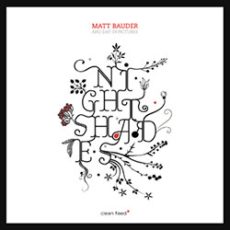
His Brooklyn-based jazz quintet Day in Pictures released two albums on Clean Feed Records, in which heplayed tenor saxophone and composed the songs on both albums. Matt has since performed as part of the Arcade Fire’s touring lineup, played saxophone and clarinet on Will Butler’s debut album Policy, and has played in the Broadway production of Fela!
Ever busy, saxophonist Matt Bauder continues to perform, compose and collaborate on numerous projects across genres.
More Posts: bandleader,clarinet,drums,guitar,history,instrumental,jazz,music,saxophone,vocal

Daily Dose Of Jazz…
Meeco was born on May 2, 1976 in Berlin, Germany. As a young child he was heavily influenced by his father who played classical piano and his poet/artist mother, thereby making it completely natural to follow their footsteps. Beginning piano lessons at six years old, and after several years of studying classical music, he sought other musical outlets. After a friend introduced vintage Ella Fitzgerald, Horace Silver and McCoy Tyner records, he became enamored with Black American music.
Mentored by his close friend, the late New York pianist/singer Bob Lenox, he realized that the only important thing in music was creating the right feeling. He would go on to work with German producer Marco Meister, founding member of the group Terranova, Meeco gained invaluable studio experience producing his own music.
Over the course of his career Meeco has recorded with Benny Golson, Gregory Porter, Ron Carter, John Scofield, Hubert Laws, Kenny Barron, Buster Williams, Kirk Whalum, Richard Bona, Casey Benjamin, Mary Stallings, Freddy Cole, Kevin Mahogany, Bennie Maupin, James Moody, Eddie Henderson, Shedrick Mitchell, David “Fathead” Newman, Eric Reed, Vincent Herring, Victor Lewis, Stefon Harris, Lionel Loueke, Cedar Walton, Charlie Mariano, David Friedman, just to name a few.
Not limiting himself to jazz, Meeco has also produced hip hop and soul legends Talib Kweli, Masta Ace, Smif n Wessun, Lil Fame of M.O.P., Yahzarah, Jean Baylor, DJ Stylewarz, along with Latin and pop genres Joe Bataan, Jane Birkin, Jaques Morelenbaum and Romero Lubambo.
Pianist, composer, producer, deejay and photographer Meeco, who has released seven albums to date, remains based between Berlin and Paris, France as he continues to expand his musical horizons.
More Posts: bandleader,composer,deejay,history,instrumental,jazz,music,piano,producer