

Three Wishes
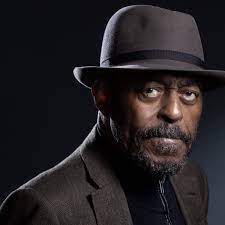
The Baroness was having a conversation with Archie Shepp when she brought up the topic of three wishes and asked him what his would be. He responded by telling her:
- “To be free of poverty.”
- “I don’t know the next.”
- “To be free.”
*Excerpt from Three Wishes: An Intimate Look at Jazz Greats ~ Compiled and Photographed by Pannonica de Koenigswarter

More Posts: baroness,history,instrumental,jazz,music,pannonica,saxophone,three,wishes
Daily Dose Of Jazz…
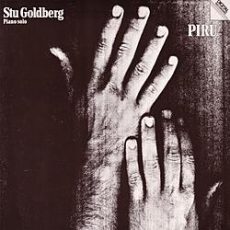
Stuart Wayne Goldberg was born on July 10, 1954 in Malden, Massachusetts but was raised in Seattle, Washington. He attended the University of Utah, taking his bachelor’s in music in 1974, then relocated to Los Angeles, California.
The following year Goldberg played with the Mahavishnu Orchestra and subsequently worked through the 1970s with Al Di Meola, Freddie Hubbard, Alphonse Mouzon, Michal Urbaniak, and Miroslav Vitous.
Booking a European tour in 1978 as a solo keyboardist, Stu released several albums under his own name and with Toto Blanke’s Electric Circus. Returning to Los Angeles in 1985 he worked extensively in film soundtracks with Lalo Schifrin and Ira Newborn. He also worked as a studio musician.
Keyboardist Stu Goldberg, who played with Ray Brown at the Monterey Jazz Festival in 1971, continues to perform and record.

More Posts: bandleader,history,instrumental,jazz,keyboard,music
Requisites
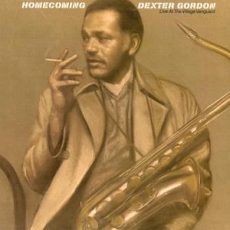
Homecoming – Live at The Village Vanguard ~ Dexter Gordon | By Eddie Carter
I’ve been a Dexter Gordon fan since childhood and saw him perform in an all-star jam session at The 1972 Newport Jazz Festival. In 1976, he returned to the US for an engagement at The Village Vanguard. Dexter received a warm welcome upon his arrival and played to sold-out crowds each night. This morning’s album from the library, Homecoming (Columbia PG 34650), finds Dexter effectively demonstrating he was still a master on the tenor sax. His bandmates on this live date are Woody Shaw on flugelhorn (tracks: A2, D1) and trumpet (A1, B1, B2, C1, C2, D2), Ronnie Matthews on acoustic piano, Stafford James on acoustic bass, and Louis Hayes on drums. My copy is the 1977 US Stereo release.
The album opens with Gingerbread Boy by Jimmy Heath. The front line leads the ensemble in a lively melody. Dexter is off to an adventurous start on the opening solo. Woody and Louis share the spotlight in the following reading; first, in a vigorous exchange; next, Woody takes the reins. Ronnie follows with an exciting closing statement ahead of the reprise. Gordon introduces Woody Shaw’s Little Red Fantasy, a dedication to his wife and manager, Maxine Gregg opens with the ensemble’s attractive melody. Gordon begins the opening solo affectionately, then gradually increases the intensity as it unfolds. Shaw comes behind him with a beautiful performance, then Matthews moves into the third reading elegantly. James walks the bass confidently until the ensemble’s delicate ending.
Fenja, Dexter Gordon’s touching tribute to his wife, begins Side Two with the quintet’s medium theme. Dexter takes the first solo at an easy swing, then builds to a happy groove. Woody adds a bit of home cooking in the following interpretation. Ronnie emerges next for a relaxing reading one can almost dance to, and Stafford eases into a delightfully personal statement preceding the ensemble’s closing chorus. In Case You Haven’t Heard by Woody Shaw picks up the pace for the rhythm section’s introduction and quintet’s melody. Gordon is up first with a lively interpretation; then Shaw engages in a vigorous conversation with Hayes. Matthews has the last spot and dispenses vibrant notes into the melody reprise and ending.
Side Three starts with It’s You Or No One by Sammy Cahn and Jule Styne. The saxophonist opens with an energetic introduction, succeeded by the quintet’s spirited melody. Dexter swings hard on the first solo. Woody comes in next for an enthusiastic romp, then Ronnie responds with a passionate improvisation. Louis provides a memorable exclamation point preceding a vibrant closing chorus. Let’s Get Down by Ronnie Matthews begins with his introduction segueing into the group’s peppy theme. Gordon kicks off the solos with an inspired improvisation; Shaw has much to say in the following statement. Matthews settles in for some straight-ahead swinging next, then James’ bass walks smoothly. Both horns share the finale with Louis before the quintet takes the song out.
‘Round Midnight is Thelonious Monk’s best-known and most recorded composition. It opens Side Four with Ronnie’s gentle introduction; then Dexter comes in for the tender theme, accented by Woody’s comments. Dexter continues with a delicately pretty opening solo. Woody delights with velvet smoothness in the following reading. Ronnie shows expressive artistry in the next statement. Dexter provides a final comment ahead of the ensemble’s summation. The rhythm section opens Dexter’s Backstairs with a brisk introduction to the quintet’s quick melody. Gordon gives the opening solo an energetic workout; then Shaw delivers a passionate intensity in the second statement. Matthews raises the temperature in a quick finale leading to the quintet’s climax, and Dex thanking the audience.
Michael Cuscuna produced Homecoming, and Malcolm Addey recorded it. The album has a splendid soundstage that transports the listener to the Village Vanguard’s intimacy as the musicians perform. If you’re a Dexter Gordon fan and are in the mood for an excellent live quintet date, I invite you to consider Homecoming for a spot in your library. It’s a jazz time capsule with many magical moments that not only rewards those in attendance but allows the listener to enjoy these outstanding performances each time it’s on the turntable!
~ Round Midnight – Source: JazzStandards.com © 2023 by Edward Thomas Carter

More Posts: choice,classic,collectible,collector,history,instrumental,jazz,music,saxophone
Daily Dose Of Jazz…
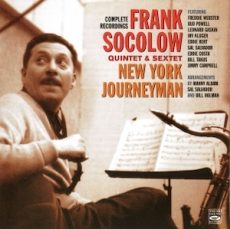
Irv Kluger was born in New York City, New York on July 9, 1921 and early in life he played violin before settling on drums. His first professional gigs came at age 15 and by the time he was 17 he played with Georgie Auld, then with Bob Chester and Freddie Slack. The mid Forties saw him playing with Dizzy Gillespie, Boyd Raeburn, Bobby Byrne and Herbie Fields. Following this he played with Stan Kenton, Artie Shaw, then for a short time in 1950 with Tex Beneke.
He played less jazz after 1950, working in the pit orchestras of Broadway shows such as Guys and Dolls. He returned to play with Artie Shaw again in 1953–54 as a member of the Gramercy Five. In the middle of the 1950s he moved to California and played at the Moulin Rouge in Hollywood as the house drummer.
He played with Dave Pell in 1956, and with Benny Goodman and Woody Herman later in life, doing much freelance work through the 1960s and 1970s. As a studio musician he played with Johnny Cash.
Drummer Irv Kluger, never led a recording session and transitioned on February 28, 2006.
More Posts: drums,history,instrumental,jazz,music
Daily Dose Of Jazz…
Ron Rubin was born in Liverpool, London, England on July 8, 1933, to David and Louise Rubin. Music was important to the family and he learned piano from an early age. Becoming interested in jazz in his early teens while attending Liverpool College school, he was suspended for playing jazz on the school piano. Not being put off, he studied law under his uncle but it wasn’t for him and he signed up for the Royal Army Service Corps for a two year stint.
In the army he played piano with the Rhine River Jazz and Germany Rhine bands in Germany where he was stationed. After his service, in 1953 he picked up some gigs around Merseyside, London where he was playing guitar and clarinet at this time. Ron practiced hard on the piano and found solo work at clubs in London’s Soho. Taking up the double bass in 1955 and within a few weeks he was playing gigs with Ralph “Bags” Watmough and Tony Davis’s Gin Mill Four. In 1957 he played opening night at the Cavern Club with the Merseysippi and Watmough bands.
Moving to London in the 60s Ron played with a wide variety of bands on piano and double bass with Glyn Morgan, Dick Williams, Brian Leake, the Fairweather-Brown band, Mike Taylor, Group Sounds Five, the Ronnie Selby Trio, Fat John Cox and Bruce Turner. He accompanied visiting musicians Bill Coleman, Henry “Red” Allen and Ray Nance and with groups like those of Long John Baldry and the Hoochie-Coochie Men, and Manfred Mann.
Through the 1970s Rubin toured with the Lennie Best Quartet, Sandy Brown, Keith Ingham, Alex Welsh, Colin Purbrook, and accompanied Billy Eckstine. He had his own band at the Roundhouse Bar and was with the John Picard Band for three years and recorded regularly. The Eighties saw him touring with Wild Bill Davison and playing with Fatty George, Geoff Simkins, Keith Smith and Oscar Klein, George Howden, Brian Leake and Earl Okin.
By the end of the decade he was playing bass with the Bruce Turner Quartet before joining George Melly and John Chilton’s Feetwarmers. The following decades he played with Campbell Burnap’s band, then joined George Melly and John Chilton again and continued playing and touring. After surviving cancer in 2001 he slowed down to playing occasionally. In his later years Ron spent many happy hours writing his Jottings From A Jazzman’s Journal, a record of his life as a musician.
Pianist, bassist and poet Ron Rubin, who for many years was at the centre of the British jazz scene, transitioned on April 14, 2020 at the age of 86.