

Daily Dose Of Jazz…
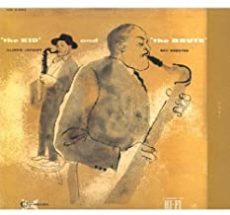
Albert Bennington Lucas was born on November 16, 1912 in Brantford, Ontario, Canada and took piano lessons as a child from his mother, Francis Bradley Lucas, a concert pianist. By the age of twelve, he had switched to bass and tuba. After his move to New York City in 1933, he played with Kaiser Marshall before joining the Royal Sunset Orchestra, where he played until 1942.
During the 1940s Albert appeared on record with Hot Lips Page, Coleman Hawkins, Eddie Heywood, Duke Ellington, Mary Lou Williams, James P. Johnson, J.J. Johnson, Ben Webster, Erroll Garner, and Eddie South.
Throughout his career he toured and recorded with Illinois Jacquet from 1947–53, recording in Detroit with Jacquet’s all-star band which included Sonny Stitt, Leo Parker, Sir Charles Thompson, Maurice Simon and Shadow Wilson before returning to play with Heywood again from 1954–56. He also recorded in the 1950s with Ruby Braff, Charlie Byrd, Teddy Wilson, Bill Doggett, Dexter Gordon, Oliver Nelson.
Working primarily as a studio musician in his last two decades, backing up groups at Apollo Theater performances, he played jazz only occasionally. Double-bassist Albert Lucas passed away on June 19, 1983, in New York City.


Requisites
Tenor and Flute ~ Bobby Jaspar | By Eddie Carter
Bobby Jaspar steps into the spotlight for this morning’s discussion with his 1957 album, Tenor and Flute (Riverside RLP 12-240). I first heard him on two records he made with Herbie Mann, Flute Flight, and Flute Soufflé (1957). Bobby was born in Liège, Belgium, and began playing the piano at eleven and the clarinet at sixteen. He later switched to the flute and tenor saxophone, and in 1950 began working with French pianists Henri Renaud and Bernard Peiffer. Jaspar was also a member of the Bop Shops band and played and recorded with Toshiko Akiyoshi, Chet Baker, Kenny Burrell, Donald Byrd, John Coltrane, Miles Davis, Milt Jackson, J.J. Johnson, Hank Jones, John Rae, and Wynton Kelly. He was married to jazz pianist and singer Blossom Dearie. His supporting cast is Idrees Sulieman on trumpet (tracks: A1, B1, B2), George Wallington on piano, Wilbur Little on bass, and Elvin Jones on drums. My copy used in this report is the 1976 Japanese Mono reissue (Riverside SMJ-6156M).
The opener, Seven Up is Bobby’s easy blowing vehicle beginning with everyone laid-back on the melody. Idrees starts the song in a nice happy mood on the first interpretation, then Bobby takes over for an outstanding solo as solid as the Rock of Gibraltar. George follows with some carefree cruising that’s a treat for the ears and Wilbur is rhythmically infectious on a short statement ahead of the ensemble’s breezy climax.
Jaspar changes to flute for My Old Flame, written in 1934 by Arthur Johnston and Sam Coslow. It appeared in the film, Belle of The Nineties that year. He embraces the jazz standard lovingly on the melody and paints a compassionate portrait on the opening statement. The second presentation by Wallington is tenderly expressed, then the leader gives a second performance that’s delicately pretty and Jones offers some beautifully shaped brushwork on the closer ahead of a tranquil ending.
Bobby returns to tenor sax for a spirited quartet rendition of All of You, Cole Porter’s 1954 jazz standard that first appeared in the 1955 Broadway musical, and 1957 film, Silk Stockings. The quartet gives a lift to this timeless classic with a briskly paced theme treatment. The saxophonist displays a lively intensity on the lead solo, then George adds a bouncy effervescence to the second reading. Wilbur and Elvin split the third statement for a short, incisive comment, followed by Bobby and Elvin who guide us into the reprise with an expressive exchange. Idrees Sulieman’s Doublemint is an energetic companion to his blues, Juicy Fruit, heard on The Hawk Flies High (1957). It opens Side Two with a collective infectious melody. Jaspar cooks vivaciously on the first statement, then Sulieman breaks into a robust reading. Wallington moves in next for a scintillating solo and Jones finds something good to say on the closing chorus sharing notes with the front line.
George Wallington wrote the final two tunes on Tenor and Flute beginning with his tenderly passionate ballad, Before Dawn. It starts slowly with a breathtakingly beautiful theme by Bobby and the rhythm section. Jaspar then creates a mood of ecstasy on the first performance, then Idrees delivers a fine solo punctuated with delicate lyricism. George follows, sharing a brief moment of intimacy before Bobby adds a few additional affectionate remarks preceding the ensemble’s sultry coda.
Jaspar and the rhythm section take Sweet Blanche for a brisk ride on the finale with the leader back on flute. The quartet opens with a cheerfully pleasant theme and Jaspar excels with vigorous flair on the first interpretation. Wallington heads into the second reading expressing considerable delight, then Jaspar and Jones take us home sparring with each other into a satisfying climax. Tenor and Flute was produced by Orrin Keepnews, and the man behind the dials was Jack Higgins.
I was pleasantly surprised with the sound quality, the instruments produce an exceptional soundstage across the highs, midrange, and low end that’s right on the money. The analog Mono transfer by Victor Musical Industries from the original tapes has been gorgeously remastered and transports the listener to the studio alongside the musicians during the session. During 1961 & 1962, Jaspar formed a quintet with guitarist René Thomas and performed in a series of concerts and several recordings including appearing on Chet Is Back (1962). He passed away from a heart attack at age thirty-seven on February 28, 1963. I’ve enjoyed listening to this album and am happy to have it in my library. If you aren’t familiar with Bobby Jaspar, are a fan of Hard-Bop or tenor sax, I hope you’ll seek Tenor and Flute out during your next vinyl hunt. It’s a perfect album to get into jazz and the music is sure to make you tap your foot!
~ Chet Is Back (RCA Victor PML-10307); Flute Flight (Prestige PRLP 7124); Flute Soufflé (Prestige PRLP 7101); The Hawk Flies High (Riverside RLP 12-233) – Source: Discogs.com
~ My Old Flame ~ Source: JazzStandards.com ~ All of You, Bobby Jaspar ~ Source: Wikipedia.org © 2020 by Edward Thomas Carter
More Posts: choice,classic,collectible,collector,flute,history,instrumental,jazz,music,saxophone

Daily Dose Of Jazz…
Achille Joseph Baquet was born on November 15, 1885 in New Orleans, Louisiana into a musical family whose patriarch, Théogène, led the Excelsior Brass Band. He learned the clarinet from Luis “Papa” Tio and was thought to have been a member of the Whiteway Jazz Band.
Moving to New York City in 1918, then ragtime pianist, vocalist, and leader Jimmy Durante, the only member not from New Orleans, hired him to play with the Original Dixieland Jazz Band that was founded by Johnny Stein. He would go on to work with Papa Jack Laine’s Reliance Brass Band and was part of the clarinet section of the Happy Schilling Dance Orchestra.
Baquet’s credits as a composer include Why Cry Blues, written with Jimmy Durante. According to Papa Jack Laine, he co-wrote Livery Stable Blues with Acide “Yellow” Nunez.
Clarinetist and saxophonist Achille Baquet, who was a light-skinned black man able to pass for white, passed away on November 20, 1956 in his hometown.
More Posts: clarinet,history,instrumental,jazz,music,saxophone
Daily Dose Of Jazz…
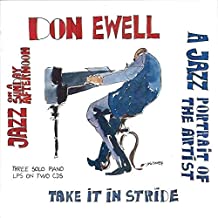
Donald Tyson Ewell was born in Baltimore, Maryland on November 14, 1916. He played with Bill Reinhardt’s Jazz, Ltd. band in Chicago, Illinois in 1947, 1948, and 1949. From 1956 to 1962, he was a member of the Jack Teagarden band and after Teagarden’s death, he went on tour in Europe.
Returning to New Orleans, Louisiana he performed in clubs and hotels. From 1976 to 1978 he performed in concert while battling alcoholism, he lived with his friend King Denton, the manager of a jazz club where Don was Artist in Residence.
He worked with Sidney Bechet, Kid Ory, George Lewis, George Brunis, Muggsy Spanier, and Bunk Johnson. He recorded twenty-one albums as a leader and seven as a sideman with Barbara Dane, Doc Evans, Bunk Johnson, Jack Teagarden. Moving back to Maryland. After his daughter’s death from cancer and after two strokes, stride pianist Don Ewell passed away on August 9, 1983.
More Posts: bandleader,history,instrumental,jazz,music,piano

Daily Dose Of Jazz…
Eddie Calhoun was born November 13, 1921 in Clarksdale, Mississippi and raised in Chicago, Illinois. During the late Forties, he worked with Dick Davis and Ahmad Jamal in the early 1950s. Through the decade he played with Horace Henderson, Johnny Griffin, Roy Eldridge, Billie Holiday, and Miles Davis. He joined Erroll Garner in 1955 and played with him through 1966, recording extensively and touring worldwide.
After his time with Garner, Calhoun settled again in Chicago, where he played with vocalist and pianist Norvel Reed from 1967 to 1968. For two years from 1972 to 1974, he ran a nightclub called Cal’s in Chicago and led a sextet at the Fantasy Club from 1975 to 1980.
1980 to 1986 saw him accompanying pianist Lennie Capp before joining the Chicago All-Stars alongside Erwin Helfer for a tour of Europe. Never recorded as a leader, he recorded ten albums as a sideman during his career. Double bassist Eddie Calhoun passed away on January 27, 1993 in Paradise Lake, Mississippi.
More Posts: bass,history,instrumental,jazz,music