

Daily Dose Of Jazz…
Rubin “Zeke” Zarchy was born on June 12, 1915 in New York City on June 12, 1915. He first learned the violin, but after a stint as bugler with his Boy Scout troop he switched permanently to trumpet while in his early teens.
Zarchy joined the Joe Haymes Orchestra in 1935, and the following year played with Benny Goodman, and then Artie Shaw. He was there through the end of the decade with Bob Crosby and Red Norvo, Tommy Dorsey, and then with Glenn Miller in 1940.
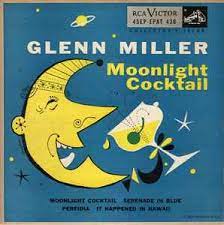
Between 1942 and 1945 he played in US Army bands of what became Miller’s Army Air Force Band, officially the 418th Army Band, playing lead trumpet as Master First Sergeant. Zeke’s trumpet can be heard on recordings as Benny Goodman’s Bugle Call Rag, Glenn Miller’s Moonlight Cocktail, and Bob Crosby’s South Rampart Street Parade.
After the war Frank Sinatra invited Zarchy to move to Los Angeles, California where he became a first-call studio musician. He played on numerous recordings, including those led by Boyd Raeburn, Jerry Gray, Sarah Vaughan, and Frank Capp. He appeared on film in The Glenn Miller Story and through both the 1940s and 1950s swing era, he included occasional doubling on instruments to some degree, the saxophone and trombone.
During the 1960s and 1970s, he played in the house bands of several CBS TV variety shows, including The Smothers Brothers Comedy Hour, The Danny Kaye Show and The Jonathan Winters Show, and was a member of the NBC Staff Orchestras in New York and Los Angeles.
In his later years, Zarchy toured several times in Europe, South America, and Australia, as well as thirty-two concert trips to Japan. He tutored several young trumpet players who became successful performers and studio musicians.
Trumpeter Zeke Zarchy, who was a lead player of the big band and swing eras, transitioned in Irvine, California, on April 11, 2009.

More Posts: history,instrumental,jazz,music,trumpet
Daily Dose Of Jazz…
John Joseph Harold Holmes was born in Montreal, Canada on June 8. 1916 and began playing cornet at 10, briefly studying with C. Van Camp. After playing trumpet for a year in 1940 in a co-operative band, the Escorts, he took over its leadership 1941-50.
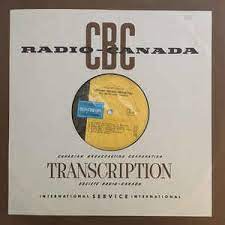
Under the name Johnny Holmes Orchestra, they played Saturday nights at Victoria Hall in Montreal, broadcasted on CBC radio, and occasionally toured Canada’s Quebec and Ontario. One of Montreal’s leading dance bands of the day, it boasted a healthy jazz quotient and benefited from Holmes’ ability to identify talented young musicians. His sidemen included, at various times, Nick Ayoub, Al Baculis, Percy and Maynard Ferguson, Bud Hayward, Art Morrow, and Oscar Peterson. Lorraine McAllister and Sheila Graham, in turn, sang with the band.
Retiring from music from 1951 to 1959, he reemerged and from 1959 to 1969 was heard on CBC radio in The Johnny Holmes Show, Broadway Holiday, and others. Holmes’ orchestras made several broadcast recordings between 1966 and 1973 for the CBC’s LM series. He continued to perform periodically until his final retirement from music in 1978.
Trumpeter, bandleader, arranger, composer Johnny Holmes, who wrote more than 40 songs and many arrangements for his orchestra and his radio shows and has no available recordings online, transitioned on June 11, 1989.
More Posts: arranger,bandleader,composer,history,instrumental,jazz,music,trumpet
Daily Dose Of Jazz…
David Matthews was born on June 6, 1911 in Chagrin Falls, Ohio but was raised in McAlester, Oklahoma. He attended the University of Oklahoma and Chicago College of Music.
He started out as an alto saxophonist with Ben Pollack in 1935, moved to Jimmy Dorsey then Benny Goodman through the rest of the decade. In the Forties Dave went on to play with Harry James, Hal McIntyre, then switched to tenor saxophone with Woody Herman, Stan Kenton and Charlie Barnet.
Matthews arranged for many of these groups, and continued working as an arranger in New York City and California well into the 1960s, with Duke Ellington among others. Occasionally he played with his own bands, including at Lake Tahoe in the 1970s.
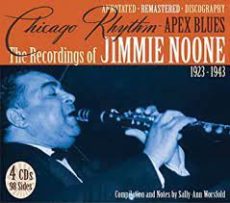
He made recordings with the big bands of Bud Freeman, Lionel Hampton, Jimmy Noone, Jack Teagarden, and Hot Lips Page. Saxophonist Dave Matthews, who was principally playing in the swing era, transitioned in 1997.
More Posts: bandleader,history,instrumental,jazz,music,saxophone
Daily Dose Of Jazz…
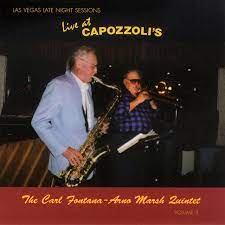
Arno Marsh was born on May 28, 1928 in Grand Rapids, Michigan and played early on in local dance bands, then played in Woody Herman’s ensemble from 1951 to 1953, where he soloed frequently on Herman’s Mars Records releases.
He led a band in a Grand Rapids residency from 1953 to 1955, then rejoined Herman intermittently through 1958. He recorded with Stan Kenton, Charlie Barnet, Lionel Hampton, Buddy Rich, and Harry James. After the late 1950s most of Marsh’s activity was in Las Vegas, Nevada leading hotel orchestras. He accompanied Nancy Wilson on record with one of them in 1968, and did a Woody Herman tribute in 1974.
Tenor saxophonist Arno Marsh transitioned at the age of 91 on July 12, 2019.

More Posts: history,instrumental,jazz,music,saxophone
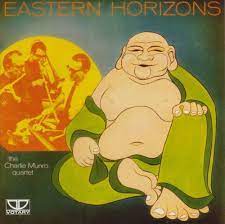
Daily Dose Of Jazz…
Charles Robert Munro was born on May 22, 1917 in Christchurch, New Zealand. While in his teens he became quite proficient on several saxophones and by 21 had moved to Sydney, Australia where he played in the bands led by Myer Norman and Wally Parks. In addition he worked as a sideman on various nightclub, theater, and ship gigs.
Serving in the military during World War II, Charlie went on to work with Wally Norman at the Roosevelt nightclub in Sydney. In 1950 he played with Bob Gibson, then joined the Australian Broadcasting Commission’s dance band in 1954, continuing to perform with the group through 1976 as a composer and arranger.
He worked extensively with Bryce Rohde in the 1960s, participating in many of Rohde’s Australian jazz experiments. He led his own bands toward the end of his career, and also worked with Georgina de Leon.
Saxophonist and flutist Charlie Munro, who also played the cello and delved into free jazz movement, transitioned on December 9, 1985, in Sydney.
More Posts: arranger,bandleader,cello,composer,flute,history,instrumental,jazz,music,saxophone