

Daily Dose Of Jazz…
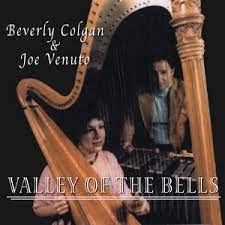
Joseph A. Venuto, Jr. was born on June 20, 1929 in Bronx, New York into an Italian immigrant family where he received his first drum kit from his grandfather. Having had lessons with Henry Adler, he moved on to Phil Kraus to learn mallet percussion. After earning a master’s degree from the Manhattan School of Music, he became a member of the Sauter-Finegan Orchestra, with whom he made his first recordings Doodletown Races on the RCA label in 1953. He was a featured soloist with the orchestra on Solo for Joe and Swingcussion. The DownBeat Reader’s Poll voted him the best vibraphonist that year.
From the mid-1950s, Venuto worked with Billy Byers in the Westchester Workshop, the Kent Harian Orchestra, Bobby Dukoff, and the Johnny Richards Orchestra before joining Radio City Music Hall as a session musician in the recording and television studios. By 1959 he recorded his debut album for Everest Records under his own name.
Between 1953 and 1975 Joe was involved in 104 recording sessions with Jack Teagarden, Kenyon Hopkins, Rex Stewart, The Creed Taylor Orchestra, Irene Kral/Al Cohn Orchestra, Mary Ann McCall, Don Costa, Hal Mooney, Ruth Brown, Gene Krupa and His Orchestra, LaVern Baker, Budd Johnson, Marion Montgomery, Benny Goodman, Shirley Scott, Solomon Burke, Gary McFarland, Johnny Hodges, Hank Jones/Oliver Nelson, and numerous more.
the early 1970s when he was in his Forties, he left New York City and moved to Reno, Nevada. He met, married, performed and recorded with his wife, harpist Bev Colgan, in a harp/vibes duo. Percussionist Joe Venuto, who also played the vibraphone, marimba, bongos and drums, transitioned on Feb. 14, 2019 at age 89.

More Posts: bongos,drums,history,instrumental,jazz,marimba,music,percussion,vibraphone
Daily Dose Of Jazz…
Thore Swanerud was born June 18, 1919 in Stockholm, Sweden. He started out his professional career playing extensively with major Swedish dance bands in the 1940s, such as those of Simon Brehm, Miff Görling, and Stan Hasselgård.
In 1949-1951 Thore led his own six-piece ensemble, then led smaller groups in the 1950s and 1960s. His associations include work with Ernestine Anderson and James Moody.
He is best remembered for an eight-bar improvised solo he made during a 1949 recording of I’m In The Mood For Love, in a quintet headed by Moody while touring Sweden. Eddie Jefferson created the 1952 song Moody’s Mood For Love in vocalese style by adapting lyrics to Moody’s song. The song later became a jazz standard, covered by many singers.
Pianist, vibraphonist, arranger, conductor, and composer Thore Swanerud, who scored three films, appeared in two and recorded five albums and five singles, transitioned in Stockholm on December 8, 1988.
More Posts: arranger,composer,conductor,history,instrumental,jazz,music,piano,vibraphone
Daily Dose Of Jazz…
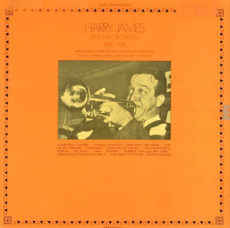
Dominick Buono was born on June 17, 1917 in North Park, California and started playing trumpet at age 11 with the music group at Nazareth Home, near to the North Park Mission. He would go on to play as a member of the 110-piece Bonham Brothers Greater North Park Boys Music Group, which performed concerts at Balboa Recreation area.
In his early professional career Buono performed trumpet in a variety of west coast-based dance and golf swing rings, including those led by Ken Baker, Cally Holden, Bobby Grain and Vido Musso. In 1939 he experienced fellow trumpeter Harry Wayne. At that time, Musso’s music group was fronted by well-known entertainer Johnny ‘Scat’ Davis and playing engagements at Chicago’s Blackhawk cafe. Buono joined Wayne and remained with the group until the innovator’s death more than 40 years later.
During the 1940s, Harry James, while working the Sherman Resort’s Panther Space with his first music group, invited Nick to be his lead trumpeter. He loved the obvious sound and stage presence of the trumpeter and hired him.
Over the years, Nick recorded and toured with Wayne, playing all over America with extended residencies in Nevada, where he and Wayne both had homes. They toured internationally to the United Kingdom and several other European countries. Happy with his anonymity, he sometimes played solos on radio broadcasts, on songs such as Ciribiribin and Sing, Sing, Sing.
The lead trumpeter inside a big music group is vital, certainly, he could well be considered the key guy. Trumpeter Nick Buono, whose charisma and skill often led to solos in the Wayne group, transitioned on October 14, 1993 in his hometown of North Park.
Bestow upon an inquiring mind a dose of a North Park trumpeter to motivate the perusal of the genius of jazz musicians worldwide whose gifts contribute to the canon…
More Posts: history,instrumental,jazz,music,trumpet
Daily Dose Of Jazz…
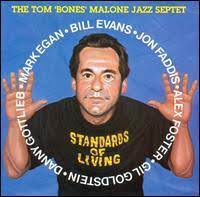
Thomas “Bones” Malone was born June 16, 1947 in Honolulu, Hawaii. He began playing professionally as lead trumpeter for Brenda Lee at a club in Jackson, Mississippi while enrolled at the University of Southern Mississippi. In response to a call from Warren Covington, leader of the Tommy Dorsey Orchestra, he began contracting musicians. After transferring to North Texas State University, Malone continued working as both a player and a contractor for groups. He graduated from North Texas State University with Lou Marini, and both were members of the One O’Clock Lab Band at North Texas.
After graduation, he worked in bands of Woody Herman in 1969, and during the early Seventies he worked with Duke Pearson, Louie Bellson, Doc Severinsen, Frank Zappa, and Blood, Sweat & Tears. In 1973, Malone began a close, fifteen-year association with Gil Evans, whom he has called a mentor. He recorded albums with Evans and toured Europe, Japan, and the Far East. In 1975 Malone toured with Billy Cobham and in 1976 with The Band.
From 1975 to 1985 he worked as arranger for Saturday Night Live and from 1981 to 1985 as musical director. He wrote the chart for the skit that introduced John Belushi and Dan Aykroyd as the Blues Brothers and worked on the film score for Blues Brothers 2000. He joined the CBS Orchestra in 1993, and contributed more than 1,600 arrangements to the Late Show with David Letterman.
As a studio musician, he has been heard on more than 1,000 records, more than 3000 radio and television commercials, and over 4,000 live television shows. In 2007 Bones was invited by music director Geoffrey Moull to arrange and perform a concert with the Thunder Bay Symphony Orchestra. In 2011 Malone was a guest artist with the University of Southern Mississippi Symphony Orchestra.
Trombonist, arranger, and producer Tom Malone, who also plays saxophone, trumpet, tuba, flute, and bass guitar, continues to expand his creative reach.
More Posts: bass guitar,flute,history,instrumental,jazz,music,saxophone,trombone,trumpet,tuba

Daily Dose of Jazz…
Nappy Lamare was born Joseph Hilton Lamare on June 14, 1905 in New Orleans, Louisiana. He got his nickname from his friend, Eddie Miller, because he had curly hair. He started playing trumpet but picked up the banjo when he was thirteen and weeks later he was a member of the Midnight Serenaders. During his teen years he worked with Sharkey Bonano, Monk Hazel, and Johnny Wiggs. In 1925 he toured in California with Johnny Bayersdorffer, then recorded for the first time two years later with the New Orleans Owls.
A move to New York City had him playing mostly guitar instead of banjo and he became a member of the Ben Pollack Orchestra and sang on Two Tickets to Georgia. Lamare remained with the band until 1942, performing on records and films, sometimes as a vocalist. He moved to California and spent the rest of his career playing Dixieland as leader of the Louisiana Levee Loungers, then the Straw Hat Strutters in the 1940s and 1950s. The Strutters appeared in the movie Hollywood Rhythm and on the weekly TV variety show Dixie Showboat.
The latter part of his career he spent in reunions with Bob Crosby, performing at Disneyland, and touring with the World’s Greatest Jazz Band. He played guitar, banjo, and sang until his transition at the age of 82 on May 8, 1988.
More Posts: bandleader,banjo,guitar,history,instrumental,jazz,music,vocal