

Daily Dose Of Jazz…
Sam Allen was born in Middleport, Ohio on January 30, 1909 and beginning at the age of seven started playing the piano. By 10 he accompanied silent films on piano in movie theaters, allowing him to sit and extemporize as the action unfolded on screen. Over the next few years he absorbed plenty of slapstick hi-jinx and derring-do from the Hollywood sagas he accompanied.
1928 saw the 19 year old Sam moving to New York City where he joined Herbert Cowans’s band at the Rockland Palace. It wasn’t too long after the move before he moved back to Ohio, where he played with saxophonist Alex Jackson through 1930.
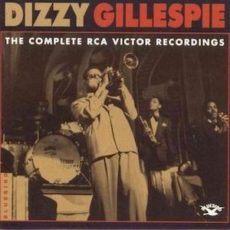
He joined James P. Johnson’s orchestra as a second pianist absorbing the intense chords in the scores that required two pianos. For amuch of the ’30s, he played with the dance band of Teddy Hill including a European tour. In the 1940s he had one of his most musically satisfying collaborations as piano man in the sometimes rowdy combo of violinist Stuff Smith. Playing in the hyper-drive bebop of Dizzy Gillespie, and then the shenanigans as pianist for the madcap jive jazz duo Slim Gaillard & Slam Stewart.
As the Fifties approached he relocated to Washington, shifting gears from touring sideman to stay-at-home featured soloist. He then headed for California where he settled into the Oakland jazz scene, often accompanying the fine singer Billie Heywood. Pianist Sam Allen transitioned at the age of 63 in April 1963.
More Posts: history,instrumental,jazz,music,piano
Daily Dose Of Jazz…
David Black, born January 23, 1928 in Philadelphia, Pennsylvania, started out as the drummer in the house band at the Philadelphia Blue Note Jazz Club where he played with the likes of Charlie Parker, Buddy DeFranco and Zoot Sims.
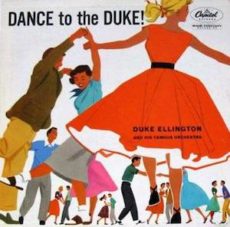
From 1953 to 1955 Black was a part of Duke Ellington’s Orchestra until he contracted polio, forcing him to leave the band. After recovering, he moved to the San Francisco Bay Area and partnered with Bob Scobey until the latter’s death in 1963.
Continuing to perform with Bay Area and various international jazz musicians, drummer Dave Black, most notable for his work with Duke Ellington, transitioned on December 4, 2006
More Posts: bandleader,drums,history,instrumental,jazz,music
Daily Dose Of Jazz…
Irving “Mouse” Randolph was born in St. Louis, Missouri on January 22, 1909 and started off playing on riverboats with Fate Marable’s ensemble. Following this he played in numerous territory bands, including those of Walt Farrington, Willie Austin, Art Sims, Norman Mason, Floyd Campbell, Alphonse Trent, and J. Frank Terry.
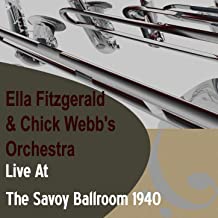
From 1931 to 1933 he was in Kansas City, Missouri playing in Andy Kirk’s Twelve Clouds of Joy, and then played briefly with Fletcher Henderson and Benny Carter in 1934. 1935 to 1939 saw Mouse playing in Cab Calloway’s orchestra, then departed to play with the Ella Fitzgerald Orchestra under the direction of Chick Webb for three years ending in 1942.
By 1943 he was playing with Don Redman and from 1944 to 1947 he did a stint with Edmond Hall. Randolph continued to play into the Seventies, including with the Chick Morrison Orchestra. He never recorded as a bandleader, though he recorded copiously with Henderson, Carter, and Calloway.
Trumpeter Mouse Randolph, who was prominent during the swing era, transitioned on December 12, 1997 in New York City, just six weeks shy of his 89th birthday.
More Posts: history,instrumental,jazz,music,trumpet
Daily Dose Of Jazz…
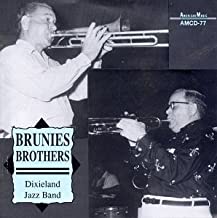
Albert “Abbie” Brunies was born on January 19, 1900 in New Orleans, Louisiana into a famous musical family, which counted among its members George Brunies and Merritt Brunies.
He was the leader of the Halfway House Orchestra from 1919 to about 1927, playing at the Halfway House Club in New Orleans. This ensemble recorded for Okeh Records in 1925. Among the musicians who played in this group were New Orleans Rhythm Kings members Charlie Cordella, Mickey Marcour, Leon Rappolo, Sidney Arodin, Bill Eastwood, Joe Loyacano and Leo Adde.
He played in New Orleans into the mid-1940s, after which time he moved to Biloxi, Mississippi. There he played with Merritt in the Brunie Brothers Dixieland Jazz Band. Unfortunately, this ensemble recorded sparsely. Cornetist Abbie Brunies transitioned on October 2, 1978.
More Posts: cornet,history,instrumental,jazz,music
Daily Dose Of Jazz…
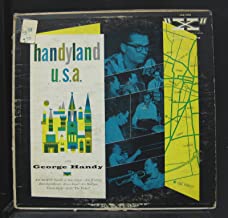
George Handy, born George Joseph Hendleman on January 17, 1920 in New York City, where his musical beginnings were fostered under the tutelage of composer Aaron Copland.
He first worked professionally as a swing pianist for Michael Loring in 1938. Soon afterward George was drafted into the United States Army in 1940. Post WWII, from 1944 to 1946 he became a member of the Boyd Raeburn Orchestra, composing and performing on piano. This was during a time when many big bands were transforming their musical tendencies toward bebop. Leaving the orchestra briefly to work for Paramount Studios, he returned to Raeburn quickly. During this period he entered one of his most creative periods, doing arrangements of older standards with a distinctly bebop quality.
A rift between him and Raeburn, just as he was entering his prime, forced him to depart the group. Handy continued to arrange for other musicians in his later career.
Pianist, arranger and composer George Handy, best remembered in retrospect for his bebop arrangements, transitioned in Harris, New York, on January 8, 1997 at the age of 76, from heart disease.
More Posts: arranger,composer,history,instrumental,jazz,music,piano